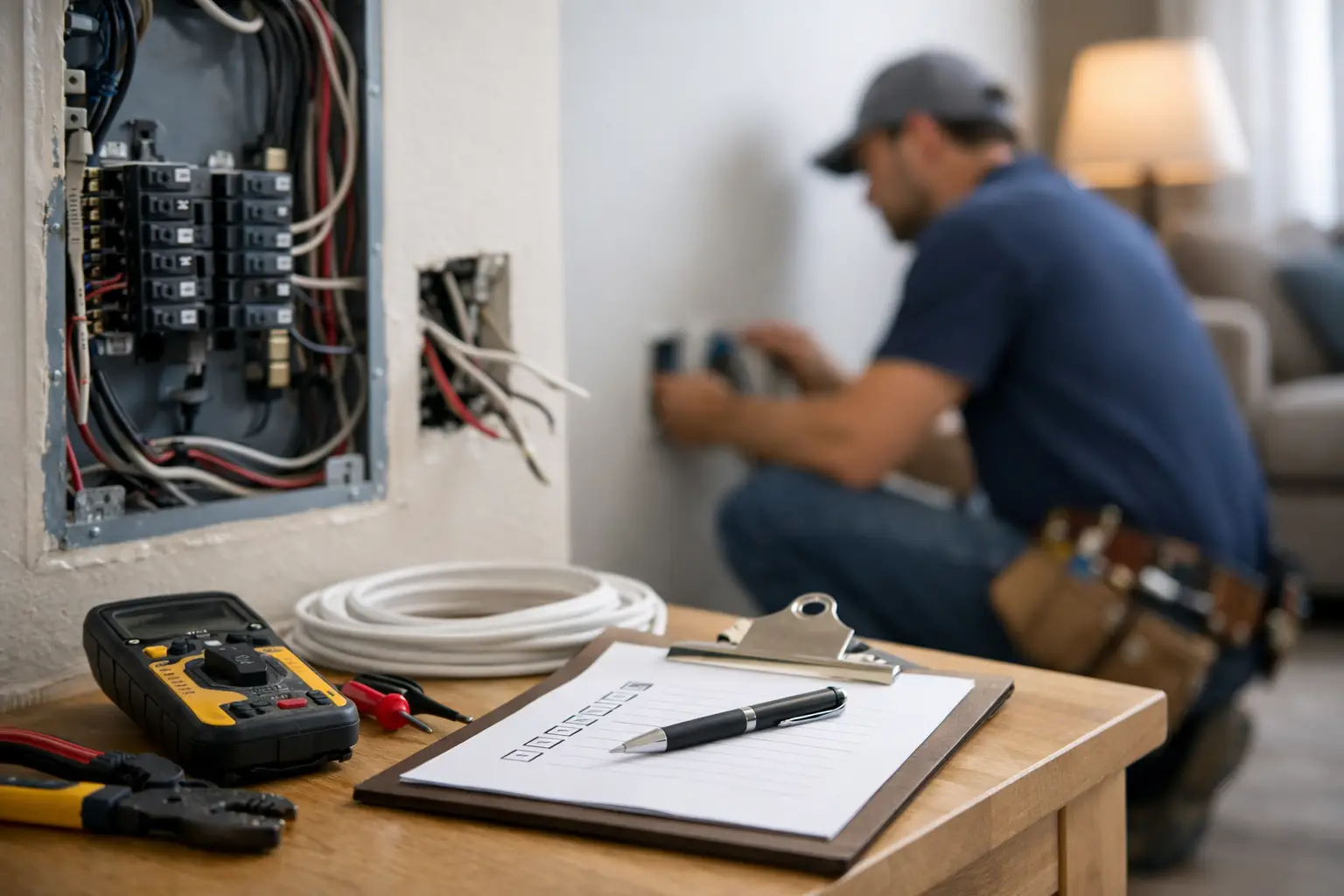
Old wiring rarely announces itself politely. It shows up as flickering lights, tripping circuits, hot power points, and the nagging feeling that your home is working harder than it should. A solid residential rewiring checklist helps you make sense of the job before walls are opened, trades are booked, and timelines start to matter.
For many homeowners, rewiring is not just about replacing old cables. It is a chance to improve safety, bring the property up to current standards, and make the home more practical for modern living. If you are renovating, adding major appliances, installing air conditioning, or preparing for EV charging, it makes sense to look at the wiring now rather than patching problems later.
When a residential rewiring checklist becomes necessary
Some homes clearly need attention. If your property still has ageing wiring, limited power points, ceramic fuses, or a switchboard that has never kept pace with modern demand, rewiring should be on the table. The same applies if lights dim when appliances start, breakers trip regularly, or parts of the installation feel inconsistent from room to room.
Age alone is not the only trigger. Poor past workmanship, DIY alterations, water damage, pest damage, and repeated electrical faults can all justify a full review. In some houses, a partial rewire is enough. In others, especially during major renovations, a complete rewire is the safer and more cost-effective path.
That is where professional assessment matters. The right electrician will not push a full replacement if the existing system can be upgraded sensibly. Just as importantly, they will not underquote by ignoring switchboard issues, earthing problems, or compliance work that should be addressed at the same time.
Your residential rewiring checklist before work starts
Before any cables are pulled, get clear on the scope. Ask whether the job is a full rewire or a partial one, and which areas of the home are included. This sounds basic, but confusion here is one of the biggest causes of budget surprises.
You also want to confirm the condition of the switchboard. In many older homes, rewiring without a switchboard upgrade only solves part of the problem. Safety switches, circuit protection, and capacity for current and future loads should all be reviewed together.
Think carefully about how you use each room now, not how the home was used twenty years ago. Kitchens need more capacity than they once did. Home offices, entertainment areas, garages, and outdoor spaces often need more outlets, lighting options, and dedicated circuits. If you are considering solar integration, electric hot water, induction cooking, or an EV charger, mention it early. These decisions affect cable sizing, circuit planning, and switchboard layout.
At this stage, access matters too. Rewiring an occupied home is very different from rewiring during a renovation with walls and ceilings already open. A tidy electrician can minimise disruption, but there is no point pretending the process is invisible. Some homes allow easier roof and underfloor access. Others require more invasive work, more patching, and more time.
Safety and compliance checks that should not be skipped
A proper rewire is not just a cable swap. It should include a full review of earthing, bonding, circuit separation, protection devices, and the general condition of the installation. If any of that is treated as an optional extra, it is worth asking more questions.
Make sure the contractor is licensed and experienced in residential rewiring, not only in small maintenance jobs. Rewiring older properties often involves hidden variables, and experience counts when faults emerge behind walls or above ceilings.
It is also reasonable to ask what testing will be completed at the end of the project. Final testing and certification are part of doing the work properly. You want confidence that the installation is safe, compliant, and ready for everyday use, not just that the lights came back on.
If your home has smoke alarms that are outdated or poorly located, rewiring can be the right time to address that as well. The same goes for hardwired security devices, external lighting, and any planned access control or camera cabling. Combining works can save time and reduce repeat disruption.
Planning the layout properly
The most successful rewiring jobs are planned around how people actually live. This means looking beyond the bare minimum number of power points and switches. It means asking where bedside chargers sit, where the microwave will go, how outdoor entertaining areas are used, and whether the garage may one day house an EV charger or workshop tools.
Lighting should be considered early. If you want better task lighting in the kitchen, feature lighting in living areas, or practical sensor lighting outside, it is easier and more affordable to include it while the wiring work is underway.
It is also worth thinking about future flexibility. A few extra circuits or well-placed outlets can make later upgrades much easier. There is always a budget balance to strike, but smart planning now can prevent another round of electrical work in a few years.
What to expect during the rewire
Once work starts, disruption depends on the house and the scope. In some homes, power may need to be isolated for periods while circuits are replaced and tested. In others, the work can be staged to keep parts of the property functional. If you are living in the home during the job, discuss this upfront.
There may be cutting into plaster, lifting floor sections, or working through roof spaces and wall cavities. A good contractor will explain where access is needed, what protection will be used, and whether patching or painting falls within the quoted scope. Never assume finishing work is included unless it is written down.
Timing can vary more than people expect. Straightforward homes with good access move faster. Older houses with brittle finishes, limited access, or undocumented past alterations can take longer. That does not always mean anyone has done the wrong thing. Sometimes the house reveals issues only after the work begins.
Questions to ask before you approve the quote
A reliable quote should explain what is included, what is excluded, and what may change if hidden defects are found. If the pricing looks far lower than others, check whether switchboard upgrades, testing, making good, smoke alarms, or disposal of old materials have been left out.
Ask who will carry out the work, how the job will be supervised, and how communication will be handled if conditions change. Homeowners and property managers both benefit from knowing who to call, when updates will be provided, and how variations are approved.
You should also ask about warranty-backed workmanship and whether the electrician can coordinate related upgrades at the same time. For many households, combining rewiring with lighting improvements, security cabling, or an EV charger installation is more efficient than booking separate jobs months apart.
After the work is complete
A finished rewire should leave you with more than fresh cables in the walls. You should have a safer electrical system, better protection at the switchboard, a layout that suits your household, and clear documentation of what has been done.
Take time to walk through the home with the electrician. Check switch locations, test power points, review any labelled circuits, and ask about anything that works differently from before. This is also the moment to understand your switchboard, especially if new safety switches or dedicated circuits have been added.
Keep any certificates, test records, and scope documents in a safe place. They are useful for future maintenance, renovations, and property sale disclosures. If your home has had years of piecemeal electrical changes, a properly documented rewire is a major reset.
A practical way to approach the job
The best residential rewiring checklist is not the longest one. It is the one that helps you ask the right questions early, plan for how the home is used, and choose an electrician who treats safety, communication, and workmanship as part of the same service. That is the standard homeowners should expect, whether the job is urgent or part of a bigger upgrade.
If you are already seeing signs of ageing wiring, do not wait for a minor fault to become a serious one. A clear plan, a transparent quote, and licensed advice can turn a disruptive project into a smart long-term improvement for your home.