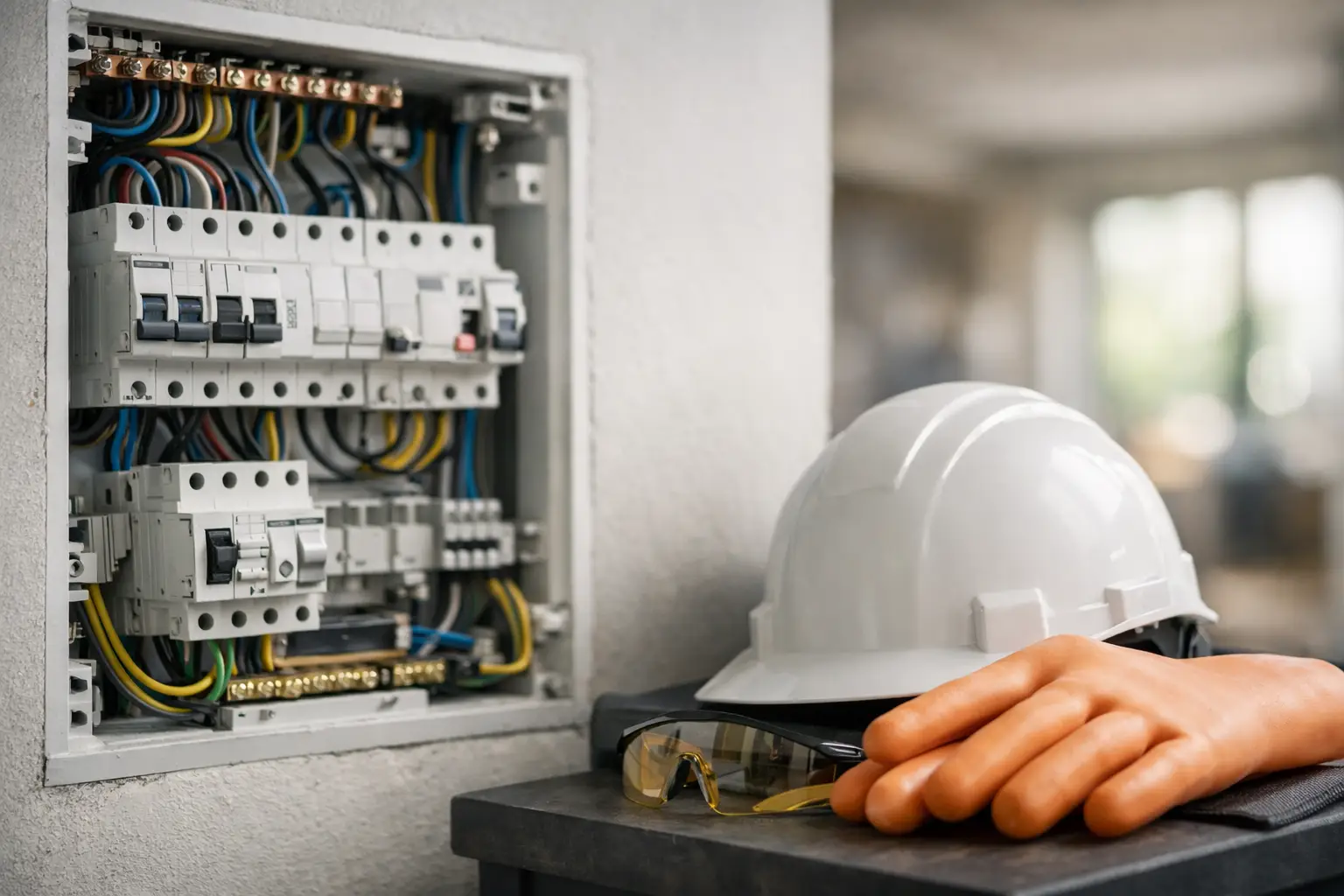
A switchboard usually gets ignored until something trips, flickers or stops working. That is often the first sign there is a bigger issue behind the panel. This switchboard safety guide is designed to help homeowners, property managers and business operators understand what a safe switchboard looks like, what warning signs should never be brushed off, and when it is time to bring in a licensed electrician.
Why switchboard safety matters
Your switchboard is the control point for the electrical circuits across your property. It manages how power is distributed and, just as importantly, how faults are isolated. When it is modern, correctly labelled and fitted with proper safety devices, it helps protect people, appliances and the building itself.
When it is outdated or overloaded, the risks change quickly. A fault that should have been cut off in seconds can linger. Wiring can overheat. Circuits can trip repeatedly. In serious cases, an old or damaged switchboard can become a fire hazard.
For homes, this often shows up after a renovation, a new air conditioner, an induction cooktop or an EV charger installation. For businesses, it may happen as equipment loads increase over time or when a tenancy changes use. The common thread is simple – the switchboard that worked years ago may no longer suit the way the property runs today.
What a safe switchboard should include
A safe switchboard is not just a box with switches inside it. It should be suited to the property, installed to current standards and easy to inspect and operate.
Most modern switchboards include circuit breakers rather than old ceramic fuses. They should also include safety switches, often called RCDs, which are designed to cut power rapidly if they detect an electrical fault that could cause shock. Clear labelling matters too. In an emergency, you should be able to identify which circuit controls lighting, power, appliances or tenancy areas without guessing.
Physical condition is just as important. The enclosure should be secure, with no exposed internal parts, no signs of corrosion and no gaps that allow dust, moisture or pests inside. Access should be clear, especially in commercial settings where fast isolation may be needed.
Switchboard safety guide: warning signs to watch for
Some switchboard problems are obvious. Others build slowly and are easy to miss until they become urgent.
If your power trips often, do not assume it is just a nuisance. Repeated tripping is a sign that the board is doing its job in response to a fault, overloaded circuit or appliance issue. The cause needs to be identified rather than worked around.
Buzzing sounds, a burning smell, heat around the panel or discolouration near breakers are more serious warning signs. These can point to loose connections, damaged components or overheating. If you notice any of these, treat it as a safety issue.
Flickering lights can also relate to switchboard faults, particularly when they happen across multiple areas rather than in one fitting. The same applies to appliances that lose power unexpectedly or circuits that seem to struggle when several items are running at once.
Older fuse boards deserve special attention. Many older properties still have legacy switchboards that were not built for current demand and may not include the level of protection now expected. They can continue to operate for years, but that does not mean they are safe enough for modern use.
Common causes of switchboard problems
Overloading is one of the biggest issues we see. A property that once had modest electrical demand may now be running split systems, entertainment setups, office equipment, commercial refrigeration, security systems and EV charging from the same original board. Even if each addition made sense at the time, the combined load can push an old switchboard beyond what it was designed to handle.
Age also matters. Components wear out. Connections loosen over time due to heat cycling. Moisture, dust and pests can damage internal parts, especially in outdoor or semi-exposed installations.
Then there is workmanship. Not every past installation or alteration has been done to the standard it should have been. Mixed generations of protective devices, poor circuit identification and crowded board layouts can all create safety and maintenance problems later on.
Homes vs businesses: the risks are a bit different
The core safety principles are the same, but the way switchboard issues affect a home is different from the way they affect a business.
In a home, the focus is usually personal safety, appliance protection and making sure the electrical system can support modern living. Families are often concerned about children, ageing wiring, electric hot water systems, pool equipment or a planned renovation. If the switchboard is not up to scratch, those upgrades can be delayed or installed without the level of protection they should have.
In a business, downtime and compliance can become just as important as direct safety risk. A switchboard fault can interrupt trade, affect staff, damage equipment and cause headaches for tenants or customers. In some workplaces, there is also a higher duty to maintain a safe environment and document electrical maintenance properly.
That is why there is no one-size-fits-all answer. A small retail tenancy, a warehouse and a family home each place different demands on their switchboards.
When a switchboard upgrade makes sense
A switchboard upgrade is not only for properties that have already failed. In many cases, it is the sensible next step when the existing board is outdated, undersized or unable to support planned electrical work.
If you are adding major appliances, renovating, installing air conditioning, upgrading kitchen equipment or preparing for an EV charger, it is worth checking whether the switchboard can handle the extra demand safely. The same applies if your board still uses rewireable fuses or does not have adequate safety switch protection.
An upgrade can improve reliability as well as safety. It can reduce nuisance tripping, make fault finding easier and give you clearer control over how circuits are managed. For landlords and property managers, it can also reduce the chance of recurring maintenance call-outs tied to an ageing electrical setup.
What not to do
A practical switchboard safety guide has to be clear about this point – switchboards are not a DIY job. Opening, modifying or attempting to repair a switchboard without the right licence is dangerous and unlawful.
Even simple-looking issues can involve live parts, hidden faults or damaged connections that are not visible from the front. Resetting a tripped breaker once may be reasonable if you know which appliance caused the issue, but repeated resets without investigating the cause are not a fix.
It is also a mistake to ignore small warning signs because the power has come back on. Electrical problems often escalate before they fail completely.
How to stay on top of switchboard safety
The best approach is preventative. If your property is older, if the board has not been inspected in years, or if your power needs have changed, book an electrical inspection before there is a fault. This is especially worthwhile before purchasing a property, signing a new commercial lease or starting renovation works.
Keep the area around the switchboard accessible and dry. Make sure circuits are labelled clearly. Test safety switches in line with the manufacturer guidance or the advice of your electrician. If labels are faded, breakers are unidentified or the enclosure is damaged, have it assessed.
For businesses and managed properties, regular maintenance is usually the smarter option than waiting for an emergency. It helps you plan repairs and upgrades rather than dealing with outages at the worst possible time.
Choosing the right electrician for switchboard work
Switchboard work should be carried out by a licensed electrician with experience in fault finding, upgrades and compliance requirements. Fast response matters, but so does clear advice. You want someone who can explain whether the issue is a simple component fault, an overloaded circuit, or a sign that the whole board needs to be upgraded.
A good electrician will also look beyond the switchboard itself. Sometimes the problem starts with a faulty appliance, damaged wiring or an added load elsewhere on the property. That broader view is what leads to a proper fix, not just a temporary reset.
At Voltricity, that is how we approach switchboard safety – practical advice, quality workmanship and solutions that suit the way your property is actually used.
If your switchboard is showing warning signs, or you are planning upgrades that will add electrical demand, it is worth acting early. A safer switchboard does more than keep the lights on. It gives you confidence that the property is protected where it matters most.