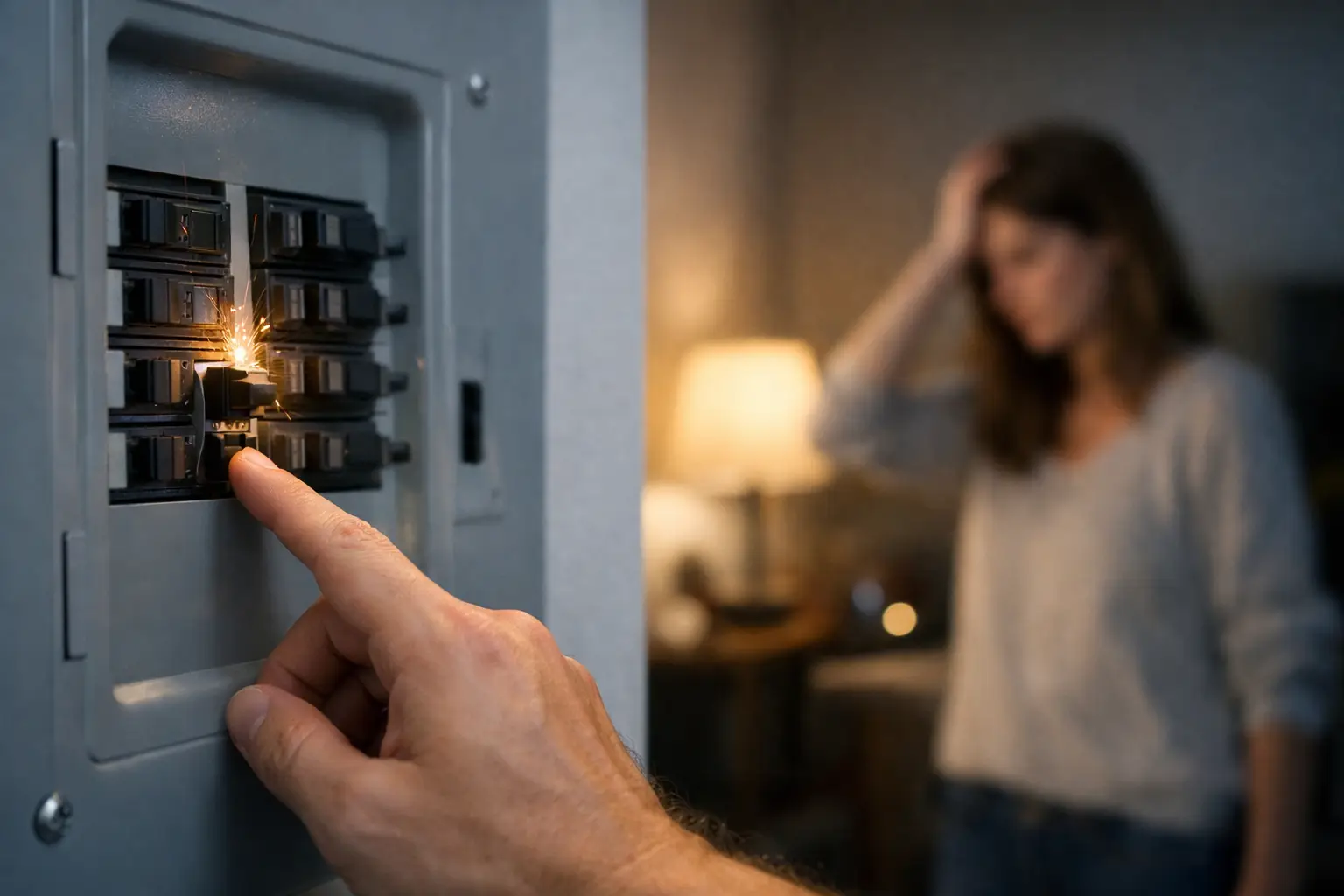
You plug in the kettle, the lights flick off, and suddenly half the house is out. If you’re asking why does power keep tripping, you’re usually dealing with one of two things – an overloaded circuit or an electrical fault that needs proper attention. Either way, repeated tripping is your system doing its job by cutting power before a bigger safety issue develops.
A trip is not something to ignore or work around. Resetting the switch once may be harmless if a one-off overload caused it. But if the same circuit keeps dropping out, or the safety switch won’t stay on, the problem needs to be identified properly. For homeowners, property managers and business operators, the priority is simple: keep people safe, protect appliances and get the power stable again.
Why does power keep tripping in the first place?
Your switchboard is designed to shut power off when something is wrong. Different protective devices respond to different problems, so the reason your power keeps tripping depends on which switch has gone down.
A circuit breaker usually trips when a circuit is overloaded or when there is a short circuit. A safety switch, also called an RCD, trips when it detects current leaking somewhere it should not. That leakage can happen through a faulty appliance, damaged wiring, moisture, or a more serious installation issue.
This is why tripping can feel random from the outside. You might notice it when the toaster is on, when the air conditioner starts up, or after rain. The trigger is often the moment the fault becomes large enough for the protective device to react.
The most common causes of repeated power trips
Overloaded circuits
This is one of the most common reasons in older homes and busy commercial spaces. Too many high-draw appliances running on the same circuit can push it beyond its limit. Kettles, microwaves, portable heaters, dryers and EV chargers can all place a significant load on a circuit, especially if the wiring or switchboard was not designed for modern demand.
The fix is not always as simple as using fewer appliances. If overloading happens regularly, the property may need circuit redistribution, dedicated circuits for heavy loads, or a switchboard upgrade.
Faulty appliances
Sometimes the issue is not the house wiring at all. A damaged toaster, washing machine, dishwasher, fridge or power board can cause a breaker or safety switch to trip. Appliances with heating elements are common culprits, as are older units with worn insulation or internal moisture.
If the power trips only when one appliance is used, that is a strong clue. It does not guarantee the appliance is the only problem, but it points to where testing should start.
Short circuits and damaged wiring
A short circuit happens when active and neutral conductors come into direct contact, often because insulation has failed or wiring has been physically damaged. This can create a sudden surge of current and trip the breaker immediately.
In homes, damaged wiring may be hidden in walls, ceilings or outdoor runs. In commercial settings, wear and tear, past modifications and equipment movement can all contribute. This is not a DIY situation. Hidden cable faults need professional testing and safe repair.
Earth leakage and safety switch faults
If your safety switch keeps tripping, current is leaking to earth somewhere in the circuit. That could be from a faulty appliance, moisture in an outdoor fitting, water around a hot water system, or deterioration in fixed wiring.
Safety switch trips are doing exactly what they are meant to do – reducing the risk of electric shock. If the switch will not reset, or trips again straight away, leave the affected circuit off and arrange for a licensed electrician to investigate.
Moisture and weather exposure
Outdoor power points, garden lighting, pool equipment and external junctions can all be affected by rain, condensation and water ingress. Even in covered areas, damaged seals or ageing fittings can allow enough moisture in to create a fault.
This is especially common after heavy rain or in coastal areas where salt and moisture speed up corrosion. If the tripping starts during wet weather, external electrical components should be high on the inspection list.
Old or undersized switchboards
An outdated switchboard may not handle the way modern properties use power. Renovations, added air conditioning, induction cooking, home offices and EV charging all increase demand. If the switchboard is old, crowded or lacking the right protection, nuisance tripping and genuine faults become more likely.
Upgrading a switchboard does not just improve convenience. It can improve safety, support current standards and make room for future electrical needs.
What you can safely check before calling an electrician
There are a few sensible checks you can make without taking risks. Start by looking at the switchboard and identifying which breaker or safety switch has tripped. If it is labelled, that may tell you which area or appliances are involved.
Next, unplug portable appliances on that affected circuit. If a safety switch has tripped, disconnecting items one by one can help rule out a faulty appliance. Once everything is unplugged, try resetting the switch. If it holds, plug items back in one at a time until the fault reappears.
You should also think about timing. Did the power trip when several appliances were running together? Did it happen after rain? Does it affect one room, one section of the property, or the whole site? These details help narrow the cause quickly.
What you should not do is keep forcing a switch back on, use damaged extension leads, or open up fittings and panels yourself. If the breaker will not reset, trips immediately, or there is any sign of burning, buzzing or heat, leave it off.
Signs the problem is more serious
Some tripping issues are straightforward. Others point to faults that should be treated urgently.
If you notice a burning smell, discoloured power points, crackling sounds, flickering lights before the trip, or shocks and tingles from appliances or taps, stop using that circuit. The same applies if the switchboard feels hot or if the power is dropping out more frequently over time.
For landlords and property managers, repeated electrical faults should never be treated as a minor tenant inconvenience. A recurring trip can indicate deteriorated wiring, overloaded circuits or unsafe appliances that expose the property to risk.
For business operators, intermittent electrical faults can also affect equipment reliability, security systems, lighting and day-to-day operations. A quick reset may get things moving again, but it does not solve the underlying issue.
Why does power keep tripping after you reset it?
If the power comes back briefly and then trips again, the fault is still present. In many cases, a connected appliance starts drawing current as soon as it cycles back on and the protective device reacts again. In other cases, the wiring fault is permanent, so the trip happens immediately each time you reset.
That repeat pattern matters. A one-off overload might not return once the appliance load is reduced. Ongoing tripping usually means testing is needed to locate the exact cause instead of guessing.
Electricians use fault-finding methods and test equipment to isolate the circuit, check insulation resistance, inspect outlets and fittings, and confirm whether the problem lies in the switchboard, fixed wiring or connected equipment. That is how you get from temporary reset to lasting repair.
When to call a licensed electrician
Call a licensed electrician if the same breaker or safety switch trips more than once, if you cannot identify a clear appliance-related cause, or if the switch will not reset at all. You should also book an inspection if the property has an older switchboard, recent renovation work, storm exposure, or increased electrical demand from new appliances or an EV charger.
A proper inspection can save time and money because it deals with the root cause. Depending on the fault, the solution may be as simple as replacing a damaged outlet or faulty fitting. In other cases, the right answer is a circuit upgrade, rewiring work or a switchboard replacement.
At Voltricity, this is exactly the kind of problem we help clients solve – quickly, safely and with clear advice about what is actually needed.
The right fix depends on the cause
There is no single answer to why power keeps tripping because not every trip means the same thing. Sometimes the problem is an overloaded kitchen circuit. Sometimes it is a deteriorated outdoor fitting taking on water. Sometimes it is an older board struggling to keep up with a property’s current load.
What matters is treating repeated tripping as a warning sign, not an annoyance. Your electrical system is telling you something has changed, and the safest path is to find out what that is before it turns into damage, downtime or a serious hazard.
If your power keeps tripping, trust what the switchboard is telling you. A safe, reliable electrical system should stay on without guesswork, and when it does not, getting it checked properly is the smartest next step.