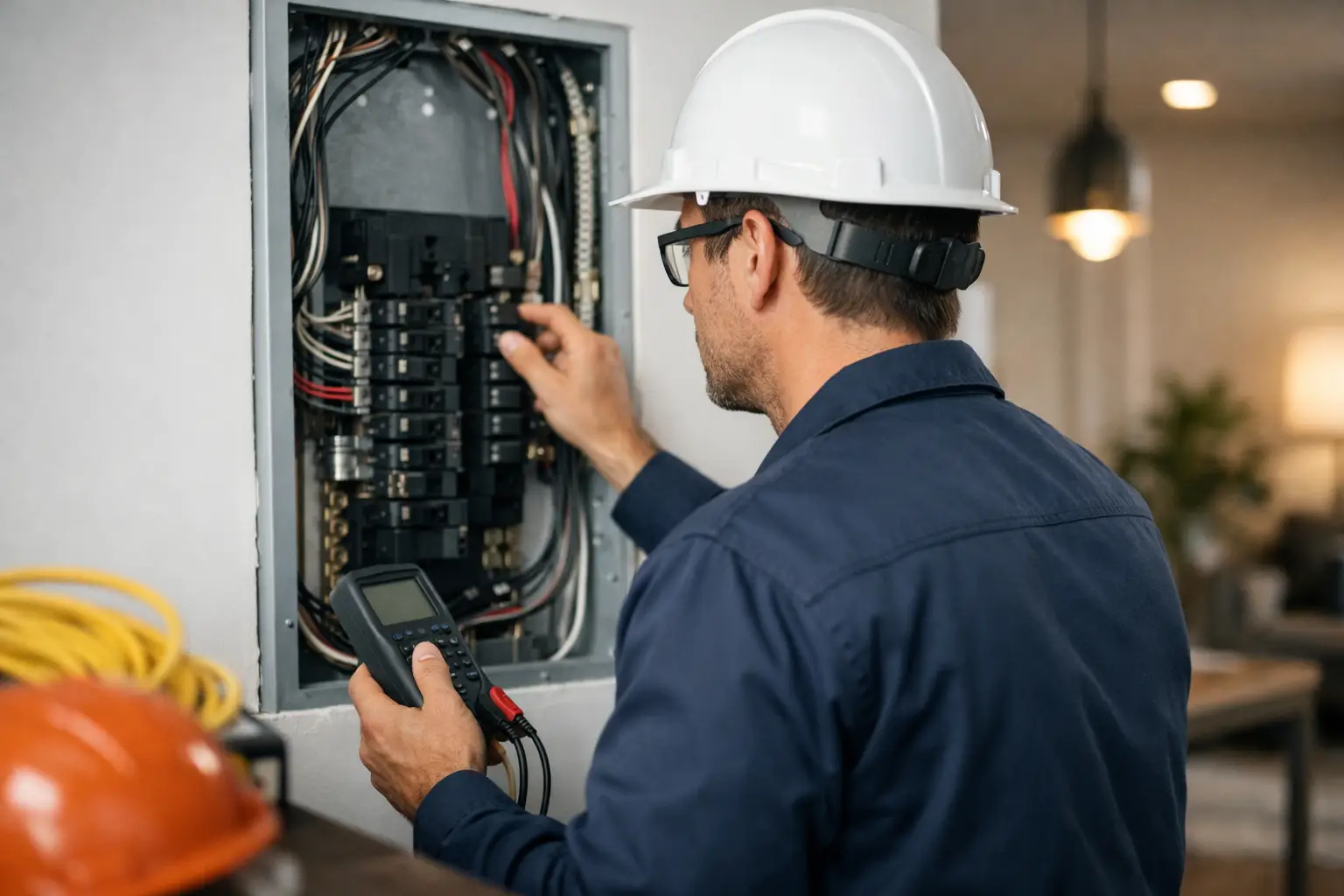
A light that flickers once might be nothing. A power point that feels warm, a switchboard that trips without warning, or a tenancy change in an older property is different. That is usually the point where an electrical safety inspection stops being a nice idea and becomes the sensible next step.
For homeowners, property managers and business operators, the real challenge is not just spotting obvious faults. It is knowing when a system is ageing, overloaded or no longer suited to how the property is used. Electrical issues often build quietly in the background long before they become a breakdown, compliance problem or safety risk.
What an electrical safety inspection actually involves
An electrical safety inspection is a structured check of the condition, safety and basic compliance of your electrical system. It is not the same as waiting for something to fail, and it is not limited to one fitting or one fault. The goal is to identify hazards, wear, outdated components and installation issues before they lead to electric shock, fire risk or costly repairs.
In a typical home or commercial premises, that can include the switchboard, safety switches, circuit protection, wiring condition, power points, lighting circuits, earthing, smoke alarm interfaces and any visible signs of damage or overheating. If the property has had additions over time such as air conditioning, security systems, outdoor lighting or EV charging, those changes matter too. Extra demand can expose weaknesses in older infrastructure.
A good inspection also considers how the site is actually being used. A family home with a renovated kitchen and several high-load appliances places different demands on a system than it did 20 years ago. A shop, office or warehouse with new equipment, staff and customer traffic has its own risk profile. The inspection should reflect real conditions, not just a quick visual glance.
When an electrical safety inspection makes sense
Some properties clearly need attention after a fault, but many inspections are booked for preventive reasons. That is often the smarter move because planned work is generally easier, safer and less disruptive than urgent repairs.
Older homes and ageing switchboards
If your property is older and has not had major electrical upgrades in years, an inspection is worth arranging. Older wiring, ceramic fuses, limited circuit capacity and missing safety switches are still found in many Australian properties. These systems may continue to operate, but that does not mean they are keeping up with modern electrical loads or current safety expectations.
Age alone does not automatically mean a property is unsafe. Some older installations have been well maintained. Others have had partial upgrades that solve one issue but leave another in place. An inspection gives you a clear picture of what is there and what should be addressed first.
Before buying, leasing or renovating
Property decisions move quickly, and electrical issues are easy to miss during general inspections. Before purchasing a home or commercial site, an electrical safety inspection can help uncover outdated switchboards, non-compliant work, inadequate circuit protection or hidden wear that may affect your budget after settlement.
For landlords and property managers, inspections are also a practical way to reduce risk between tenancies or before leasing an older property. If renovations are planned, checking the existing system early helps avoid delays later. There is little benefit designing new lighting, appliances or charging infrastructure if the switchboard cannot support it.
After warning signs appear
Some triggers should not be ignored. Frequent tripping, burning smells, buzzing outlets, discoloured switches, sparks, tingling from metal surfaces, or inconsistent power all justify prompt attention. These signs do not always point to a major fault, but they do suggest something is wrong or under stress.
The same applies after storm activity, water ingress or pest damage. Moisture and damaged cable insulation can create faults that are not obvious until conditions change. It is better to have the system checked properly than hope the issue settles on its own.
Why inspections matter beyond basic compliance
People often think about electrical safety only in terms of emergencies, but the value of an inspection is broader than that. It helps you make decisions with confidence.
In a home, that could mean knowing whether your switchboard is ready for an induction cooktop, split system or EV charger. In a business, it might mean reducing the chance of downtime, protecting staff and customers, or planning upgrades around trading hours. In a rental property, it can support safer occupancy and clearer maintenance priorities.
There is also a financial side to it. Small issues caught early are usually cheaper to fix than faults discovered after damage occurs. A loose connection, overloaded circuit or deteriorated fitting may be straightforward when identified in time. Left alone, the same problem can damage appliances, interrupt operations or create a fire hazard.
What electricians often find during an electrical safety inspection
The most common findings are not always dramatic. In many cases, they are everyday issues that have been overlooked for years.
Safety switches may be missing on some circuits or may no longer function correctly. Switchboards are often undersized for the way a property is now used. Power points can be cracked, loose or heat-affected. Outdoor fittings may have deteriorated from weather exposure. Wiring in roof spaces or under floors may show signs of age, damage or poor previous work.
Then there are the additions made over time. Extra appliances, home office setups, workshop equipment, CCTV systems and EV chargers all place demand on the electrical system. If those loads were added without wider upgrades, the property may be operating with less safety margin than the owner realises.
That does not mean every inspection ends with a long defect list. Sometimes the outcome is reassuring. The system may be in sound condition with only minor recommendations. That clarity still has value because it lets you move forward knowing where you stand.
Residential and commercial inspections are not exactly the same
The core safety principles are similar, but the scope can vary depending on the property.
In homes, inspections often focus on family safety, ageing infrastructure, renovation readiness and appliance demand. Special attention may be given to switchboards, smoke alarm connections, outdoor circuits and wet-area protection.
In commercial settings, the practical concerns often extend further. Load demand, operating hours, staff safety, public access areas, emergency systems and equipment reliability all come into play. A café, office, retail site and warehouse each have different usage patterns, so the inspection should match the environment rather than follow a one-size-fits-all approach.
This is where working with a licensed electrician who understands both traditional electrical systems and newer infrastructure can make a real difference. A property may not just need a fault check. It may need advice on future capacity, security integration or planned upgrades.
Choosing the right response after the inspection
An inspection is most useful when the findings are explained clearly. Property owners and managers should not be left guessing which issues are urgent, which are recommended, and which upgrades can be staged over time.
That matters because not every issue carries the same level of risk. A failed safety component or damaged wiring usually needs prompt action. Other items may be about improving reliability, bringing parts of the system up to current expectations or preparing for future works. The right approach is practical, prioritised and transparent.
At Voltricity, that is how we believe electrical work should be handled – clear advice, licensed workmanship and solutions matched to the property, not pushed for the sake of it. For customers, that means fewer surprises and a clearer path from inspection to action.
How often should you arrange an electrical safety inspection?
There is no single answer that fits every property. It depends on the age of the installation, how heavily it is used, whether there have been alterations, and whether any warning signs have appeared.
For an older home with no recent upgrades, a periodic inspection makes good sense even if nothing seems wrong. For rental properties, inspections around tenancy changes can be a sensible risk-management step. For businesses, the timing may depend on equipment use, compliance obligations and the cost of downtime if a fault develops.
If you are unsure, the best rule is simple. If the property is ageing, changing use, showing signs of electrical stress or about to undergo works, book the inspection before a small problem has the chance to become an urgent one.
A safe electrical system is not just about passing a check. It is about knowing your home or business is ready for the way you actually live and work in it. When that confidence is missing, an inspection is usually the right place to start.