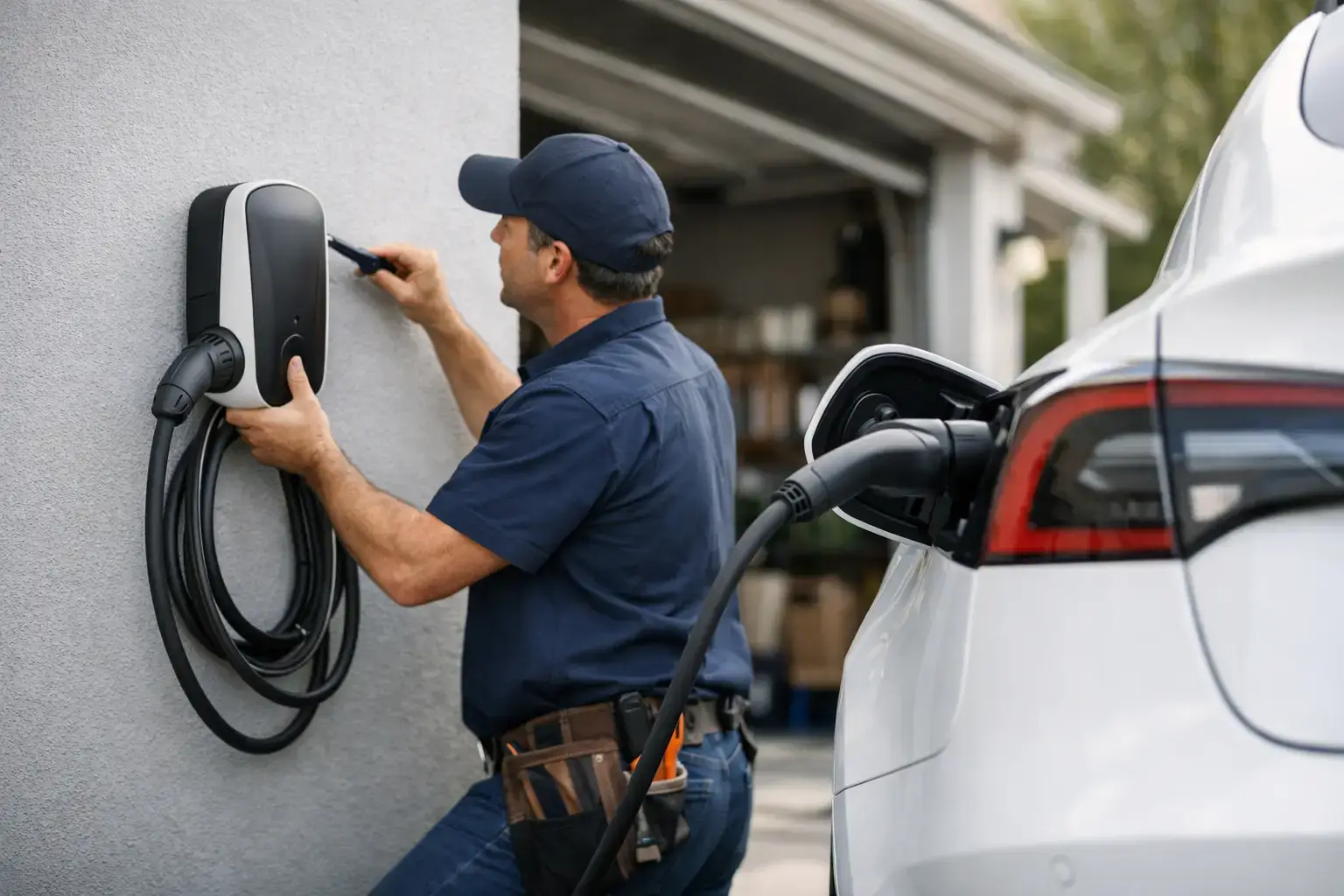
You notice it quickly once you start living with an EV – public chargers are useful, but they are not what makes ownership easy. The real convenience comes from home EV charger installation that suits your vehicle, your driving habits and your property’s electrical capacity. Get that part right, and charging becomes part of the routine rather than something you need to plan your week around.
Why home EV charger installation matters
A standard power point can top up some vehicles, but it is usually slow and not ideal as a long-term solution. If you drive daily, have a larger battery, or simply want the confidence of reliable overnight charging, a dedicated charger is the better option. It is faster, safer and designed for the load.
There is also the question of electrical safety. EV charging places sustained demand on a circuit for hours at a time. That is different from plugging in a small appliance for occasional use. A professionally installed charger gives you the protection of the right circuit, the right cabling, the right breaker and the right testing at the end of the job.
For many households, it is not just about speed. It is about protecting the switchboard, avoiding nuisance tripping and making sure the installation complies with current Australian standards.
What a proper installation usually involves
Home EV charger installation is rarely just a case of mounting a unit on the wall and plugging it in. Every property has its own layout, switchboard condition and power availability, so the job starts with an assessment.
An electrician will usually check your existing switchboard, identify whether there is enough spare capacity, and confirm the best location for the charger. That includes practical details such as cable run distance, weather exposure, vehicle parking position and whether the charger can be installed where the cable reaches comfortably without becoming a trip hazard.
The final design may also include load management. This matters in homes where air conditioning, ovens, hot water systems and EV charging may all be operating around similar times. Rather than overloading the supply, a smart setup can balance demand across the property.
In some homes, the installation is straightforward. In others, the charger is only one part of the job, with a switchboard upgrade or circuit improvements needed first. That is not upselling for the sake of it. It is often the difference between a charger that works reliably and one that causes ongoing issues.
Choosing the right charger for your home
Not every EV owner needs the biggest charger available. The right unit depends on how far you drive, how long the car is parked at home, and what your property can support.
A homeowner with a short daily commute may be perfectly well served by a modest charger that replenishes the battery overnight. A two-EV household, or a business operator using a vehicle heavily during the day, may want faster charging and smarter scheduling features. If you have solar, it may make sense to choose a charger that can integrate with your system and prioritise solar generation when conditions allow.
Features matter, but only when they match how you actually live. App control, timers, usage tracking and load balancing can be genuinely useful. On the other hand, paying extra for features you will never use does not make the installation better. Good advice starts with your routine, not a product brochure.
Where the charger should go
Placement affects convenience more than most people expect. A charger installed in the wrong position can leave cables stretched across walkways or force awkward parking every day. The best location is usually the one that gives easy access to the charge port while keeping the unit protected and the installation neat.
Garages are common, but not every home has one. Carports, side access areas and external walls can also work well when the equipment is rated for the environment. Weather protection, clearance, cable management and safe routing all need to be considered before the first hole is drilled.
For strata properties, apartment parking or shared spaces, the process can be more involved. Approval requirements, common property rules and metering arrangements can affect what is possible. That does not mean it cannot be done, but it does mean planning matters early.
The electrical capacity question
One of the most common issues with home EV charger installation is not the charger itself. It is whether the property’s electrical system is ready for it.
Older homes may have limited switchboard capacity or outdated components that should be addressed before adding a high-demand circuit. Even newer homes can run into capacity issues if they already have multiple large electrical loads. The answer depends on the property. Sometimes it is a simple dedicated circuit. Sometimes it calls for load management. Sometimes a switchboard upgrade is the safest path.
This is where a licensed electrician adds real value. They can assess the total demand, explain the trade-offs clearly and recommend a solution that is safe, compliant and practical for everyday use. Guesswork is not worth it when you are adding a major electrical load to your home.
How much home EV charger installation costs
Cost is one of the first questions people ask, and reasonably so. The honest answer is that pricing varies because installation conditions vary.
A straightforward install close to the switchboard, with good access and no upgrade work, will usually cost less than a charger placed far from the supply or on a property that needs board upgrades, trenching or additional protection. The charger brand and feature set also affect the final figure.
The cheapest quote is not always the best value. If a price leaves out key protection devices, proper testing or realistic labour for the job, it may look attractive at first and become expensive later. Clear quoting matters. You should know what is included, whether any upgrade work is recommended, and what warranty applies to the installation.
Compliance, safety and why licensing matters
EV charging is not a handyman job. It needs to be installed by a licensed electrician who understands the product requirements, the circuit protection involved and the applicable Australian standards.
A compliant installation is about more than ticking a box. It reduces fire risk, protects the vehicle, protects the home and gives you confidence that the charger will perform as intended. Proper testing and certification are part of the process, not optional extras.
That is especially important if the charger is installed outdoors, in a multi-dwelling setting, or in a commercial environment where usage may be heavier or more varied. Safety does not change just because the installation is convenient. If anything, higher-use environments demand even more care.
Planning for the future
A good charger install should work for the car you have now, but it should also make sense for the way your property may change. You might add a second EV. You might install solar or battery storage. You might renovate the garage or upgrade other major appliances.
Thinking ahead can save money and disruption later. That might mean choosing a charger with smart features you are likely to use, allowing for future circuit capacity, or installing in a location that still works if your parking setup changes. Future-proofing does not mean overbuilding everything. It means making sensible decisions now so you are not redoing the job in two years.
What to expect from a professional installer
A professional service should feel clear from the start. You should be able to ask questions, get a realistic assessment of your property, and receive advice that matches your needs rather than a generic sales pitch.
That includes turning up when promised, explaining whether your switchboard is suitable, outlining any approval or upgrade requirements, and completing the work neatly. Good workmanship is visible in the details – tidy cable runs, secure mounting, accurate testing and a clean handover.
For property managers and business operators, responsiveness matters just as much. Delays, vague communication and unclear scopes create unnecessary friction. A reliable electrical contractor helps you make decisions quickly and keeps the project moving.
At Voltricity, that practical, safety-first approach is exactly how home charging work should be handled. The goal is not simply to install a unit on the wall. It is to deliver a setup that is safe, compliant and reliable for the long term.
The right installation makes EV ownership easier
When home EV charger installation is planned properly, it becomes one of the most useful upgrades you can make to a property. You stop thinking about charging stops, waiting times and whether the battery will get you through tomorrow. You come home, plug in and get on with the rest of your evening.
That kind of convenience only feels simple because the electrical work behind it has been done properly. If you are considering a charger at home, start with the condition of your electrical system, the way you actually use your vehicle and the value of having the job completed right the first time.