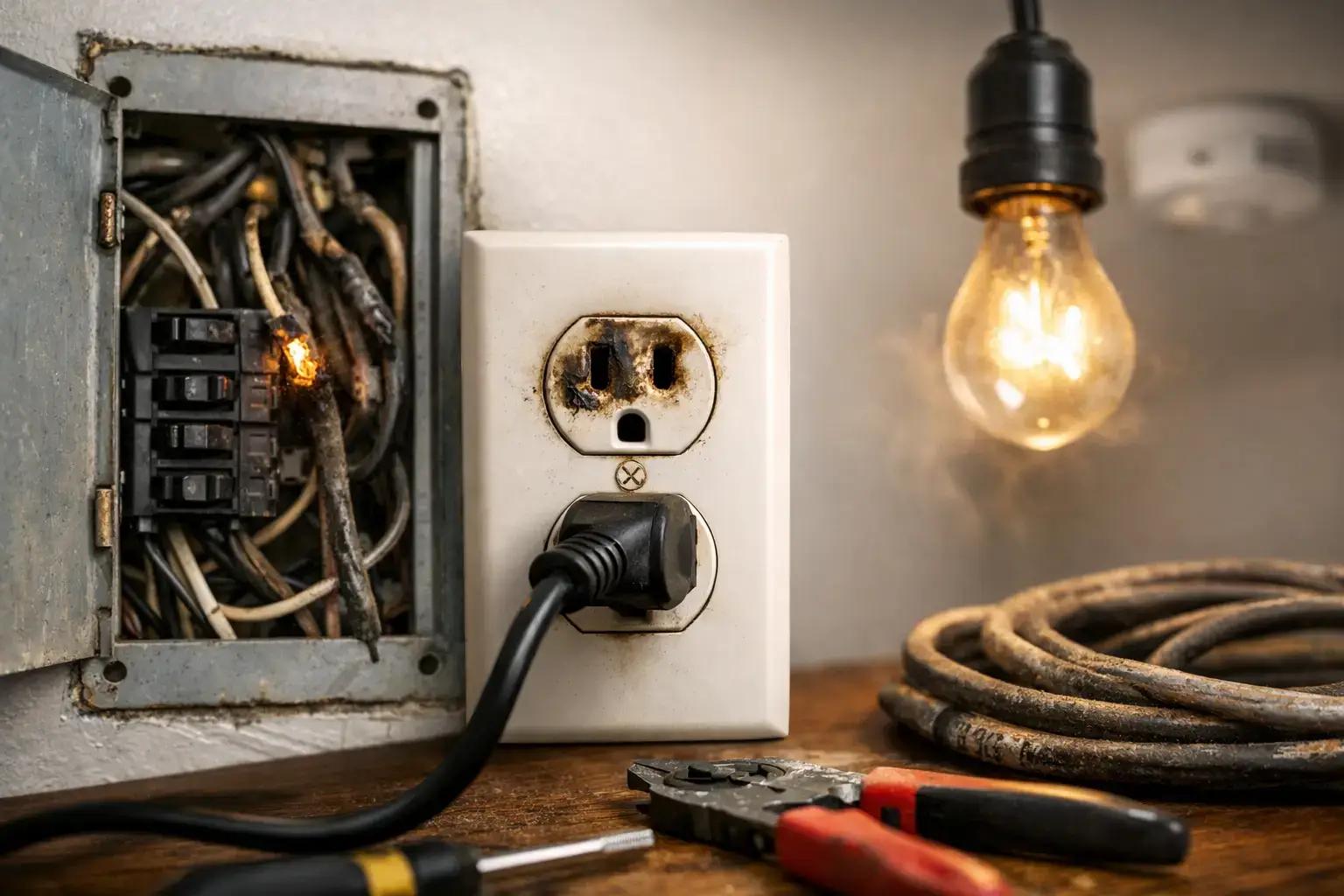
You usually notice the signs your house needs rewiring at the worst possible time – when the lights start flickering during dinner, a breaker trips in the middle of work, or you catch that faint burning smell and wonder if it is serious. In many homes, electrical problems build slowly. What starts as a minor annoyance can point to ageing wiring, overloaded circuits, or a system that no longer suits the way the property is used.
Rewiring is not a small job, so it makes sense to want clear reasons before moving ahead. The good news is that many warning signs are easy to spot once you know what to look for. The key is not to ignore them or put them in the too-hard basket. Electrical issues are about more than convenience – they are about safety, compliance, and protecting your home or business from avoidable risk.
Common signs a house needs rewiring
Some properties show one obvious warning sign. Others show a pattern of smaller issues that together point to the same problem. If you are seeing several of the following at once, it is worth arranging a professional inspection.
Circuit breakers trip often
A switchboard is designed to protect your property by cutting power when a circuit is overloaded or unsafe. If your breakers trip every now and then after plugging in a high-demand appliance, that may simply mean the circuit is doing its job. If it happens regularly, though, the issue may be deeper.
Frequent tripping can suggest deteriorating wiring, overloaded circuits, or a system that was never designed for modern electrical demand. Homes now run air conditioning, larger televisions, kitchen appliances, chargers, home office equipment, and sometimes EV chargers as well. Older wiring often struggles to keep up.
Lights flicker or dim without a clear reason
A single flickering globe can be as simple as a loose bulb. If multiple lights flicker, dim when appliances switch on, or vary in brightness around the property, that is different. It can indicate loose connections, poor load distribution, or failing wiring behind the walls.
This is one of those issues where context matters. In some cases, the fault is localised to one fitting or one circuit. In others, it points to a broader wiring problem that should be investigated before it gets worse.
Power points feel warm or look damaged
Power points and light switches should not feel hot to the touch. Warmth, scorch marks, crackling sounds, or discolouration around fittings can indicate current is not flowing as it should. That might be due to loose wiring, internal damage, or ageing components.
Sometimes people assume replacing the faceplate solves the problem. It rarely does if the issue is in the wiring behind it. Surface damage is often a symptom, not the cause.
You smell burning or notice buzzing sounds
A faint burning smell with no clear source should never be ignored, especially if it appears near outlets, switchboards, or appliances. The same goes for buzzing sounds coming from switches, lights, or the meter box. Electricity should be quiet and controlled. Smells and noises can mean overheating, arcing, or damaged connections.
If this happens, the safest move is to stop using the affected circuit if possible and call a licensed electrician promptly. Waiting to see if it goes away is not a sensible gamble.
There are not enough power points
This one seems less dramatic, but it matters. If a home relies heavily on double adaptors, power boards, and extension leads, the wiring layout may no longer suit the property. That often happens in older homes built well before current appliance loads and living habits.
A lack of outlets does not always mean the whole property needs rewiring. Sometimes targeted upgrades are enough. But when combined with other issues, it can be a sign the electrical system is outdated overall.
Older homes and hidden electrical risks
Age alone does not automatically mean a property needs a full rewire. Some older homes have had partial upgrades over the years and remain serviceable. Others still have original wiring that falls short of current safety expectations.
The home was built decades ago and never properly upgraded
If your property is more than 30 or 40 years old and has never had major electrical work, it is worth taking a closer look. Wiring insulation can degrade over time. Older cable types may become brittle, unsafe, or non-compliant by modern standards.
Many older homes were also designed for fewer circuits and lower load demand. Even if the wiring has not visibly failed, it may be under strain every day.
You still have old-style fuses or an outdated switchboard
An older fuse board is one of the stronger signs a house needs rewiring or at least a broader electrical upgrade. Ceramic fuses and ageing switchboards are often found in properties that have not kept pace with current safety requirements.
In some homes, the switchboard is the immediate problem and the wiring is still partly usable. In others, the outdated board is just the visible part of a much larger issue. A proper inspection will determine whether a switchboard upgrade, a partial rewire, or a full rewire is the right path.
Wiring has been patched together over time
Properties that have gone through multiple renovations, DIY additions, or piecemeal repairs can end up with a mix of old and new wiring. That creates inconsistency across circuits and can make fault-finding harder. It can also leave weak points hidden in ceilings, walls, and under floors.
A home does not need to be very old for this to happen. Even newer properties can develop wiring problems if previous work was rushed, poorly planned, or completed by someone unqualified.
When rewiring becomes more than a maintenance issue
Sometimes rewiring is triggered by obvious faults. Other times, it becomes necessary because the property is changing.
If you are renovating, adding air conditioning, installing security systems, fitting new lighting, or planning an EV charger, the existing wiring may need upgrading to safely support the new load. This is especially relevant for homeowners and property managers trying to future-proof a property rather than simply patching one problem at a time.
For businesses, electrical reliability is just as important. An office, shop, warehouse, or mixed-use premises that experiences repeated faults can lose productivity, interrupt service, and create unnecessary risk for staff and customers. Rewiring may sound disruptive, but ongoing faults usually create more disruption in the long run.
What an electrician will check
A licensed electrician will not recommend rewiring based on guesswork. The right approach is to inspect the switchboard, test circuits, assess cable condition where accessible, review safety protection, and understand how the property is currently used.
That matters because rewiring is not always all or nothing. Some properties need a complete rewire. Others benefit from a staged upgrade, such as replacing the most vulnerable circuits first, upgrading the switchboard, or adding dedicated circuits for high-demand appliances.
Good advice should be clear and practical. You should know what the issue is, why it matters, and what options are available before any work begins.
Should you wait or act now?
If the issue is purely about convenience, people often wait. But if you are dealing with tripping circuits, heat, smells, buzzing, visible damage, or an obviously outdated electrical setup, delaying the decision can increase both risk and eventual cost.
Electrical faults rarely improve on their own. A small repair today can prevent emergency call-outs, property damage, or more extensive work later. That is why early inspection matters. It gives you a clear picture before the problem forces your hand.
For homeowners, the value is peace of mind. For property managers, it is risk reduction and easier compliance planning. For business operators, it is operational reliability. Whatever the setting, safe wiring is not a luxury upgrade – it is part of keeping the property fit for purpose.
If you have noticed more than one of these warning signs, it is time to have the system checked by a licensed electrician. At Voltricity, that means practical advice, transparent recommendations, and workmanship focused on getting the job done safely and properly the first time.
A home or workplace should feel dependable when you flick a switch, charge a device, or power up for the day. If your electrical system no longer gives you that confidence, trust that instinct and get it looked at before a warning sign turns into a real hazard.