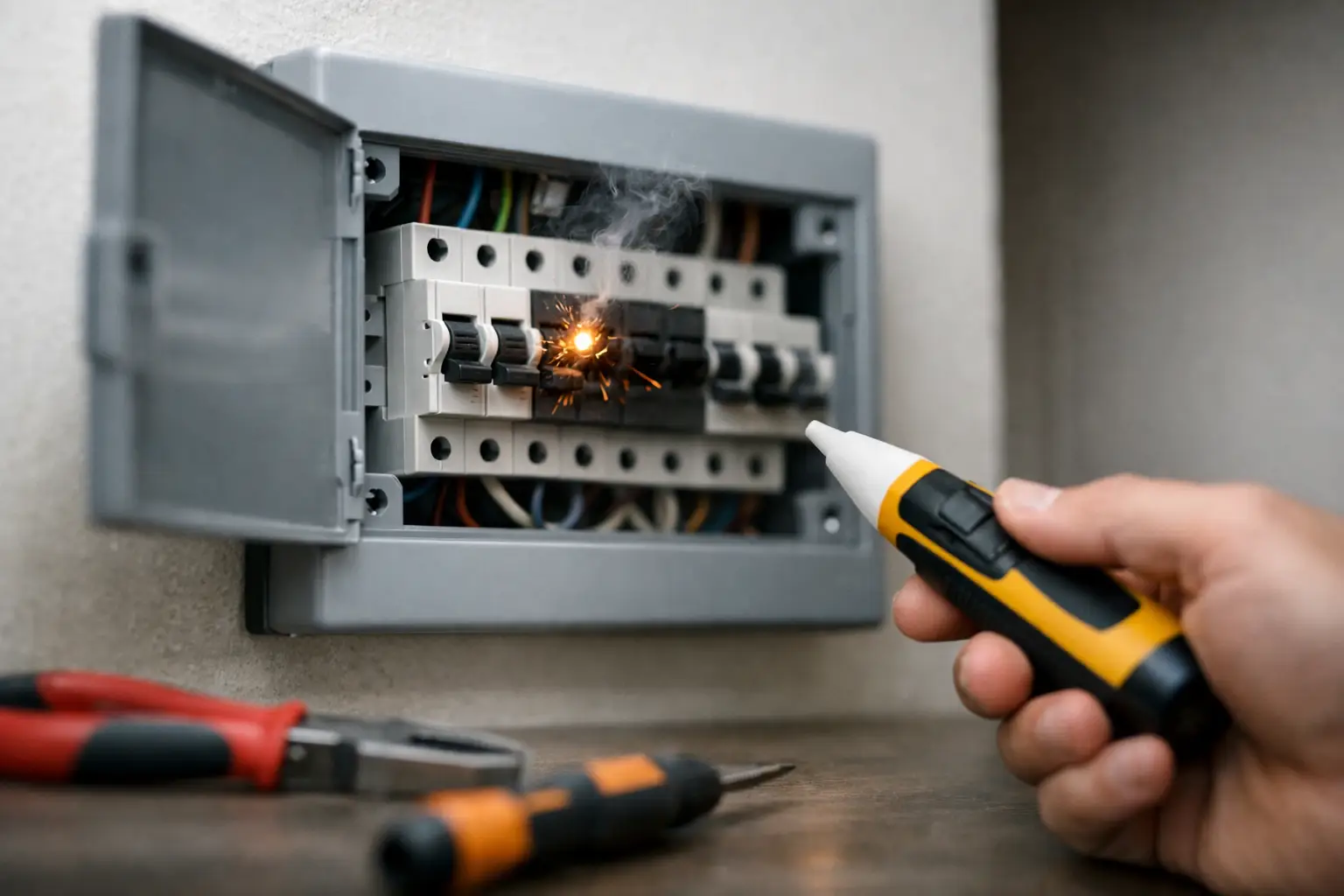
A faint hum from an older switchboard may be noticeable only when the house is quiet. A buzzing sound that is new, getting louder or coming with heat, flickering lights or a burning smell is different. If you have searched why does fuse box buzz, treat it as a prompt to check the situation safely, not a problem to ignore.
In Australian properties, people often say “fuse box” even when the unit contains circuit breakers and safety switches. Whether it is an older fuse board or a modern switchboard, electrical buzzing can range from a relatively minor vibration to a sign of a loose connection or overloaded circuit. The cause needs to be identified by a licenced electrician.
Why does a fuse box buzz?
Electricity can make components vibrate. Under normal conditions, a very soft hum from some equipment may be present, particularly around metering equipment, transformers or certain circuit breakers. It should not be loud enough to hear clearly from across the room, and it should not be accompanied by other warning signs.
A distinct buzz usually means something inside or connected to the switchboard is under strain, loose or starting to fail. The sound may occur continuously, only when a high-demand appliance runs, or after a recent electrical change such as an air conditioner, oven, EV charger or new lighting installation.
The timing matters. If the buzzing begins whenever a particular appliance is switched on, that appliance or the circuit supplying it may be drawing more current than the circuit can safely handle. If it continues even when most loads are off, the issue may sit within the switchboard, meter enclosure or incoming supply and requires prompt professional assessment.
Common causes of a buzzing switchboard
Loose or deteriorated connections
Loose terminals are one of the more serious causes of buzzing. A connection that is not secure can create resistance, heat and tiny electrical arcs. This may produce a buzzing or crackling noise, and can worsen as current passes through the circuit.
Older homes, properties with previous alterations, and boards exposed to heat, moisture or pests can be more vulnerable. A loose connection cannot be diagnosed safely by looking through the board or tightening screws yourself. Switchboards contain live parts, even when individual circuits have been switched off.
An overloaded circuit
A circuit can buzz when it is being asked to carry more than it was designed for. This is common in kitchens, workshops, offices and older homes where modern electrical demand has grown without a corresponding switchboard upgrade.
Portable heaters, dryers, kettles, induction cooktops, air conditioners and power tools can add substantial load. EV charging also needs careful circuit design. The issue is not simply that you are using several appliances at once. It is whether the circuit capacity, cable size, protective devices and connections are suitable for that load.
Repeated tripping, warm power points, dimming lights or a breaker that buzzes when a particular appliance runs are clear reasons to book an electrician.
A failing circuit breaker or safety switch
Circuit breakers and safety switches are designed to protect people and property. Like any electrical component, they can deteriorate over time or become damaged by heat, faults or age. Internal parts may vibrate, producing a hum or buzz.
A faulty protective device should be replaced with the correct rated component after the circuit has been tested. Replacing a breaker without finding out why it failed can leave the underlying problem unresolved.
Older ceramic fuses and outdated switchboards
Many older Australian homes still have ceramic fuses, timber-backed boards or switchboards that were not designed for current household demand. These installations may lack modern safety switches, have limited circuit separation, or show wear around fuse carriers and wiring terminations.
Buzzing alone does not automatically mean a full upgrade is required. However, it can be one sign that an older board needs a condition assessment. A modern switchboard upgrade can improve protection, create capacity for future additions and make faults easier to isolate. The right scope depends on the property’s wiring, load requirements and the condition of the existing installation.
Metering equipment or a supply-side issue
Sometimes the noise is not coming from the switchboard itself. A meter, service fuse enclosure or nearby transformer may hum. If the sound appears to come from sealed metering equipment or the incoming supply, do not interfere with it.
An electrician can determine whether the concern is within your installation or needs to be referred to the relevant electricity distributor. This distinction matters, particularly for commercial sites where a supply issue may affect operations, refrigeration, IT equipment or security systems.
Moisture, pests or physical damage
Water ingress, corrosion, insect activity and rodent damage can all affect electrical connections. Outdoor switchboards, boards in garages, and equipment near bathrooms, laundries or poorly sealed service areas deserve extra attention.
If there has been a leak, storm damage or flooding near the switchboard, avoid touching the area. Arrange an urgent inspection. Water and electrical equipment are never a safe combination.
Warning signs that need urgent action
A buzzing switchboard deserves prompt attention. Some signs raise the urgency considerably. If you notice any of the following, switch off power only if it is safe to do so and arrange an urgent licenced electrical inspection:
- a burning, fishy or melting-plastic smell
- smoke, scorch marks, sparking or visible arcing
- a hot switchboard cover, breaker or fuse carrier
- loud buzzing, crackling or a sound that suddenly worsens
- flickering lights, repeated breaker trips or power points that feel warm
- water near the switchboard or signs of fire damage.
If there is smoke, fire, or an immediate risk to people or property, move clear of the area and call 000. Do not open the switchboard, remove fuses or attempt a repair.
What you can do safely before the electrician arrives
Start by keeping people away from the switchboard, especially children, tenants and staff. Do not remove the cover or place your hand on the board to locate the noise. Even a board that appears switched off may contain live incoming conductors.
If there is no smoke, heat or burning smell, make a note of when the buzzing occurs. Does it start when the oven, air conditioner, pump, workshop machinery or EV charger runs? Are lights flickering in one area of the property? This information can help the electrician narrow down the fault more efficiently.
You may switch off and unplug non-essential appliances that were running when the noise began, provided the outlets and leads are undamaged and safe to access. Avoid repeatedly resetting a tripping breaker or replacing a fuse. A protective device that trips is responding to a fault, overload or other abnormal condition.
For a business, consider the practical impact before isolating equipment. Critical systems such as refrigeration, alarms, access control, servers and medical equipment may need a planned response. A licenced electrician can help identify a safe path that protects both people and operations.
How an electrician finds the cause
A proper assessment goes beyond listening to the sound. A licenced electrician will inspect the switchboard condition, test circuits and protective devices, check load demand, and look for heat damage, loose terminations or signs of moisture and deterioration.
Where appropriate, thermal testing can help identify hotspots that are not obvious from the outside. The electrician may also test appliances and circuits individually to establish whether the buzz is linked to a particular load. For properties adding an EV charger, larger air conditioning system or new commercial equipment, a load assessment can confirm whether the existing supply and switchboard are suitable.
The repair may be as targeted as securing a connection or replacing a faulty breaker. In other cases, the safest solution is a switchboard upgrade, circuit upgrade or corrective work to damaged wiring. Clear advice should explain what has been found, why it matters and what work is required before any major work proceeds.
Preventing switchboard problems later
Electrical systems rarely stay static. Renovations, additional appliances, home offices, solar equipment, security systems and EV chargers all increase the demands placed on a property. Periodic electrical maintenance is particularly worthwhile for older homes, rental properties, strata sites, workshops and commercial premises.
Keep the switchboard accessible, dry and free from stored items. Label circuits accurately after any electrical work, and arrange an inspection when adding high-load equipment rather than relying on power boards or extension leads. Small changes made early can prevent a larger fault later.
A buzzing fuse box is not something to live with or diagnose by trial and error. A timely inspection from a licenced electrician gives you a clear answer, protects your property and helps keep the power you rely on safe and dependable.