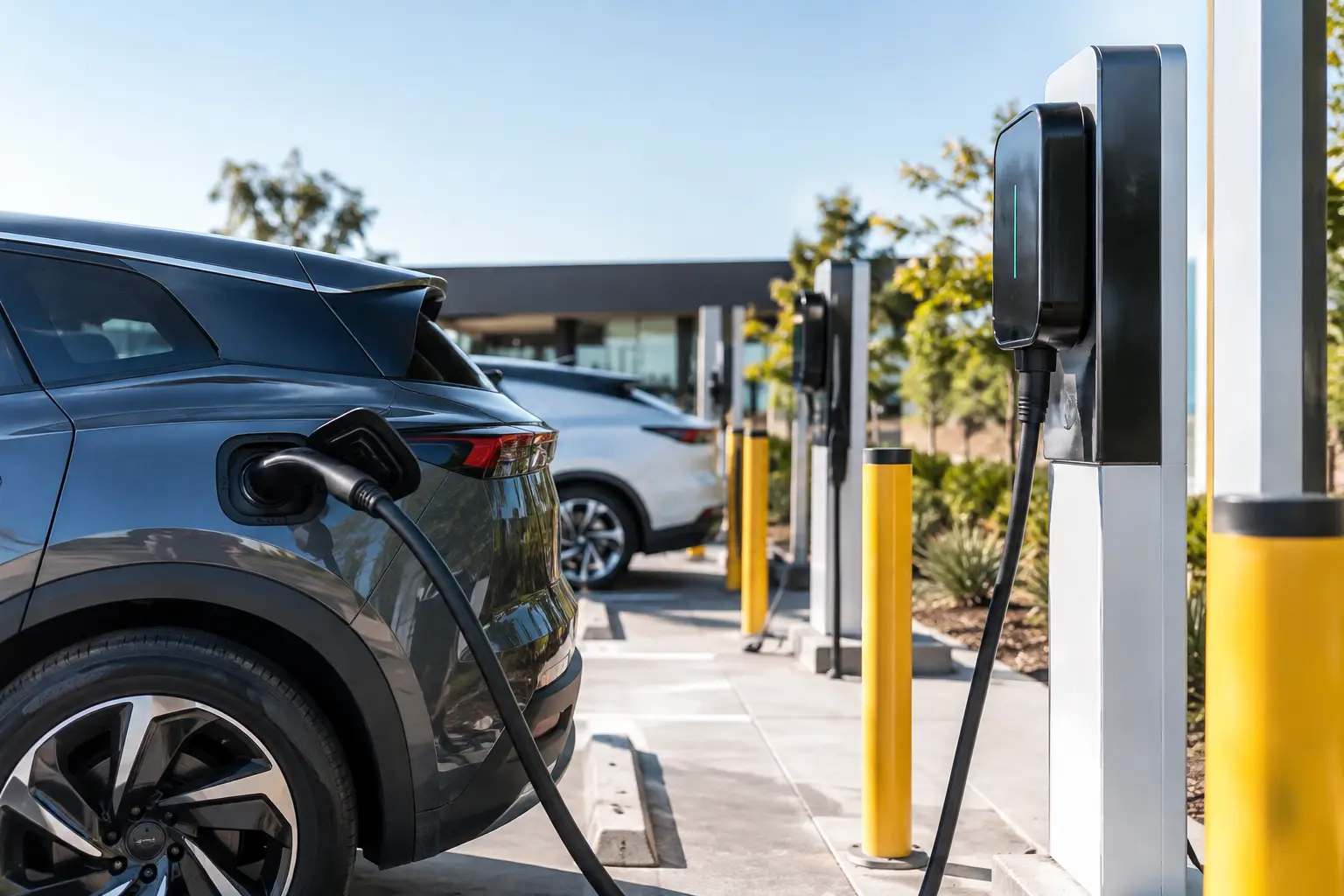
A car park with EV charging is quickly becoming a practical asset, not a future promise. Commercial EV charging trends are changing how Australian workplaces, strata properties, retail sites and fleet operators plan their electrical infrastructure. The best outcomes do not come from simply mounting chargers on a wall. They come from understanding daily demand, available electrical capacity, site safety and how the system can grow over time.
For property managers and business owners, the key question is not whether EV charging will be needed. It is how to install it without creating avoidable costs, pressure on the switchboard or frustration for drivers. A properly planned installation protects the property, supports users and gives your site room to adapt.
Commercial EV Charging Trends Shaping Australian Properties
Workplace charging is becoming an employee benefit
Businesses are increasingly installing EV chargers for staff rather than treating charging as a public amenity. For employees who drive to work and remain on site for several hours, slower AC charging is often a sensible and cost-effective fit. It gives vehicles enough time to recharge without the higher equipment and electrical supply requirements associated with rapid DC charging.
This shift is especially relevant for offices, warehouses, medical centres and industrial sites with consistent parking patterns. It can support staff retention, demonstrate a practical commitment to lower-emissions transport and make a workplace more appealing to future employees. The right number of chargers depends on staff numbers, parking allocation and likely EV uptake, not just the number of bays available.
Load management is replacing oversized electrical upgrades
One of the most useful commercial EV charging trends is smarter load management. Rather than assuming every charger will operate at full output at the same time, a managed system monitors site demand and adjusts charging output to stay within safe limits.
This may allow a business to install multiple chargers while avoiding an immediate, expensive supply upgrade. If the building’s air conditioning, machinery or kitchen equipment creates high peak demand, the chargers can reduce output temporarily and increase it again when demand falls. This approach needs careful design by a licensed electrician, because it relies on accurate assessment of the existing switchboard, supply capacity and site loads.
Load management is not a shortcut around electrical safety or inadequate infrastructure. In some older buildings, a switchboard upgrade or additional capacity will still be necessary. It is, however, a practical way to make better use of the power already available.
Fleet charging is becoming more planned and less ad hoc
Electric utes, vans and passenger vehicles are entering business fleets across service, delivery, maintenance and local government operations. Fleet charging has different priorities from general workplace charging. Vehicles may need to be ready by a set departure time, return at varying hours and travel different distances each day.
A useful fleet charging design starts with operational data: vehicle battery size, kilometres travelled, overnight dwell time, route schedules and future fleet replacement plans. Installing the fastest charger available is not always the answer. Overnight charging may meet operational needs at a lower cost, while selected higher-output chargers can be reserved for vehicles with shorter turnaround times.
Charging access and payment are being built into site management
Shared commercial chargers need clear rules. Businesses and strata managers are looking for systems that can identify users, restrict access, track energy use and apply charging fees where appropriate. This is particularly helpful where staff, tenants, visitors and fleet vehicles use the same car park.
Access control can prevent unauthorised use, while usage reporting makes it easier to manage costs fairly. For strata and multi-tenant sites, this visibility can help separate charging costs from common-area electricity. The technology should suit the way the property operates. A small staff car park may only require straightforward access controls, while a mixed-use development may need more detailed billing and reporting.
What These Trends Mean for Your Electrical Infrastructure
Commercial charging equipment is only one part of the project. The electrical infrastructure behind it determines whether the installation will remain safe, reliable and practical as demand grows.
Start with the switchboard and available capacity
Before selecting chargers, your electrician should assess the incoming supply, main switchboard, distribution boards, protective devices and existing electrical loads. Older commercial properties may have limited spare capacity, ageing equipment or documentation that no longer reflects the current installation.
This assessment identifies whether the site can support chargers now, whether load management is appropriate, or whether upgrades should be completed first. It also helps determine cable routes, parking-bay locations and the protection required for the equipment. Skipping this stage can lead to unexpected variation costs and a system that cannot expand easily.
Plan for future chargers while completing today’s work
A staged installation is often the most sensible option. A business may begin with two or four active chargers, while allowing space in the switchboard, conduit routes and cable containment for more units later. Doing this groundwork during the initial project is generally less disruptive than reopening walls, trenches or car park surfaces after demand increases.
Future-ready planning does not mean paying for equipment you do not need. It means making informed allowances where they offer long-term value. The right approach depends on the property type, lease arrangements, expected vehicle turnover and the life of the building’s electrical assets.
Consider location, weather and everyday use
Charger placement affects safety and convenience. Drivers need easy access without cables becoming trip hazards or crossing traffic paths. Outdoor installations need equipment and enclosures suited to the environment, along with suitable protection from vehicle impact where required.
For workplaces, clear bay markings and signage help prevent charging spaces from becoming general parking. At strata sites, the arrangement also needs to account for resident access, visitor spaces and the practicalities of body corporate approval. Good planning reduces disputes before they begin.
Choosing the Right Commercial Charging Approach
There is no single charger type that suits every business. AC chargers are commonly well suited to workplace and overnight fleet use because they offer dependable charging across longer parking periods. DC fast charging can be valuable for customer-facing locations, high-utilisation fleets or sites where vehicles need rapid turnaround, but it usually requires greater electrical capacity and a higher upfront investment.
A commercial charging project should also consider equipment compatibility, communications capability, warranty support, maintenance access and compliance with applicable Australian electrical requirements. The cheapest charger is not necessarily the best value if it does not suit the site, cannot be managed effectively or leaves little support when a fault occurs.
Reliable installation matters just as much as charger selection. A licensed electrician can coordinate the electrical design, switchboard works, cable installation, testing and commissioning so the system is ready for safe day-to-day use. For larger sites, clear documentation and a planned maintenance approach will make future servicing and expansion simpler.
A Practical Next Step for Property Owners
If EV charging is on your property plan, begin with a site assessment before committing to equipment or promising charging access to staff and tenants. Voltricity can assess your existing electrical infrastructure, explain the practical options and provide a clear path for safe installation or staged upgrades.
The most useful charging system is the one that works reliably on a busy Monday morning, fits the way your people use the property and leaves your electrical infrastructure in better shape for what comes next.