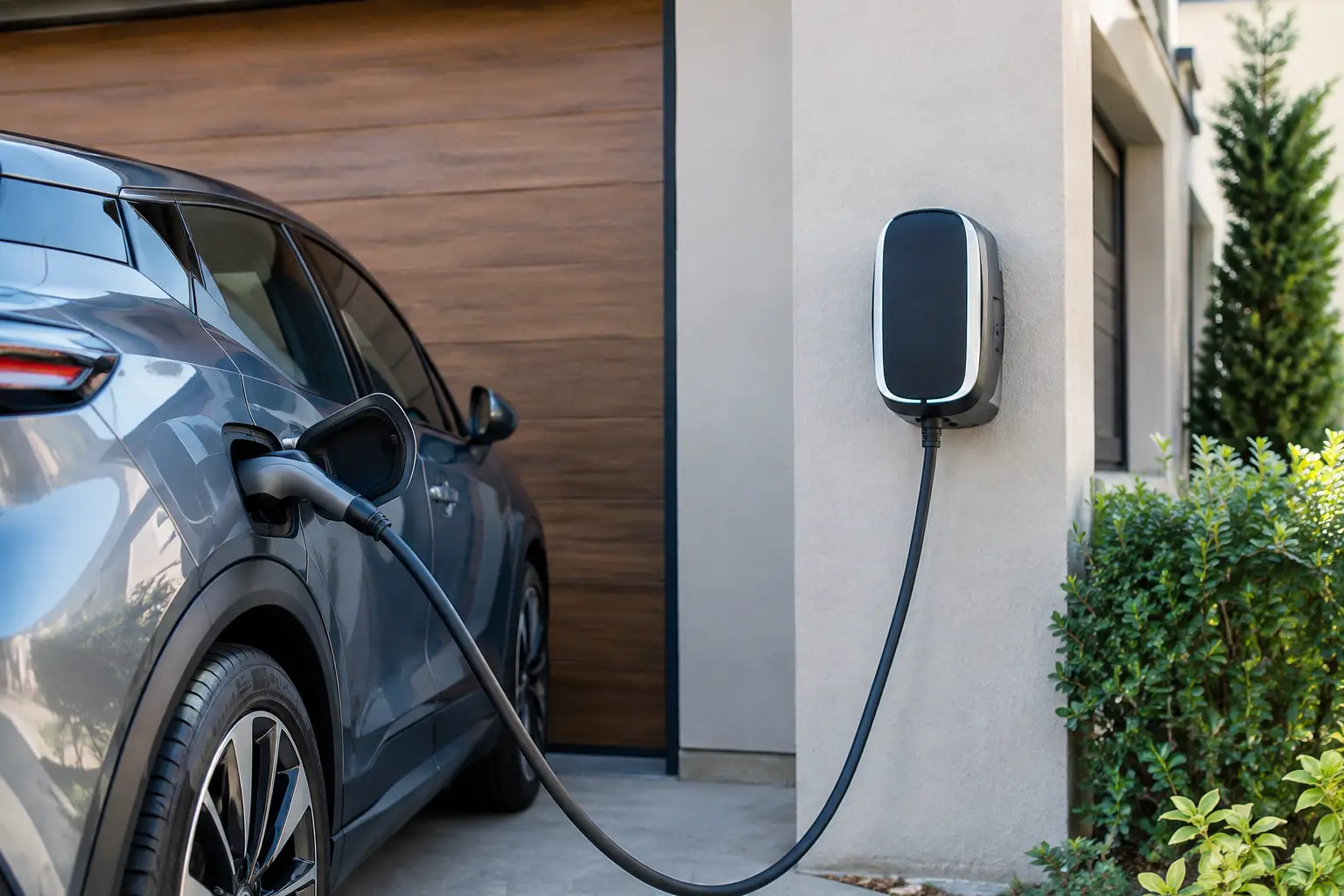
Your EV charger should make arriving home easier, not create a daily parking puzzle. The best EV charger placement is usually close to where the vehicle naturally parks, protected from avoidable damage and planned around the property’s existing electrical capacity. Get the location right before installation and you can reduce cable clutter, protect your investment and make charging feel like part of the routine.
For homes, that often means a garage or carport wall. For businesses, it may mean a dedicated parking bay that is visible, accessible and practical for more than one type of vehicle. The right answer depends on your parking habits, building layout, switchboard location and plans for the future.
Start with how the vehicle actually parks
The first question is simple: where does the EV stop most nights or during the working day? A charger placed beside the usual parking position is more useful than one selected purely because it is closest to the switchboard.
Think about which side of the vehicle the charge port is on and how different vehicles may use the space. Charge ports are commonly located at the rear or front, and on either side depending on the model. A well-positioned charger allows the cable to reach comfortably without being stretched across a driveway, walkway or access route.
Avoid relying on an extension lead or regularly trailing a charging cable across areas where people walk. Besides being inconvenient, this creates a trip hazard and exposes the cable to unnecessary wear. A dedicated charger with the correct cable reach gives you a safer, tidier arrangement.
If two cars share a garage or driveway, allow for the way drivers enter, reverse and open doors. The charger should not interfere with access to storage, bins, internal doors or the path from the car to the house. A few minutes spent observing the usual parking routine can prevent a frustrating installation choice.
Best EV charger placement at home
A garage is often the preferred location because it protects the charger, cable and vehicle connection from harsh weather. It can also provide better security and a clean wall-mounted installation. The ideal wall is normally beside or slightly ahead of the vehicle’s parking position, at a practical height specified by the equipment manufacturer and installation requirements.
Garages and carports
In a garage, choose a wall that is unlikely to be blocked by shelving, sporting equipment or a future workbench. Keep the charger clear of areas where it may be struck by a car door, bicycle or stored items. If parking is tight, protective bollards or wheel stops may be worth considering.
A carport can be equally convenient, particularly where the house has no enclosed garage. Select a location with suitable weather protection and avoid placing the charger where roof runoff will continually fall on it. Chargers designed for outdoor use can handle Australian conditions when correctly installed, but less exposure to direct sun, heavy rain and wind-driven debris generally supports a longer service life.
Driveways and external walls
An external wall may be the best option where vehicles park on a driveway. This can work well when the charger is within your boundary and the cable reaches the car without crossing a footpath or shared accessway.
Consider security before choosing an exposed position. A charger near the front of the property may be easy to access, but it can also be more visible from the street. Good exterior lighting, camera coverage and access controls can provide peace of mind. The installation should also be positioned to minimise the risk of accidental impact from vehicles.
For homes with a long driveway, a charger closer to the parking area may require additional cabling and trenching. That can increase the upfront cost, yet it may be the better long-term decision if it removes the need to park in an awkward spot every day.
Plan around the electrical supply, not just the wall
The nearest wall is not always the most economical or technically suitable location. Your electrician needs to assess the distance to the switchboard, cable route, available capacity and the condition of the existing electrical system.
Longer cable runs can involve more labour, materials, wall or ceiling access, and possibly underground conduit. They may still be worthwhile for a safer and more convenient charging location. A transparent quote should explain the practical trade-off between a straightforward install near the switchboard and a more tailored location near the vehicle.
Older homes may also need a switchboard upgrade or dedicated protection before an EV charger can be installed. Modern chargers draw a significant, sustained electrical load, so the property’s supply must be assessed alongside other major appliances such as air conditioning, electric hot water, ovens, pool pumps and induction cooktops.
Load management can be a practical option where supply capacity is limited. It allows charging to adjust when household demand is high, helping avoid unnecessary upgrades in some situations. Whether it suits your home depends on the charger, electrical supply and how the property uses power.
Keep safety, access and weather in view
EV charging equipment must be installed by a licensed electrician and comply with applicable Australian electrical standards, manufacturer instructions and local requirements. This is not a job for a standard power point, improvised wiring or a DIY installation.
Placement should provide clear access to the charger controls and isolating equipment where required. It should not obstruct doors, emergency exits or service areas, and it should be protected from likely damage. In a garage, that may mean keeping it away from the path of a reversing vehicle. In a commercial car park, it may mean using bollards, kerbs or a purpose-built mounting post.
Outdoor chargers need appropriate equipment ratings and installation methods for the environment. Direct western sun, coastal salt air, flooding risk and garden irrigation can all influence the best location. A charger may be rated for external use, but careful positioning remains worthwhile. Shade, a canopy or a more sheltered wall can reduce exposure without making the charger difficult to reach.
Consider who will use the charger
For a single household, convenience usually takes priority. For rental properties, strata sites or workplaces, user access and clear responsibility become more significant.
At an apartment building or managed property, charger placement may affect common property, fire safety considerations, metering arrangements and future access for other residents. Early planning is far easier than trying to retrofit several chargers after the first installation has set an unsuitable precedent.
For businesses, a charger should sit in a bay that is easy to find without disrupting customer parking, deliveries or accessible parking requirements. Staff-only charging may suit a secured rear car park, while customer charging may be more effective near an entrance or reception area. In either case, clear line marking and signage help prevent petrol vehicles from blocking the bay.
Where multiple chargers are planned, consider vehicle circulation and cable reach across every bay. Chargers should not force drivers to reverse awkwardly or leave cables in traffic paths. Networked charging and load management can also help a site expand without immediately overloading its supply.
Allow for the next vehicle, not only this one
A charger installation is property infrastructure. Even if you have one EV today, the next car may have its charge port on the opposite side, a larger battery or different charging capability. A slightly more flexible charger position can save changes later.
It is also wise to think about future additions. If a household expects a second EV, ask whether conduit, cable capacity or switchboard space can be allowed for now. For commercial properties, installing suitable pathways during a car park upgrade or renovation can be considerably more cost-effective than opening finished surfaces later.
You do not need to overspend on capacity you will never use. The goal is a sensible plan based on likely needs, not a one-size-fits-all installation.
A site assessment turns a good idea into a safe installation
Before selecting a charger or committing to a location, walk through the site with a licensed electrician. They can check parking positions, cable routes, switchboard capacity, protection requirements, weather exposure and the practical details that are easy to miss from a product brochure.
Voltricity approaches EV charger placement as part of the wider electrical system, so the finished installation is designed around safe operation and everyday convenience. The best location is the one that suits your vehicle, protects the equipment and works properly for the way your property will be used years from now.