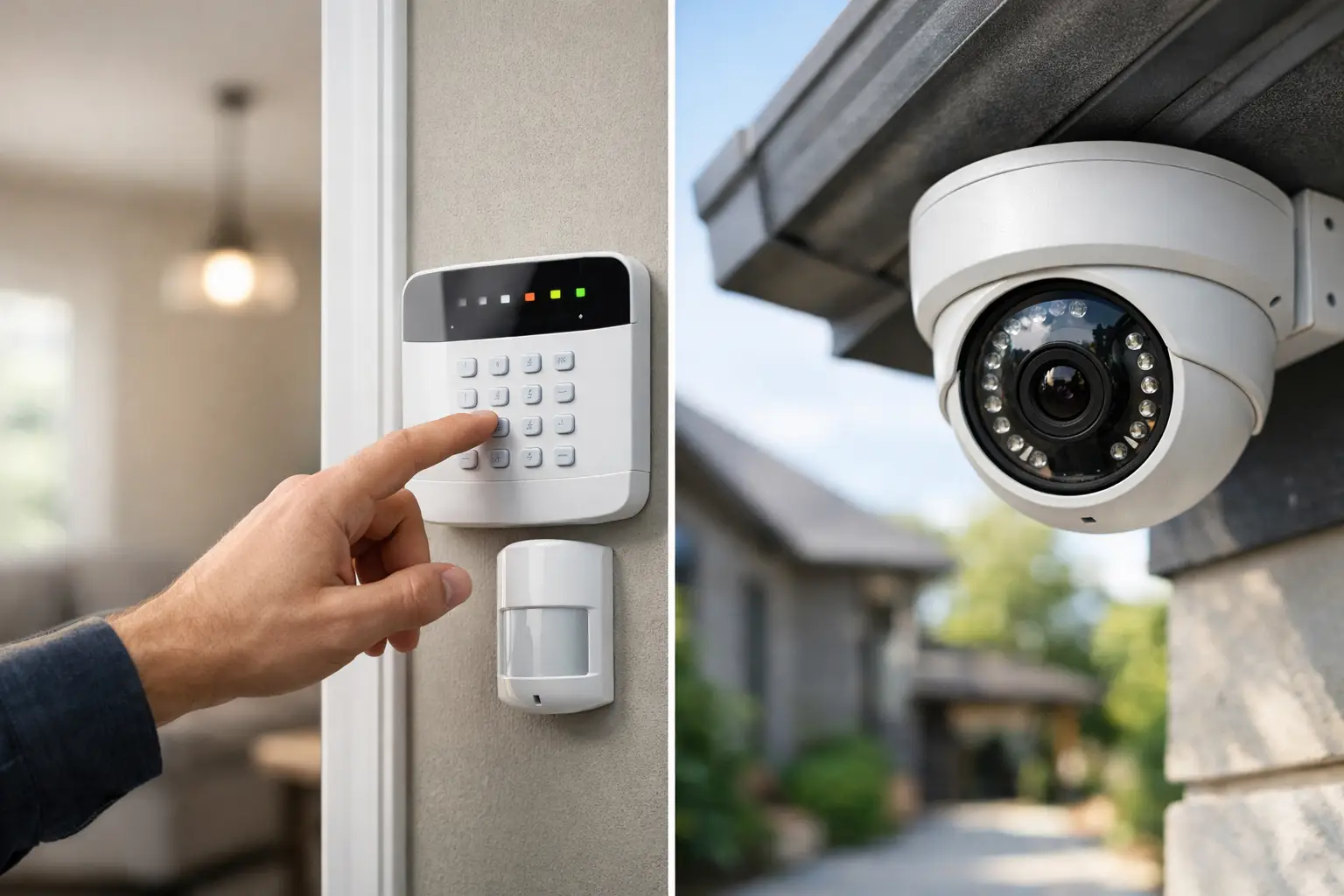
A locked front door is a good start, but it does not tell you what happened when someone tests it. When weighing up home alarm vs CCTV, the best choice comes down to the risk you want to manage: do you need an immediate warning, a clear record of activity, or both? For most homes and businesses, security works best when it is planned around the property rather than bought as a one-size-fits-all package.
An alarm system and CCTV solve different problems. An alarm is designed to detect unauthorised entry and raise the alarm quickly. Cameras give you visibility, help deter opportunistic behaviour and provide footage that may be useful after an incident. Understanding where each system performs well makes it far easier to invest with confidence.
Home alarm vs CCTV: the core difference
A home alarm system responds to a trigger. This might be a door or window opening, movement in a protected area, glass breakage, or an outdoor beam being crossed. Depending on the system, it can sound a siren, send an alert to your mobile, notify a monitoring provider, or do all three.
Its strongest advantage is speed. If someone forces entry while you are asleep, away, or operating a business after hours, an alarm creates an immediate disruption. A loud siren can encourage an intruder to leave quickly, while remote notifications let you decide whether to check cameras, contact a neighbour, or call the police.
CCTV, by contrast, watches and records. Modern cameras can cover entry points, driveways, car parks, reception areas, stock rooms and outdoor spaces. Many systems allow live viewing on a mobile, recording to local storage or the cloud, and motion alerts when activity is detected.
The value of CCTV is context. You can see whether an alert was caused by a delivery driver, a family member, an animal or a genuine security concern. If an incident occurs, recorded footage can help establish what happened, when it happened and who was involved.
Neither option is automatically better. An alarm is more active in the moment. CCTV is more informative before and after an event. A camera without a monitored alert may record a break-in without stopping it, while an alarm without cameras may trigger without telling you why.
When an alarm system is the better first step
For properties where fast notification matters most, an alarm is often the priority. This includes occupied homes, holiday homes left vacant for extended periods, small offices, retail premises and sites with tools or valuable stock.
A properly designed system protects the routes an intruder is most likely to use. Rather than placing sensors everywhere, a licensed installer can identify practical coverage for doors, accessible windows, hallways and key internal zones. This reduces unnecessary devices while helping ensure the system responds when it should.
Alarms are also a sensible choice if privacy is a major concern. Internal cameras can make some households, tenants or staff uncomfortable, particularly in shared spaces. Door contacts, motion sensors and perimeter detection can protect the property without constantly recording inside it.
There are trade-offs. An alarm cannot show you what caused the activation unless it is paired with cameras. It also needs thoughtful placement and setup to minimise false alarms. Pets, open windows, poorly positioned sensors and user error can all create nuisance notifications. Quality equipment, correct programming and a clear handover make a significant difference.
For a family home, features such as separate arming zones can be useful. You may want perimeter protection active overnight while allowing movement through bedrooms or living areas. For a business, different user codes can make it easier to track access and manage staff changes without sharing one general code.
Alarm monitoring: is it worth it?
Professional monitoring adds another layer of response. When the alarm is activated, a monitoring centre can follow an agreed procedure, such as contacting nominated keyholders or escalating the matter. This can be particularly valuable for business owners, property managers and people who travel regularly.
It is not essential for every property. Some owners are comfortable receiving app alerts and managing the response themselves. The right approach depends on how quickly you can attend the site, the level of risk, and whether there is someone reliable available after hours.
When CCTV offers greater value
CCTV is particularly effective where visibility is the main gap. A camera positioned at the front entry can show who approached the door. Driveway coverage can help monitor vehicles, deliveries and after-hours activity. Cameras around a commercial building can support safer access, oversee external areas and discourage trespassing.
Visible cameras can be a useful deterrent, especially when combined with clear signage and adequate outdoor lighting. Opportunistic offenders generally prefer properties that appear easy to access without being seen. Well-positioned cameras signal that the site is actively considered and protected.
For business operators, footage can also assist with non-break-in issues. It may help clarify delivery disputes, damage in a car park, unauthorised access, or incidents around entrances and common areas. Property managers may benefit from cameras in appropriate shared external locations, subject to privacy obligations and the needs of residents.
Camera quality matters more than many people expect. A low-resolution camera or poor lens placement may provide little useful detail when it is needed most. Strong backlighting, darkness, glare, weather exposure and the distance to a subject all affect what footage captures.
A professional CCTV design considers the purpose of each camera. Is it intended to identify a person at a front gate, observe general movement in a yard, read a number plate at a driveway, or cover a broad commercial area? One camera type and position will not suit every job.
Privacy and placement matter
CCTV should protect your property without unnecessarily recording your neighbours’ private spaces. Avoid aiming cameras into adjoining homes, bathrooms or areas where people reasonably expect privacy. For workplaces and strata environments, clear policies and appropriate signage are equally important.
Placement also determines whether cameras are useful at night. Infrared capability can help, but it is not a substitute for considered lighting. Outdoor lighting designed to reduce dark approaches and eliminate glare can improve both safety and image quality. This is one reason electrical and security planning often work well together.
Why a combined system is often the practical answer
For many Australian properties, the strongest setup combines alarms and CCTV. The alarm draws attention to a possible intrusion. Cameras let you verify the event remotely and preserve footage. Together, they remove much of the uncertainty that comes with relying on one system alone.
Imagine an after-hours alert at a small business. With an alarm only, you know a protected zone has been triggered but may not know whether it is an intruder or an accidental activation. With cameras linked to the property, you can view the relevant area before deciding how to respond. That can be reassuring and can help avoid unnecessary call-outs.
At home, a video doorbell or front camera may handle daily visibility, while an alarm protects entry points and internal areas when the property is vacant. Larger homes may benefit from cameras covering side access, sheds, gates and driveways, alongside alarm sensors at likely entry locations.
The combined approach does not need to be excessive. A well-planned system can start with the most vulnerable points and allow for future expansion. This is often more cost-effective than fitting equipment quickly, then discovering blind spots or compatibility issues later.
Choosing the right security setup for your property
Start by considering how the property is used. A family home with children and pets has different requirements from a warehouse, medical practice, rental property or retail shop. Think about when the site is empty, which areas are difficult to see from the street, what valuables need protection, and whether there have been previous incidents nearby.
Also consider the practical side of ownership. Who needs access to the system? Do you need mobile alerts? Is internet coverage reliable? Will cameras require recording retention for several days or several weeks? Do you want a system that can integrate with access control, lighting or future building upgrades?
Avoid selecting security equipment based on device count alone. More cameras do not always mean better coverage, and more sensors can create complexity without improving protection. The goal is clear coverage, reliable detection and an interface that you will actually use.
A site assessment by a licensed electrician and security professional can identify suitable camera heights, cable routes, power requirements, lighting improvements and sensible alarm zones. At Voltricity, the focus is on tailored installation, tidy workmanship and a security solution that suits how you live or operate.
The most useful security system is the one that gives you a clear response when something is wrong and confidence when everything is quiet. Whether you begin with an alarm, CCTV or an integrated setup, planning it around your real risks will protect your investment far better than choosing on price alone.