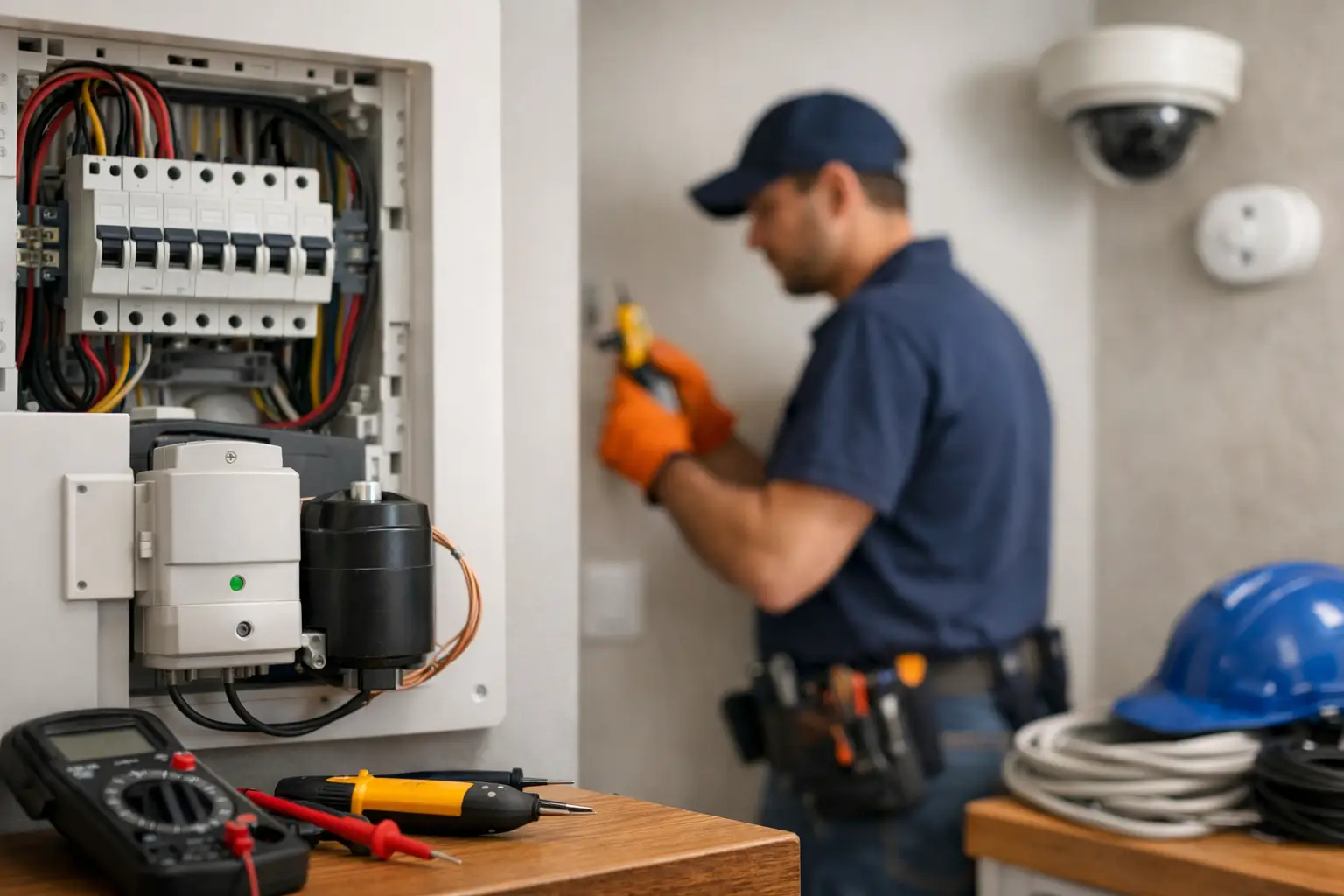
A flickering light, a power point that feels warm, or a switchboard that trips whenever the kettle and heater run together are not small inconveniences to ignore. The best electrical safety upgrades address these early warning signs before they become a costly outage, equipment damage or a serious electrical hazard.
For homeowners, property managers and business operators, electrical safety is not about fitting every new device available. It is about understanding how your property uses power, identifying weak points in the installation and investing in improvements that provide genuine protection. A licensed electrician can assess the condition of your system and recommend practical upgrades that suit your building, budget and future plans.
Start with an electrical safety assessment
The right upgrade depends on the age of the property, the condition of its wiring and the demands being placed on the system. An older home with original wiring has different priorities from a renovated commercial tenancy with multiple computers, refrigeration or security equipment.
A professional assessment gives you a clearer starting point. It can identify overloaded circuits, deteriorated cables, outdated protective devices, damaged outlets, inadequate earthing and signs that moisture has affected electrical equipment. For landlords and property managers, it can also help plan maintenance before an urgent call-out disrupts tenants.
Do not wait for repeated tripping or visible damage to arrange an inspection. Electrical faults are often hidden behind walls, ceilings and switchboard covers, where they cannot be safely assessed without the right training and test equipment.
1. Upgrade an outdated switchboard
A modern switchboard is often one of the most valuable electrical safety improvements for an established property. It manages how electricity is distributed around the building and houses the protective devices that respond when something goes wrong.
Older boards may contain ceramic fuses, limited circuit capacity or equipment that is no longer suitable for modern household and business loads. A switchboard upgrade can replace outdated components with circuit breakers and safety switches, improve labelling and create capacity for future additions such as air conditioning, solar, an EV charger or upgraded security systems.
The benefit is not simply convenience when a circuit trips. Correctly selected protective devices can isolate a fault more precisely, reducing the chance that a problem on one circuit affects the entire property. It also makes fault finding and future maintenance safer for your electrician.
A full switchboard replacement is not always necessary. In some cases, targeted improvements can be appropriate. The decision should follow an inspection, rather than relying on a one-size-fits-all recommendation.
2. Install or test safety switches
Safety switches, also called residual current devices or RCDs, are designed to quickly disconnect power when they detect an imbalance that may indicate current is flowing through an unintended path. This provides vital protection against electric shock.
Modern Australian properties commonly require RCD protection on relevant final subcircuits, but older installations may not have adequate coverage. A licensed electrician can check which circuits are protected and advise whether additional RCDs are needed for lighting, power points or appliances.
Safety switches are different from circuit breakers and fuses. A circuit breaker primarily protects wiring from overloads and short circuits. An RCD focuses on leakage current and personal protection. Both have an important role.
Test buttons should be used in accordance with the manufacturer’s instructions, but a successful button test does not replace professional inspection. If a safety switch will not reset, trips repeatedly or has no clear labelling, arrange an electrician promptly. Never hold it in the on position or keep resetting it until it stays on.
3. Replace damaged outlets, switches and wiring
Power points and switches are used every day, which makes visible wear easy to overlook. Cracked plates, loose fittings, discolouration, buzzing, tingling or heat around an outlet should be treated as a reason to stop using it and seek professional advice.
The wiring behind an outlet matters just as much. Older cable insulation can become brittle over time, particularly where heat, rodents, building movement or past DIY work have caused damage. Rewiring may sound disruptive, but it can be completed in stages during a renovation, before new wall linings are installed or as part of planned maintenance.
Properties with old wiring, limited outlets or frequent use of double adaptors deserve particular attention. Adding correctly installed power points in practical locations is safer and neater than relying on overloaded power boards and extension leads.
4. Add surge protection for sensitive equipment
Power surges can be caused by network events, storms, switching loads and faults within a property. They may not always cause immediate failure, but repeated smaller surges can shorten the working life of electronics.
Switchboard-mounted surge protection is worth considering where a property relies on computers, smart appliances, audiovisual equipment, security cameras, alarms, access control, refrigeration controls or EV charging equipment. It is particularly practical for businesses where equipment downtime can interrupt trading or compromise security.
Surge protection is not a substitute for sound wiring, correct earthing or a lightning protection strategy where one is required. It is one layer of defence. Your electrician can advise on the right approach based on the supply arrangement, equipment being protected and the property’s exposure.
5. Improve lighting in high-risk areas
Good lighting supports electrical safety as well as everyday security. Dim paths, poorly lit stairwells, garages and external entries increase the risk of trips and make it harder to notice hazards around the property.
LED lighting can provide bright, efficient illumination with lower energy use than older fittings. For outdoor areas, weather-rated fittings and correctly installed cabling are essential. Motion sensors and timers can improve visibility around driveways, entrances and side access points without leaving lights on unnecessarily through the night.
In commercial settings, emergency and exit lighting must be properly designed, installed and maintained for the building’s use. This is not an area for quick fixes. Regular testing and prompt replacement of failed components help ensure the system performs when it is needed.
6. Protect wet areas and outdoor circuits
Bathrooms, laundries, kitchens, pools, gardens and outdoor entertaining areas all bring water and electricity closer together. These zones require careful equipment selection, suitable placement and appropriate protection.
An electrician can assess whether existing fittings and outlets are suitable for their environment, particularly after a renovation or outdoor extension. This may involve replacing damaged exterior power points, installing weatherproof covers, correcting unsafe cabling or separating outdoor circuits at the switchboard.
Pool pumps, spa equipment and garden lighting deserve specialist attention. A cable that looks tidy on the surface may still be incorrectly installed or vulnerable to damage from garden tools, water or UV exposure. Having it checked is far safer than attempting a repair yourself.
7. Plan safely for higher electrical demand
Many electrical systems were not designed for the way properties operate now. Induction cooking, ducted air conditioning, home offices, large entertainment systems, electric gates and EV chargers can significantly increase demand.
Before adding major equipment, have the available capacity assessed. An EV charger, for example, may require a dedicated circuit, appropriate protection and consideration of the property’s existing load. The same principle applies to commercial equipment such as refrigeration, server racks or machinery.
Planning ahead can prevent nuisance tripping, overloaded circuits and expensive rework. It also means upgrades can be coordinated with renovations, solar installations or security improvements instead of being treated as separate jobs.
Signs your property should be checked soon
Arrange an electrical inspection if you notice any of the following:
- Safety switches or breakers trip repeatedly without an obvious cause.
- Lights flicker, dim or brighten when appliances are switched on.
- Power points, switches, plugs or electrical panels feel hot, smell burnt or show discolouration.
- You rely heavily on extension leads, adaptors or power boards to run everyday equipment.
- Your property has older wiring, ceramic fuses or a switchboard with unclear circuit labels.
If there is smoke, sparking, a burning smell or a person has received an electric shock, keep clear of the affected area where safe to do so and seek urgent assistance. Do not attempt to investigate live electrical equipment.
Choosing upgrades that will last
The best result comes from matching the work to the property rather than selecting upgrades by price alone. Ask for a clear explanation of what has been found, what work is recommended now and what can be planned for later. Quality components, compliant installation and clear documentation matter because electrical work is expected to perform safely long after the electrician has left.
Voltricity can help assess residential and commercial electrical systems, from switchboard and wiring upgrades to outdoor lighting, EV charging and integrated security requirements. Work carried out by licensed professionals gives you a safer foundation for the way you live, manage or operate your property.
A well-planned upgrade should leave you with more than new equipment. It should give you confidence that the power behind your walls, lights and essential systems is ready to do its job safely every day.