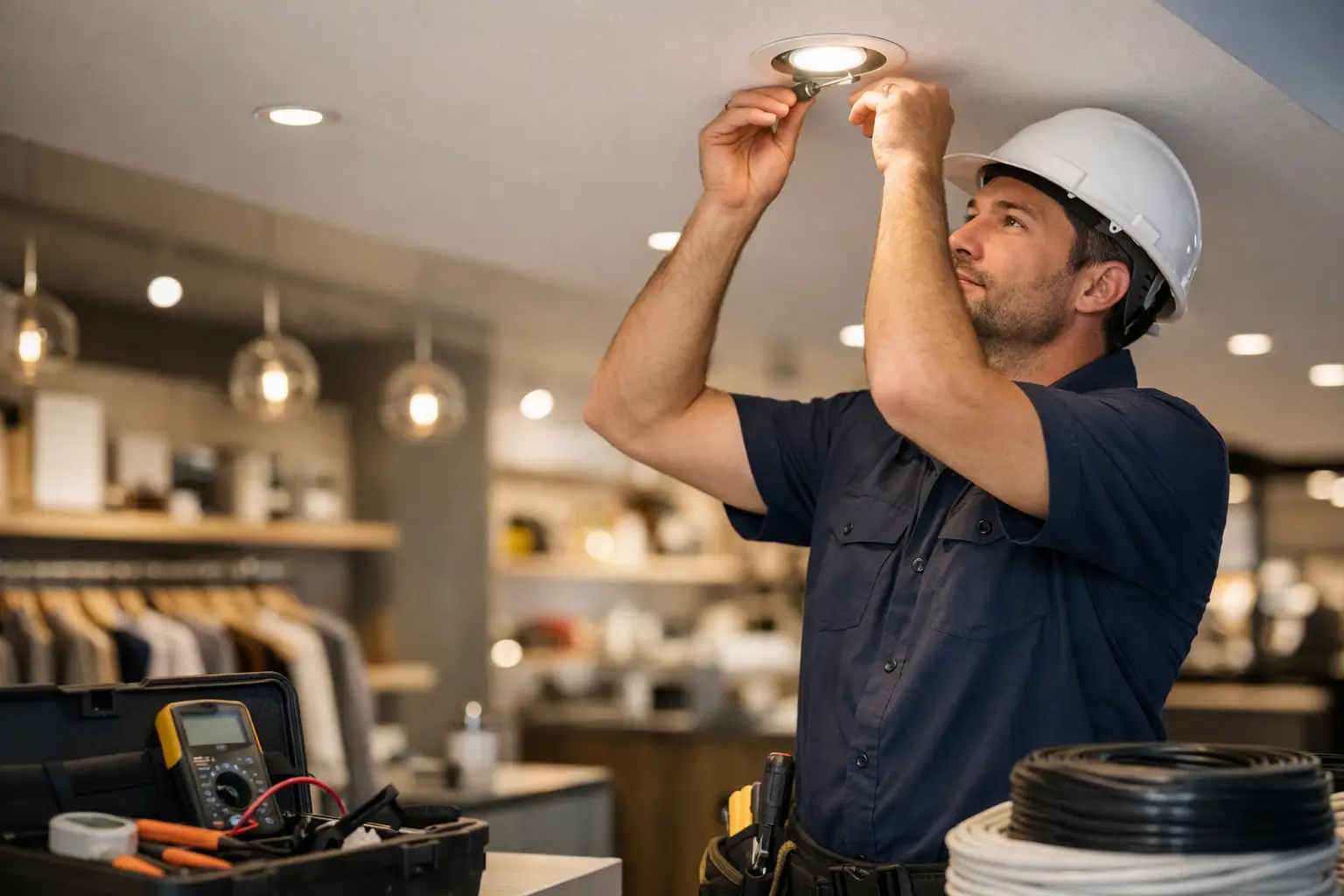
The week before opening is the worst time to discover the EFTPOS terminal has no power point, the feature lighting throws harsh shadows across your displays, or the switchboard cannot support the new equipment. A qualified shop fitout electrician helps prevent these costly last-minute problems by planning the electrical work around how your business will actually operate.
A retail, hospitality or service space needs more than lights and a few outlets. It needs the right capacity, safely located power, practical lighting, reliable data and security provisions, all installed in a way that supports the fitout schedule. Getting these details right early protects your budget, your opening date and your team.
Start With the Way Your Shop Will Work
Electrical planning should begin before walls are closed and cabinetry is installed. Your electrician needs to understand the layout, customer flow, counter position, storage areas, signage, equipment and future plans for the premises. A floor plan is useful, but a walkthrough or consultation often reveals issues that drawings miss.
Think about the work happening in each zone. A reception or point-of-sale counter may need dedicated outlets for terminals, screens, printers, charging docks and under-counter equipment. A café tenancy may need higher-demand circuits for refrigeration, coffee equipment and kitchen appliances. A salon may need accessible power at each chair, well-positioned lighting around mirrors and enough capacity for dryers or treatment equipment.
It also pays to consider what will change after opening. If you expect to add refrigerated display cabinets, digital signage, extra workstations or EV charging for a business vehicle, allowing for future capacity now can be far more economical than reopening finished walls later.
What a Shop Fitout Electrician Should Plan
A well-planned fitout brings several systems together. They need to work as one, rather than being treated as separate jobs completed at different stages.
Lighting That Supports Sales and Safety
Lighting changes how customers see your products, your premises and your brand. General lighting needs to make the space comfortable and safe to move through. Task lighting is more focused, helping staff work accurately at a counter, workstation or preparation area. Accent lighting can draw attention to displays, shelving, signage and feature finishes.
The right approach depends on the business. A jewellery display requires a different lighting outcome from a barber shop, pharmacy or takeaway venue. Brighter is not always better. Excessive glare, uneven lighting or poorly placed downlights can make a space feel uncomfortable and create unwanted shadows.
Energy-efficient LED fittings are a practical choice for many commercial fitouts because they reduce ongoing power use and replacement requirements. Controls matter too. Sensors, timers and separate switching zones can help you avoid lighting empty stock rooms, back-of-house areas or outdoor signage longer than necessary.
Power Where Staff Actually Need It
Power points should follow the operating plan, not simply fill the nearest wall. Counter locations, staff work areas, cleaning equipment, display screens, fridges, printers and charging stations all need to be considered. Where practical, outlets should remain accessible without trailing leads across walkways or behind fixed cabinetry.
Some equipment needs its own circuit or a particular connection arrangement. Your electrician can assess load requirements and advise whether existing supply and switchboard capacity are suitable. This is especially important in older shopfronts, where the electrical installation may not have been designed for modern technology, air conditioning, commercial appliances or high volumes of connected equipment.
A switchboard upgrade is not needed for every fitout. However, if circuits are overloaded, protective devices are outdated, capacity is limited or the board cannot safely accommodate new work, addressing it during the fitout is usually the sensible option. It is easier to do properly before the shop is trading.
Data, Communications and Point-of-Sale
Reliable connectivity is now part of the customer experience. EFTPOS, booking systems, stock control, music, digital displays, staff devices and cloud-based software can all depend on a stable network.
Electrical and data pathways should be coordinated early, particularly where cabling needs to pass through walls, ceilings, counters or joinery. Planning this work with the fitout team helps keep cables protected and out of sight while retaining access for maintenance. Wi-Fi alone may be adequate in a small, low-demand tenancy, but hardwired connections can provide more consistent performance for key business systems.
Security Built Into the Fitout
Security is often treated as an afterthought, then added once the fitout is complete. That can mean visible cables, limited camera positions and unnecessary disruption to finished surfaces.
Planning surveillance, alarm systems and access control from the beginning produces a neater, more effective result. Camera placement should account for entry points, tills, stock areas, rear doors and blind spots, while still respecting staff and customer privacy requirements. Access control can be useful for storerooms, offices, shared commercial buildings and areas holding valuable stock.
The best security setup depends on the premises, trading hours, stock value and site access. A small boutique will not need the same system as a multi-room clinic or a high-traffic retail tenancy. The goal is practical coverage and dependable operation, not adding equipment that does not solve a real risk.
Compliance Is Part of the Job, Not an Extra
Commercial electrical work must be completed by appropriately licenced professionals and comply with applicable Australian standards, regulations and local requirements. Fitouts can also involve landlord conditions, centre management rules, building approvals, fire services coordination and requirements around emergency lighting or exit signs.
The exact obligations vary by premises and scope of work. That is why an electrician should inspect the site rather than making assumptions based on a plan alone. Existing wiring may be damaged, poorly documented or unsuitable for the proposed use. Identifying these concerns early gives you time to make a clear decision, rather than facing urgent variations once construction is underway.
A professional contractor should explain what is included, flag likely issues and provide the relevant certification or documentation once work is complete. Transparent communication is particularly valuable where several trades are working to a fixed opening date.
Coordinate the Electrical Work With Your Fitout Timeline
The electrical component of a shop fitout happens in stages. First fix work usually takes place after framing and before walls and ceilings are finished. This is when cables, conduits, mounting points and rough-in provisions are installed. Second fix follows once surfaces, joinery and fixtures are ready, covering fittings, switches, outlets, testing and final connections.
The timing needs close coordination with builders, cabinetmakers, painters, air conditioning contractors, data technicians and signage installers. If the counter design changes after rough-in, or a wall moves without the electrical plan being updated, the result can be delays and rework.
Before work begins, confirm the programme, access arrangements, after-hours requirements and any building management procedures. For occupied retail centres or busy commercial buildings, noisy or disruptive work may be restricted to particular times. A realistic schedule should also allow for inspections, testing and unexpected site conditions.
Choosing the Right Contractor for Your Fitout
Price matters, but the cheapest quote is not always the lowest-cost outcome. A vague scope can leave important items out, creating variations later. Look for a licenced electrician who asks practical questions, reviews the site, communicates clearly and can coordinate power, lighting and security requirements where needed.
Ask whether the quote identifies fittings, switchboard work, data provisions, testing, certification and any assumptions about existing infrastructure. It is also worth discussing response times if an issue arises during the build or after you begin trading. A fitout is a business investment, so dependable workmanship and prompt support have real value.
For businesses wanting one reliable trade partner across lighting, electrical upgrades and integrated security, Voltricity can help plan the work around your site, operations and opening schedule. The focus is on safe, tidy installation, clear communication and a result that is ready to support day-to-day trade.
A Better Opening Day Starts Behind the Walls
The best shop fitouts feel effortless to customers because the hard work has been considered before the doors open. When lighting flatters the space, power is where it is needed, systems are reliable and safety has been properly addressed, your staff can focus on serving customers rather than working around avoidable problems.
Bring your electrician into the conversation early, share how the business will operate, and make room in the programme for proper planning and testing. It is a straightforward step that helps your new premises start strong and stay dependable long after opening day.