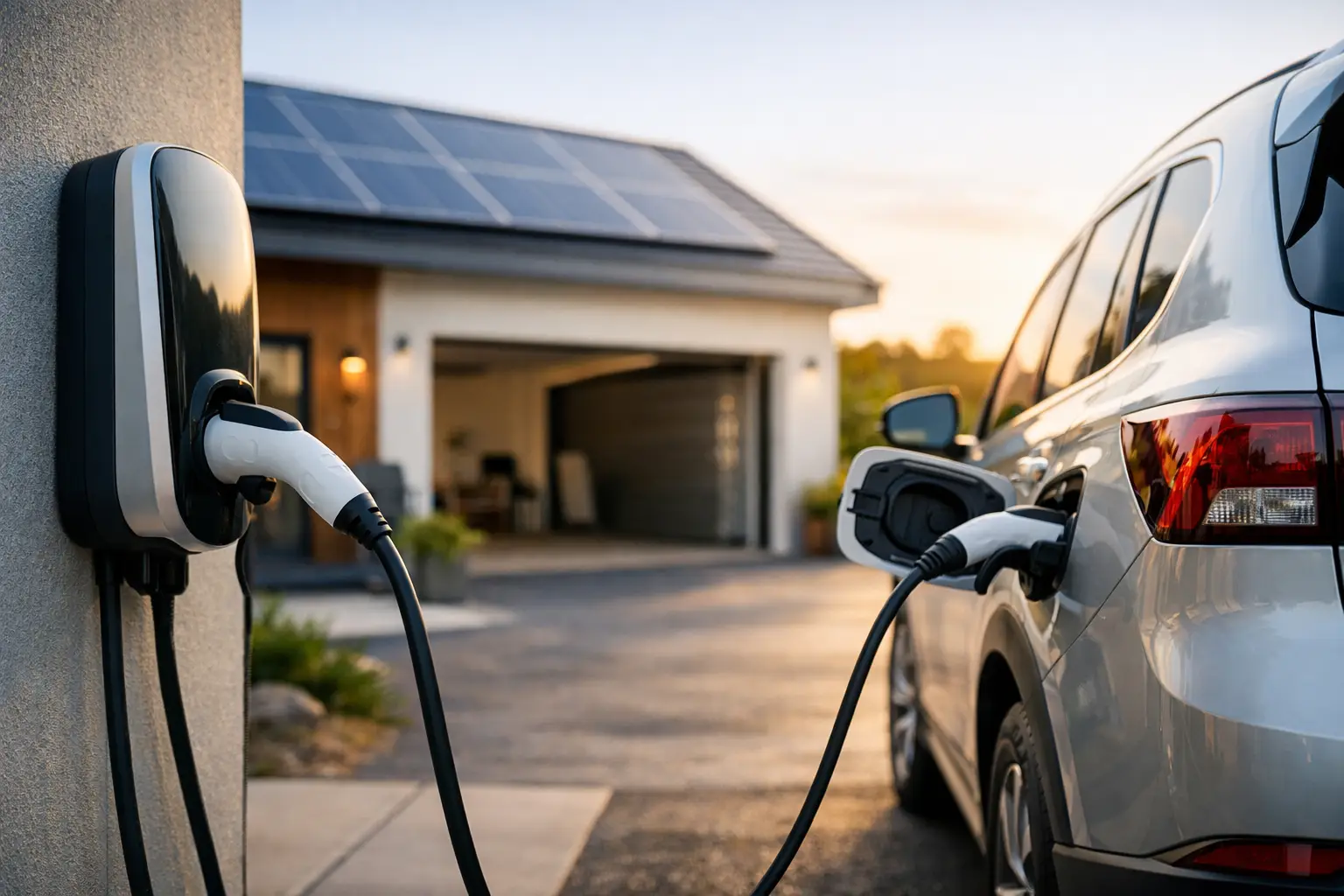
Arriving home with 30 per cent battery left should not mean planning a detour to a public charging station. For many drivers, that everyday convenience is the clearest answer to the question, are EV chargers worth it? A dedicated home charger can make electric vehicle ownership simpler, faster and easier to manage. But the value depends on your driving habits, your property’s electrical capacity and the type of EV you own.
A professionally installed EV charger is not simply a power point on the wall. It is a purpose-designed electrical circuit that delivers safe, reliable charging at a higher rate than a standard household socket. For homeowners, property managers and businesses planning for more electric vehicles, it can be a practical infrastructure upgrade rather than a luxury.
Are EV chargers worth it for daily driving?
If you drive an EV most days and have off-street parking, a home charger is usually worth serious consideration. The biggest benefit is not just charging speed. It is the ability to start each day with the battery at the level you need, without relying on queues, broken public chargers or a last-minute stop on the way home.
Most Australian homes use single-phase power. A typical 7 kW wall-mounted charger can add a useful amount of range overnight, making it suitable for regular commuting, school runs and weekend driving. The exact result will vary by vehicle battery size, charger settings and the electrical supply available at your property.
A portable charging cable connected to a standard socket may be adequate for very low daily kilometres. However, it charges more slowly and should not be treated as a permanent, high-use solution without electrical advice. Standard outlets and older wiring may not be designed for sustained charging loads over long periods. A dedicated circuit installed by a licensed electrician gives you a safer, more dependable arrangement.
For drivers who cover only a short distance each week, the payback is less immediate. You may be able to charge occasionally at public stations, at work or using the portable cable supplied with your vehicle. Even then, installing a charger can be worthwhile if convenience, safety and future resale appeal matter to you.
The real costs to consider
The price of an EV charger installation is more than the cost of the unit itself. A clear quote should account for the charger, the cable route, circuit protection, switchboard capacity, labour and any upgrades required to complete the work safely.
A straightforward installation in a garage, with the switchboard nearby and sufficient capacity available, will generally cost less than one requiring a long cable run, trenching, a switchboard upgrade or three-phase work. Older homes can need additional attention, particularly where the switchboard contains outdated equipment or the existing electrical load is already high.
The upfront cost needs to be considered against how you will use the charger over several years. Home charging can be more cost-effective than relying exclusively on public fast charging, especially when you schedule charging during lower-cost electricity periods. Time-of-use electricity plans and rooftop solar may improve the equation further, although solar production, household demand and EV charging times need to be considered together.
A smart charger can help manage these variables. Many models allow scheduled charging, usage monitoring and power adjustments. Some can work with solar or support load management, which helps prevent the EV charger from pushing your property beyond its available electrical capacity when other high-demand appliances are operating.
Your switchboard matters as much as the charger
An EV charger can be one of the largest electrical loads in a home. That does not automatically mean you need a switchboard upgrade, but it does mean your existing installation should be assessed before work begins.
A licensed electrician will look at the property’s supply, main switchboard, protective devices, earthing, cable pathways and the likely combined demand from appliances such as air conditioning, electric hot water, ovens and pool equipment. This assessment is particularly important in homes that have been renovated over time or have older fuse boards.
Load management may be the right solution where the electrical supply is limited. Rather than charging at full power regardless of what else is running, the system can reduce charging output temporarily when household demand is high. It is a practical way to support EV charging without unnecessary disruption or a larger supply upgrade where one is not required.
The same principle applies to strata properties and workplaces. Shared electrical infrastructure has to be planned carefully so that one new charger does not create problems for other residents, tenants or operations.
When a home EV charger may not be the right investment
A charger is not automatically the best choice for every EV owner. If you rent, live in an apartment without allocated parking, or expect to move soon, installation approval and access may make the project less practical. It may be better to explore options with the landlord, owners corporation or property manager before buying equipment.
You may also decide to wait if your vehicle is rarely used, reliable public charging is close by, or a major renovation is planned in the near future. Installing the charger during a garage renovation, solar installation, switchboard upgrade or new build can reduce disruption and make cable routing much easier.
It is also worth avoiding the temptation to choose a charger based only on the highest advertised charging speed. Your vehicle, electrical supply and daily needs should guide the specification. A well-installed 7 kW charger that suits your routine can be more useful than a higher-capacity unit that your home cannot use efficiently.
EV charger value for property managers and businesses
For property managers, EV charging is becoming a practical tenant amenity. Residential tenants increasingly look for homes with secure off-street charging, while commercial tenants may see charging access as a useful staff and customer benefit. The right approach depends on usage, parking layouts, billing requirements and the capacity of the site’s electrical infrastructure.
Businesses should start with a site assessment rather than installing chargers one at a time as requests arise. Planning ahead can identify where chargers should be located, how cables can be run safely, whether access control is needed and how future expansion can be accommodated.
For a workplace, four questions are particularly useful:
- Who will use the chargers: staff, customers, fleet vehicles or all three?
- How long will vehicles usually be parked on site?
- Does the business need to recover electricity costs or provide charging as a benefit?
- Can the existing supply support several chargers operating at the same time?
A staged installation often makes sense. Electrical infrastructure can be designed with future charging bays in mind, while only the number of chargers needed today are installed. This avoids repeated disruption and supports growth without overspending upfront.
Choosing the right charger and installer
The charger should suit your vehicle connector, charging capability, parking arrangement and preferred features. Tethered units, with a cable attached, are convenient for regular home use. Socketed units can offer flexibility if vehicles change or you prefer to use your own cable. Weather protection, cable length and placement are also important, especially for driveways and outdoor parking areas.
Installation quality should never be an afterthought. EV charging involves sustained electrical demand, so the work needs to be completed to applicable Australian standards and manufacturer requirements. A licensed electrician should provide a clear scope of work, explain any switchboard or load-management requirements, and test the installation before handover.
Ask whether the quote includes the full installation, required safety devices, commissioning and any work needed to make the system compliant. Transparent pricing and clear communication help prevent the surprise of discovering that essential electrical upgrades were excluded from the initial price.
A practical way to decide
Think about where your EV spends the night, how far you drive in a normal week and whether your current electrical system is ready for another major load. If the vehicle is parked at home for several hours most nights, a dedicated charger can quickly become one of the most useful upgrades you make to the property.
The best next step is a site-specific assessment. A qualified electrician can check your supply, switchboard and parking layout, then recommend a charger that fits the way you actually drive. That gives you a safe installation, realistic costs and the confidence that your charging setup will keep working when you need it most.