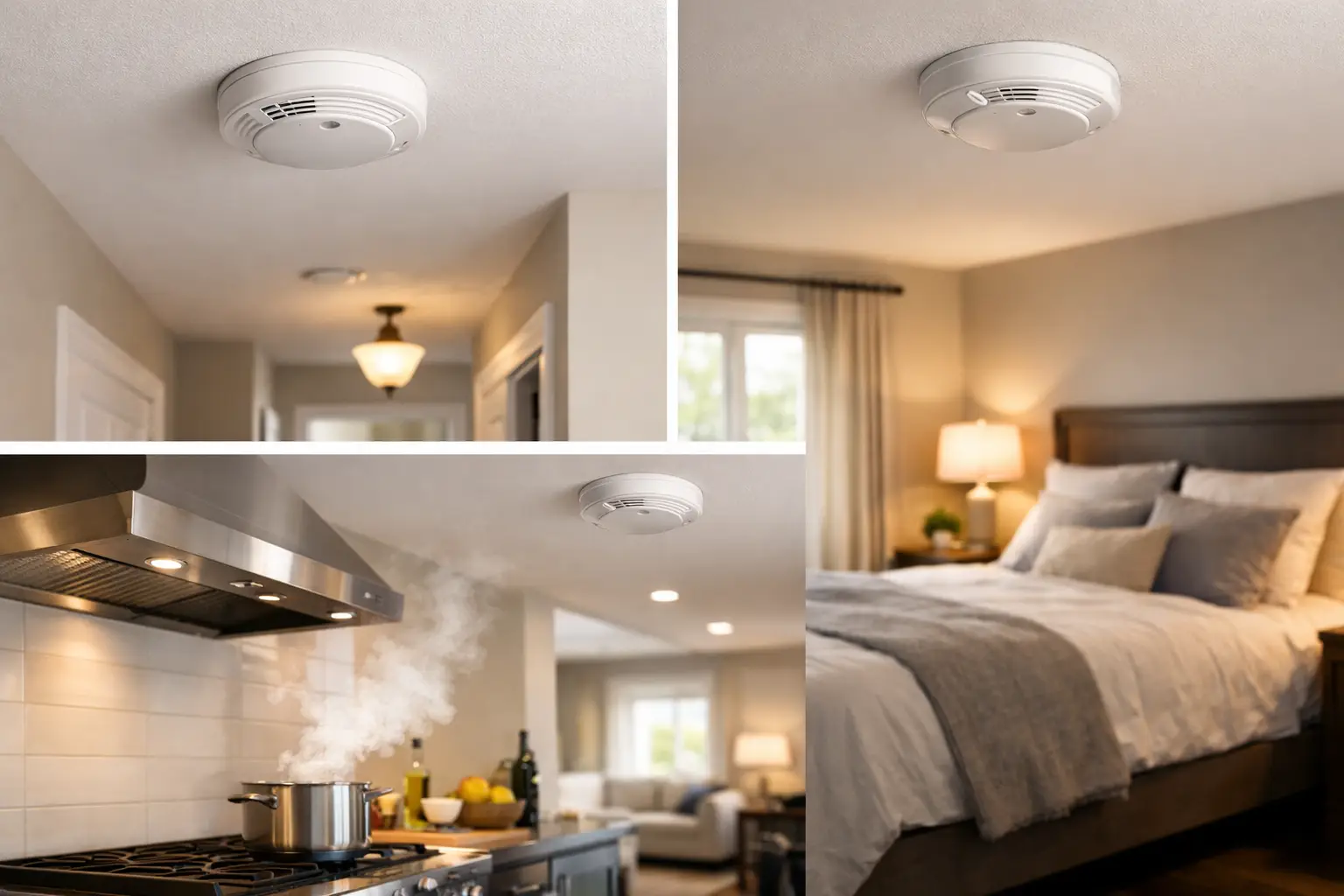
A smoke alarm on the wrong ceiling can give you a false sense of security. We often see homes with alarms installed too close to kitchens, tucked into dead air corners, or missing from the very areas where people sleep. If you want the best smoke alarm locations, placement matters just as much as choosing a compliant alarm in the first place.
Getting this right is not about overcomplicating a simple safety device. It is about giving your household the earliest possible warning, especially at night, when smoke can spread before anyone notices. For homeowners, landlords and property managers, correct placement is one of the most practical safety improvements you can make.
Why the best smoke alarm locations matter
Smoke alarms are designed to detect danger early, but they can only do that if they are installed where smoke will reach them quickly. A poorly placed alarm may activate too late, or go off so often from cooking fumes that people start ignoring it. Neither outcome is acceptable.
The aim is straightforward. You want alarms close enough to sleeping areas to wake occupants, positioned in likely smoke paths, and far enough from nuisance sources to remain reliable. In real properties, that balance can vary depending on the floorplan, ceiling height, room use and whether the home is single or double storey.
For many Australian homes, there is no single alarm that covers everything well. A layered approach is usually the safer option.
Best smoke alarm locations in a typical home
The best starting point is outside each bedroom area. If a fire starts in a living room, hallway or kitchen nearby, the alarm should sound before smoke enters sleeping spaces in dangerous amounts. In homes with a separate bedroom wing, that hallway is a priority location.
Inside bedrooms, alarms are also worth serious consideration, particularly where doors are closed overnight or where occupants use heaters, charge devices, or have limited mobility. Closed doors can slow smoke travel, which means a hallway alarm may not always provide the earliest warning inside the room.
Living areas are another strong candidate, especially if they include lounges, family rooms or spaces connected to the kitchen. These are high-use zones where electrical faults, chargers, heaters and other ignition sources can be present. If the living area is large or open plan, one alarm may not be enough to cover the full space effectively.
If the home has more than one storey, there should be smoke alarm coverage on each level. Stairways can help smoke travel quickly between floors, but relying on one level to protect another is not a sound strategy.
For larger homes, split-level homes or properties with long corridors, extra alarms are often needed. The best smoke alarm locations are the ones that reflect how the building is actually laid out, not just a minimum box-ticking exercise.
Where alarms should generally go
In practical terms, most homes should have alarms:
- in the hallway or path of travel outside bedrooms
- on every storey of the home
- in or near living areas, depending on the layout
- in bedrooms where added protection is sensible or required
That does not mean placing them anywhere on the ceiling will do. Exact positioning matters.
Ceiling placement makes a difference
Smoke rises, so ceiling installation is generally preferred. Alarms should be mounted where smoke can reach them freely, away from corners where air may not circulate properly. Those tight joins between wall and ceiling can create dead air spaces, which may delay activation.
If wall mounting is allowed for the product and the situation calls for it, the height and clearance need to follow the manufacturer’s instructions and relevant regulations. This is one area where guessing is not worth the risk.
Hallways are common, but not always enough
A hallway alarm is often essential, but it should not be the only line of defence if the home is spread out or compartmentalised. In a long floorplan, smoke may not reach the hallway quickly enough from a distant living area, garage-adjacent room or closed bedroom.
That is why a proper assessment matters. The best smoke alarm locations are based on travel paths, room separation and likely fire sources, not just habit.
Areas to avoid
Some locations look convenient but create ongoing problems. Right outside a bathroom can be a poor choice if steam regularly triggers nuisance alarms. Near supply air vents or ceiling fans, airflow can push smoke away from the unit and affect performance.
Kitchens need care as well. You want protection nearby, but not so close that normal cooking sets the alarm off every other night. Repeated false alarms frustrate occupants and can lead to tampering, removal or flat batteries being ignored.
Garages can also be tricky. Vehicle exhaust, dust and temperature changes may affect some alarm types, while attached garages still present a real risk to the home. In these cases, selecting the correct alarm type and installation point is just as important as deciding whether the area needs coverage.
You should also avoid placing alarms near windows or doors where drafts may interfere with smoke detection. The same goes for very dusty spaces or spots exposed to insects if the unit is not suited to that environment.
Open-plan homes need a smarter approach
Many newer Australian homes have open-plan kitchen, dining and living areas. These layouts are popular, but they make alarm placement more nuanced. If you place the alarm too close to the cooktop, nuisance alarms become likely. Too far away, and you may lose valuable response time.
In open-plan spaces, the right position is often in the living zone or transition area rather than directly above food preparation. The exact distance depends on the alarm type, the ceiling design and the overall room size. Raked ceilings, bulkheads and voids can all affect smoke movement.
This is where professional advice adds real value. A compliant install should account for the actual structure, not just the brochure diagram.
Bedrooms, children and vulnerable occupants
Not every household has the same risk profile. Families with young children, older residents, shift workers, or anyone who may sleep heavily should think carefully about bedroom coverage. The same applies in homes where bedroom doors are routinely closed for heating, cooling or noise.
Interconnected alarms are especially useful here. When one alarm activates, all alarms sound together. That means a fire starting in a distant room can still alert the entire household immediately. For larger homes, this is often the difference between hearing an alarm early and hearing it too late.
For property managers and landlords, dependable bedroom-adjacent coverage is not just a safety decision. It is part of delivering a well-maintained property that protects occupants properly.
Compliance matters, but so does real-world performance
Australian smoke alarm requirements vary by state and territory, and there can be extra obligations for rentals, sales, renovations or new builds. Compliance is essential, but minimum legal requirements are not always the same as best-practice protection.
A home might technically meet a baseline requirement and still have blind spots. That is why we recommend looking beyond the minimum where practical. If one extra alarm improves response time to sleeping areas or covers a disconnected part of the house, it is usually money well spent.
This is particularly true in older homes with extensions, converted garages or outdated wiring. Changes to the layout can alter where the best smoke alarm locations actually are.
Hardwired or battery-powered?
Placement and alarm type work together. Hardwired smoke alarms with battery backup are often the stronger long-term option because they are more dependable and better suited to interconnected systems. Battery-powered alarms can still be appropriate in some situations, especially where wiring access is limited, but they need proper selection and ongoing maintenance.
Whatever the power source, maintenance cannot be an afterthought. Even a perfectly positioned smoke alarm is only useful if it is tested, cleaned and replaced at the right time. Dust, age and neglect can all reduce performance.
When to get professional help
If you are unsure whether your current alarms are in the right spots, that is reason enough to have them checked. The same applies if you are renovating, converting rooms, managing a rental, or upgrading to interconnected alarms.
A licensed electrician can assess your layout, identify gaps, and recommend placements that suit both the building and current requirements. For homeowners and business operators, that means fewer assumptions and more confidence that the system will work when it matters.
At Voltricity, we see smoke alarm work as part of a bigger safety picture. Good installation is not just about passing a quick check. It is about protecting people, reducing risk and making sure your property is set up properly from the start.
The right alarm in the wrong place is still the wrong setup, so if there is any doubt, treat placement as a priority rather than a detail.