Blog

  • Switchboard Upgrade Cost Australia Guide

    Switchboard Upgrade Cost Australia Guide

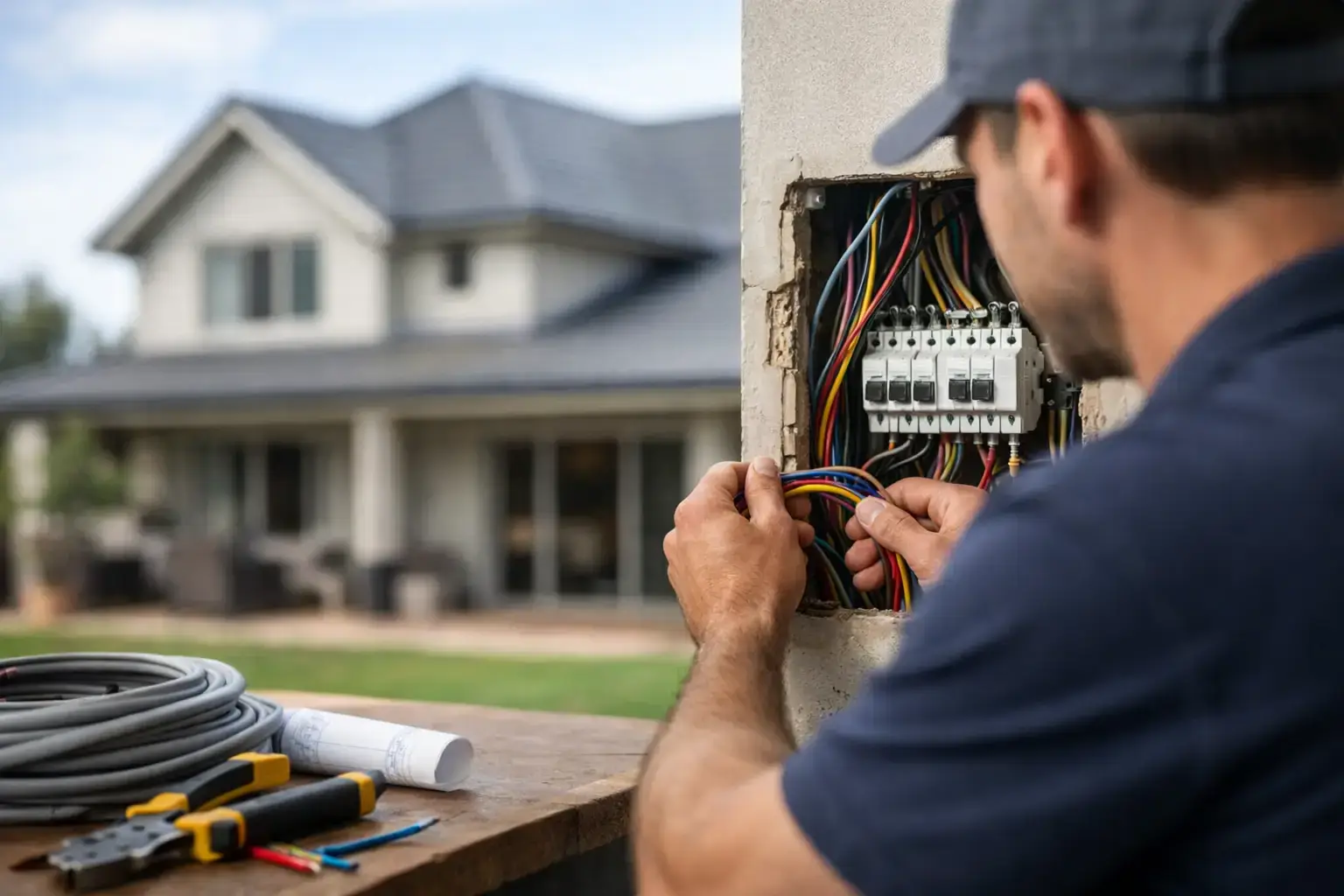
    If your lights flicker when the air con starts, your fuses are old ceramic types, or your electrician has flagged a safety issue, the question usually comes next – what is the switchboard upgrade cost Australia homeowners and businesses should expect? The short answer is that pricing varies, but most upgrades are driven by the same few factors: the age of the installation, the size of the property, the amount of circuit work involved, and whether the board needs to be brought fully up to current safety requirements.

    For many property owners, a switchboard upgrade is not about adding something flashy. It is about making the property safer, more reliable, and ready for modern electrical demand. That matters whether you are renovating a family home, managing a rental, fitting out a shop, or preparing for an EV charger.

    What affects switchboard upgrade cost in Australia?

    A switchboard upgrade is rarely a one-price-fits-all job. Two houses in the same suburb can have very different costs because the condition behind the cover can be completely different.

    The first major factor is the type of existing board. Replacing an old fuse board with a modern switchboard that includes safety switches and circuit breakers is generally more involved than swapping out a newer but undersized board. If there is asbestos backing, damaged cabling, signs of heat stress, or non-compliant components, the scope grows quickly.

    The second factor is capacity. A small unit with modest electrical demand will usually need less work than a large home with ducted air conditioning, pool equipment, induction cooking, and multiple high-load circuits. Commercial sites can be more complex again, especially where there are three-phase supplies, specialised equipment, or tenancy requirements.

    The third factor is compliance work. In some cases, the switchboard itself is only part of the job. The electrician may also need to separate circuits, label them correctly, install additional safety devices, replace mains or submains, or tidy up previous work that does not meet current standards. This is often where quotes differ, and it is also why the cheapest figure on paper is not always the best value.

    Access and outage planning can also influence cost. A straightforward installation with clear access is faster and more predictable. Tight meter cupboards, difficult cable pathways, or coordination with tenants and business hours can add labour time.

    Typical switchboard upgrade cost Australia-wide

    As a practical guide, many standard residential switchboard upgrades in Australia fall somewhere between $800 and $2,500. At the lower end, this may cover a relatively simple upgrade where the existing installation is in decent condition and only limited corrective work is needed. At the higher end, the price usually reflects added circuit work, more safety devices, mains upgrades, difficult access, or replacement of ageing components around the board.

    For larger homes, more complex properties, or sites needing substantial compliance upgrades, costs can move beyond that range. Commercial switchboard work can vary more widely again because load requirements, isolation planning, and compliance obligations are often site-specific.

    That is why a broad online price range is useful for budgeting, but not for decision-making. A proper quote should be based on inspection, not guesswork. If a board is old enough to raise safety concerns, there is little value in pricing it as though it were a clean, simple swap.

    What is usually included in the price?

    When comparing quotes, it helps to understand what the figure actually covers. A professional switchboard upgrade will often include removal of outdated protective devices, supply and installation of a new enclosure or upgraded internal fit-out, new circuit breakers, safety switches or RCBOs where required, testing, labelling, and certification.

    Some jobs also include minor rectification work needed to complete the upgrade safely. Others may list those items separately. That difference matters. A lower quote can look attractive until variations start appearing once the old board is opened.

    It is worth asking whether the quote includes shutdown and reconnection coordination if needed, replacement of damaged tails or consumer mains, and whether the electrician expects any additional work to bring the installation into compliance. Clear scope saves frustration later.

    Why prices can change after inspection

    Property owners sometimes wonder why a phone estimate shifts after a site visit. In switchboard work, that is normal. Much of the real condition is hidden until tested or visually inspected by a licenced electrician.

    For example, an old board may show no obvious issue from the outside, but inside there may be brittle insulation, overcrowded wiring, mismatched breakers, or signs of overheating. A previous renovation may have added circuits without leaving enough space or without proper protection. In older homes, the switchboard can also reveal a broader wiring problem that needs staged attention.

    A good electrician should explain those findings clearly and keep the recommendation practical. Not every property needs a major overhaul, but genuine defects should not be ignored to preserve a low quote.

    When a switchboard upgrade is worth doing now

    Sometimes a switchboard upgrade is urgent. If the board has old ceramic fuses, regularly trips, feels warm, has a burnt smell, or cannot support normal household loads, delaying the work increases risk. Safety is the first reason to act.

    The other common reason is future planning. If you are installing an EV charger, renovating the kitchen, adding air conditioning, upgrading office equipment, or improving site security, the switchboard may need more capacity and modern protection. Doing the board first often prevents delays and avoids paying twice for piecemeal electrical work.

    Rental properties are another case where timing matters. Landlords and property managers have a clear interest in reducing hazards, preventing nuisance callouts, and keeping systems dependable for tenants. A modern switchboard can also make future maintenance faster and more straightforward.

    Cheap switchboard upgrades versus proper value

    Price matters, but with electrical safety work, cheap and good are not always the same thing. A very low quote may exclude important items, use lower-grade components, or leave unresolved issues connected to the old installation.

    The better approach is to look for transparent pricing, a licenced electrician, clear explanation of inclusions, and workmanship that is tested and backed properly. The board is the control point for the whole property. If it is done well, you get safer operation, better fault protection, and a system that can handle modern demand with fewer headaches.

    For homeowners and business operators, that reliability has real value. It can reduce nuisance tripping, support new appliances and equipment, and provide peace of mind that the installation is not relying on outdated hardware.

    How to budget for a switchboard upgrade

    If you are planning ahead, start by thinking beyond the board itself. Consider what you want the property to support over the next few years. A board sized only for today may become restrictive if you later add solar, battery storage, an EV charger, new lighting circuits, or upgraded commercial equipment.

    It is often more cost-effective to plan the switchboard around upcoming works than to upgrade in stages. That does not mean overspending on features you will never use. It means making sure the board has enough space, protection, and capacity to suit the property properly.

    This is where a site-based quote is worth more than a rough online estimate. A capable electrician can tell you whether a simple upgrade will do the job, or whether a more strategic approach will save money over time. At Voltricity, that practical advice is a big part of doing the work properly from the start.

    Getting an accurate quote without surprises

    The most reliable way to understand switchboard upgrade cost in Australia is to have the existing installation inspected by a licenced electrician who explains the condition, the risks, and the options in plain language. You should know what is included, what may change, and why.

    A clear quote should leave you confident about three things: the board will be safe, the work will meet current requirements, and the upgrade will suit the way you actually use the property. That is a better outcome than chasing the lowest figure and hoping the rest sorts itself out.

    If your switchboard is outdated, overloaded, or limiting your next upgrade, it is worth getting advice sooner rather than later. A modern switchboard does more than tidy up the wall – it gives your property a safer, stronger electrical foundation for whatever comes next.
  • 10 Signs House Needs Rewiring

    10 Signs House Needs Rewiring

    You usually notice the signs your house needs rewiring at the worst possible time – when the lights start flickering during dinner, a breaker trips in the middle of work, or you catch that faint burning smell and wonder if it is serious. In many homes, electrical problems build slowly. What starts as a minor annoyance can point to ageing wiring, overloaded circuits, or a system that no longer suits the way the property is used.

    Rewiring is not a small job, so it makes sense to want clear reasons before moving ahead. The good news is that many warning signs are easy to spot once you know what to look for. The key is not to ignore them or put them in the too-hard basket. Electrical issues are about more than convenience – they are about safety, compliance, and protecting your home or business from avoidable risk.

    Common signs a house needs rewiring

    Some properties show one obvious warning sign. Others show a pattern of smaller issues that together point to the same problem. If you are seeing several of the following at once, it is worth arranging a professional inspection.

    Circuit breakers trip often

    A switchboard is designed to protect your property by cutting power when a circuit is overloaded or unsafe. If your breakers trip every now and then after plugging in a high-demand appliance, that may simply mean the circuit is doing its job. If it happens regularly, though, the issue may be deeper.

    Frequent tripping can suggest deteriorating wiring, overloaded circuits, or a system that was never designed for modern electrical demand. Homes now run air conditioning, larger televisions, kitchen appliances, chargers, home office equipment, and sometimes EV chargers as well. Older wiring often struggles to keep up.

    Lights flicker or dim without a clear reason

    A single flickering globe can be as simple as a loose bulb. If multiple lights flicker, dim when appliances switch on, or vary in brightness around the property, that is different. It can indicate loose connections, poor load distribution, or failing wiring behind the walls.

    This is one of those issues where context matters. In some cases, the fault is localised to one fitting or one circuit. In others, it points to a broader wiring problem that should be investigated before it gets worse.

    Power points feel warm or look damaged

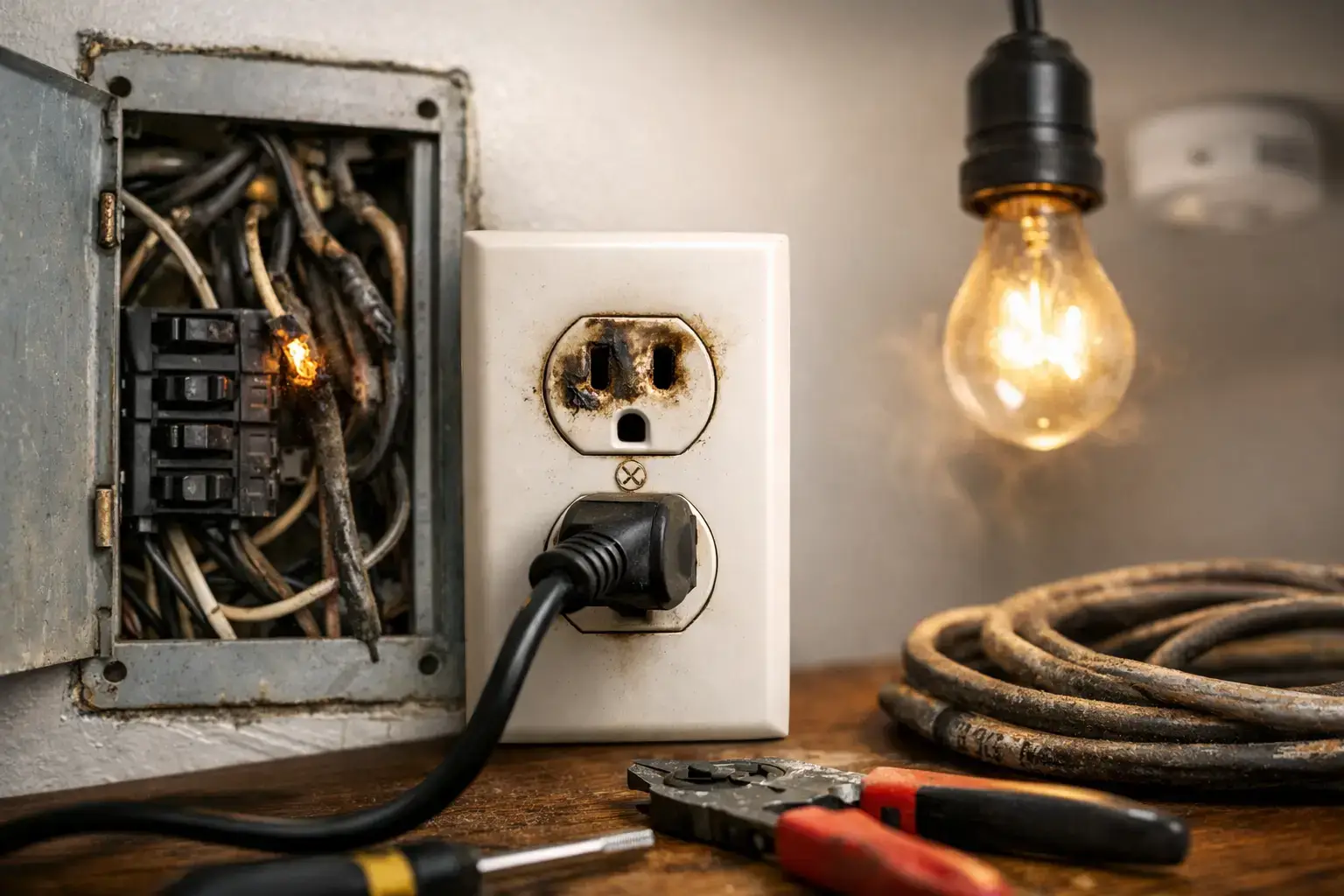
    Power points and light switches should not feel hot to the touch. Warmth, scorch marks, crackling sounds, or discolouration around fittings can indicate current is not flowing as it should. That might be due to loose wiring, internal damage, or ageing components.

    Sometimes people assume replacing the faceplate solves the problem. It rarely does if the issue is in the wiring behind it. Surface damage is often a symptom, not the cause.

    You smell burning or notice buzzing sounds

    A faint burning smell with no clear source should never be ignored, especially if it appears near outlets, switchboards, or appliances. The same goes for buzzing sounds coming from switches, lights, or the meter box. Electricity should be quiet and controlled. Smells and noises can mean overheating, arcing, or damaged connections.

    If this happens, the safest move is to stop using the affected circuit if possible and call a licensed electrician promptly. Waiting to see if it goes away is not a sensible gamble.

    There are not enough power points

    This one seems less dramatic, but it matters. If a home relies heavily on double adaptors, power boards, and extension leads, the wiring layout may no longer suit the property. That often happens in older homes built well before current appliance loads and living habits.

    A lack of outlets does not always mean the whole property needs rewiring. Sometimes targeted upgrades are enough. But when combined with other issues, it can be a sign the electrical system is outdated overall.

    Older homes and hidden electrical risks

    Age alone does not automatically mean a property needs a full rewire. Some older homes have had partial upgrades over the years and remain serviceable. Others still have original wiring that falls short of current safety expectations.

    The home was built decades ago and never properly upgraded

    If your property is more than 30 or 40 years old and has never had major electrical work, it is worth taking a closer look. Wiring insulation can degrade over time. Older cable types may become brittle, unsafe, or non-compliant by modern standards.

    Many older homes were also designed for fewer circuits and lower load demand. Even if the wiring has not visibly failed, it may be under strain every day.

    You still have old-style fuses or an outdated switchboard

    An older fuse board is one of the stronger signs a house needs rewiring or at least a broader electrical upgrade. Ceramic fuses and ageing switchboards are often found in properties that have not kept pace with current safety requirements.

    In some homes, the switchboard is the immediate problem and the wiring is still partly usable. In others, the outdated board is just the visible part of a much larger issue. A proper inspection will determine whether a switchboard upgrade, a partial rewire, or a full rewire is the right path.

    Wiring has been patched together over time

    Properties that have gone through multiple renovations, DIY additions, or piecemeal repairs can end up with a mix of old and new wiring. That creates inconsistency across circuits and can make fault-finding harder. It can also leave weak points hidden in ceilings, walls, and under floors.

    A home does not need to be very old for this to happen. Even newer properties can develop wiring problems if previous work was rushed, poorly planned, or completed by someone unqualified.

    When rewiring becomes more than a maintenance issue

    Sometimes rewiring is triggered by obvious faults. Other times, it becomes necessary because the property is changing.

    If you are renovating, adding air conditioning, installing security systems, fitting new lighting, or planning an EV charger, the existing wiring may need upgrading to safely support the new load. This is especially relevant for homeowners and property managers trying to future-proof a property rather than simply patching one problem at a time.

    For businesses, electrical reliability is just as important. An office, shop, warehouse, or mixed-use premises that experiences repeated faults can lose productivity, interrupt service, and create unnecessary risk for staff and customers. Rewiring may sound disruptive, but ongoing faults usually create more disruption in the long run.

    What an electrician will check

    A licensed electrician will not recommend rewiring based on guesswork. The right approach is to inspect the switchboard, test circuits, assess cable condition where accessible, review safety protection, and understand how the property is currently used.

    That matters because rewiring is not always all or nothing. Some properties need a complete rewire. Others benefit from a staged upgrade, such as replacing the most vulnerable circuits first, upgrading the switchboard, or adding dedicated circuits for high-demand appliances.

    Good advice should be clear and practical. You should know what the issue is, why it matters, and what options are available before any work begins.

    Should you wait or act now?

    If the issue is purely about convenience, people often wait. But if you are dealing with tripping circuits, heat, smells, buzzing, visible damage, or an obviously outdated electrical setup, delaying the decision can increase both risk and eventual cost.

    Electrical faults rarely improve on their own. A small repair today can prevent emergency call-outs, property damage, or more extensive work later. That is why early inspection matters. It gives you a clear picture before the problem forces your hand.

    For homeowners, the value is peace of mind. For property managers, it is risk reduction and easier compliance planning. For business operators, it is operational reliability. Whatever the setting, safe wiring is not a luxury upgrade – it is part of keeping the property fit for purpose.

    If you have noticed more than one of these warning signs, it is time to have the system checked by a licensed electrician. At Voltricity, that means practical advice, transparent recommendations, and workmanship focused on getting the job done safely and properly the first time.

    A home or workplace should feel dependable when you flick a switch, charge a device, or power up for the day. If your electrical system no longer gives you that confidence, trust that instinct and get it looked at before a warning sign turns into a real hazard.

  • House Rewiring Cost Australia: What to Expect

    House Rewiring Cost Australia: What to Expect

    If your lights flicker when the heater kicks in, power points are in short supply, or the switchboard still belongs to another decade, the question of house rewiring cost australia stops being theoretical very quickly. For most property owners, rewiring is not about bells and whistles. It is about safety, compliance, reliability and making sure the property can handle how people actually live and work now.

    Rewiring is one of those jobs where the headline price only tells part of the story. Two homes can look similar from the street and end up with very different quotes once the electrician checks roof access, wall construction, the condition of existing cabling and whether the switchboard needs upgrading at the same time. That is why a realistic guide matters more than a one-size-fits-all number.

    House rewiring cost Australia – the typical range

    In Australia, a full house rewire often starts around $8,000 to $15,000 for a smaller, straightforward home and can climb to $20,000 or more for larger, older or more complex properties. Some projects go beyond that if there is difficult access, extensive wall or ceiling restoration, or additional upgrades such as smoke alarms, data cabling, security wiring or EV charger readiness.

    For apartments or compact units, the cost may sit lower if the layout is simple and access is reasonable. For older weatherboard or brick homes, especially those with outdated or deteriorated wiring, the work can become more involved. If your property still has old rubber-insulated cabling, cotton-covered wiring or a fuse-based switchboard, the project usually needs a more thorough upgrade rather than a quick patch-up.

    The key point is this – rewiring is priced on the actual condition of the property, not just the number of bedrooms.

    What affects house rewiring cost Australia most?

    The age of the property is often the biggest cost driver. Older homes tend to have wiring systems that were never designed for modern appliance loads, air conditioning, home offices, security systems or EV charging. In many cases, once an electrician starts tracing circuits, it becomes clear the switchboard, earthing and safety devices also need attention.

    Access is another major factor. A home with good roof space, suspended floors and clear wall cavities is usually faster and cleaner to rewire than one with tight ceiling access, concrete walls or recent renovations that make cable runs harder. If the electrician needs to remove sections of plaster, work around insulation or navigate difficult roof lines, labour time increases.

    The size and layout of the home matters too, but not always in the obvious way. A compact double-storey home can be trickier than a larger single-storey property if cable pathways are limited. The number of circuits, power points, light fittings, switches and hardwired appliances all influence the final cost.

    Then there is the scope of the work. Some customers ask for a like-for-like rewire. Others use the opportunity to improve the whole electrical setup, adding more outlets, upgrading lighting, installing hardwired smoke alarms, modernising the switchboard and planning ahead for future loads. That broader approach can cost more upfront, but it often makes better financial sense than revisiting the wiring again in a few years.

    What is usually included in a full rewire?

    A proper rewire is more than pulling out old cable and replacing it. In most homes, the job includes new wiring to power and lighting circuits, replacement or relocation of switches and power points, safety checks, testing and compliance work. It may also include a switchboard upgrade if the existing board does not meet current standards or lacks safety switches.

    In many cases, electricians will recommend replacing old fittings that no longer suit the updated wiring layout. If the property has ceiling fans, ovens, cooktops, hot water systems, air conditioning or other dedicated circuits, those connections may also need to be upgraded or reconfigured.

    Some quotes include patching of access holes, while others cover electrical work only. That distinction matters. Homeowners are often surprised to learn that plaster repairs and repainting may sit outside the electrician’s scope unless discussed upfront. A transparent quote should make those boundaries clear.

    Rewire or partial rewire?

    Not every home needs a complete rewire. Sometimes a partial rewire is enough, particularly if only one section of the home has outdated cabling or if previous renovations have already upgraded part of the installation. This can reduce costs significantly, but only if the remaining wiring is safe, compliant and suitable for ongoing use.

    A partial approach can become poor value if it leaves old circuits in place that will soon need replacing anyway. It can also complicate the system if new and old components are patched together without a clear long-term plan. A licensed electrician should assess whether staged upgrades make sense or whether a full rewire is the safer and more cost-effective option.

    The switchboard question

    One reason rewiring quotes vary so much is that many homes needing new wiring also need a switchboard upgrade. If the switchboard still uses ceramic fuses, lacks RCD protection or is overloaded with additions made over the years, replacing cabling alone will not solve the underlying problem.

    A modern switchboard improves safety and gives the property capacity for today’s electrical demands. It can also make future upgrades easier, whether that means installing solar integration, battery systems, air conditioning, security infrastructure or an EV charger. For many households, it is smarter to treat rewiring and switchboard work as part of the same project rather than separate jobs.

    Occupied homes versus vacant homes

    Whether you are living in the property during the work can affect cost, timing and convenience. Rewiring an occupied home often requires more staging, more care around furniture and more coordination to keep essential circuits available. That does not always mean a dramatic price jump, but it can slow the job down.

    Vacant homes are usually easier to rewire efficiently. There is less disruption, fewer obstacles and more flexibility in scheduling. If a property manager is planning work between tenancies or a homeowner is renovating before moving in, that timing can help contain labour costs and reduce stress.

    How to read a rewire quote properly

    A low number is not always the best number. When comparing quotes, look closely at what is actually included. Does the scope cover a full inspection and test? Are new safety switches included? Is the switchboard part of the price or listed as provisional? Are fittings, smoke alarms, make-good work and final certification clearly stated?

    It is also worth asking how the electrician handles hidden issues. In older homes, extra faults can appear once the work begins. A professional contractor should explain what is included, what may become a variation and how those decisions will be communicated before costs move.

    Clear pricing matters, but so does workmanship. Rewiring is not a cosmetic job. It sits behind your walls and ceilings for years, so the quality of installation, testing and compliance work matters more than shaving off a small amount upfront.

    When rewiring is worth doing sooner

    Some owners delay rewiring because the home still has power and the lights still turn on. That is understandable, but ageing wiring can create risks that are easy to ignore until they become urgent. Frequent tripping, warm switch plates, buzzing outlets, burning smells, old two-prong points and visible fabric or rubber-insulated cable are all signs the system may be beyond simple repair.

    For investment properties and commercial spaces, there is also the question of reliability. Electrical faults do not just create inconvenience. They can interrupt tenancies, create compliance issues and turn a planned upgrade into an emergency call-out. Addressing old wiring before it fails usually gives you more control over budget and scheduling.

    Getting the right advice before you commit

    The best way to understand your likely cost is with a site inspection from a licensed electrician who can assess the actual condition of the property. That allows for a quote based on access, load requirements, switchboard condition and the standard of finish you want. It also gives you a chance to ask practical questions about staging, downtime and whether future-ready upgrades should be included now.

    At Voltricity, that conversation is built around safety, clear communication and getting the job done properly the first time. For homeowners, property managers and business operators, that matters just as much as the final figure.

    A rewire is a serious investment, but it is also one of the most important upgrades you can make to an older property. Done well, it gives you confidence every time you turn something on.

  • Why a Licensed Electrician Matters

    Why a Licensed Electrician Matters

    A flickering light or a tripping circuit can look like a small annoyance right up until it turns into a bigger safety issue. That is why hiring a licensed electrician is not just a box to tick – it is one of the smartest decisions you can make for your home, rental property or business.

    Electrical work sits in that category of jobs where the difference between done and done properly matters a great deal. You are not simply paying for someone to connect wires or swap fittings. You are paying for safety, compliance, fault-finding skill and workmanship that holds up over time. When the work is completed by a qualified professional, you have a far better chance of avoiding repeat call-outs, hidden faults and expensive damage later.

    What a licensed electrician actually brings

    A licensed electrician is trained, assessed and authorised to carry out electrical work to the required standards. That sounds straightforward, but it matters more than many people realise. Electrical systems are interconnected, and a poor decision in one part of the property can create problems somewhere else – overloaded circuits, nuisance tripping, heat build-up, appliance damage or safety risks that stay hidden behind walls and ceilings.

    The value of licensing is not only technical knowledge. It is also accountability. Licensed tradespeople are expected to meet legal and safety requirements, follow current regulations and complete work that is fit for purpose. For a homeowner, that means greater confidence that your lighting upgrade, switchboard replacement or rewiring job has been handled correctly. For a business operator or property manager, it means fewer loose ends and fewer headaches when maintaining a safe site.

    There is also the issue of scope. Modern electrical work often overlaps with newer systems such as EV charger installation, security devices, access control and energy-efficient lighting. These jobs are rarely just plug-and-play. They need planning, load assessment, correct protection, clean installation and a practical understanding of how the system will be used day to day.

    Why cutting corners costs more

    The cheapest quote can be tempting, especially when the job looks simple. But electrical work has a habit of exposing shortcuts later, and usually at the worst possible time. A poor installation might work for a while before faults appear. By then, the cost is no longer just the repair. It can include damaged equipment, tenant complaints, business downtime or remedial work to bring everything back to standard.

    This is where experience and licensing work together. A capable electrician does not just install what you asked for. They notice what could go wrong, what is outdated, what may fail under load and what should be addressed now rather than after the plaster is patched and the furniture is back in place.

    That does not mean every job has to become a major upgrade. Sometimes a straightforward repair is the right call. In other cases, a quick fix on an ageing switchboard or deteriorated wiring simply delays a larger problem. The right advice is rarely about selling the biggest job. It is about matching the solution to the condition of the property, your budget and the level of risk.

    When you should call a licensed electrician

    Some electrical issues are clearly urgent, such as burning smells, sparking outlets, repeated circuit trips or a partial power loss that will not resolve. Others are easier to ignore, even though they deserve attention. Lights that dim when appliances start, switches that feel warm, old ceramic fuses, ageing wiring and inconsistent power to outdoor circuits are all signs that the system may need professional assessment.

    A licensed electrician is also the right call when the job involves any change to fixed wiring or installed electrical equipment. That includes renovations, lighting upgrades, new power points, smoke alarms, ceiling fans, switchboard work, EV chargers and most security system installations. If the project affects safety, load capacity or compliance, proper expertise matters from the beginning.

    For commercial properties, the stakes are often higher. Downtime disrupts staff and customers. Poor lighting can affect safety and presentation. A dated switchboard can limit expansion. Security systems need to be reliable, not temperamental. In those settings, an electrician should be thinking beyond the immediate task and considering performance, scalability and long-term maintenance.

    How to choose the right licensed electrician

    Not all providers offer the same level of service, even when they are licensed. The difference often comes down to communication, attention to detail and whether they approach the job as a quick transaction or a proper solution.

    A good starting point is clarity. You should know what is being quoted, what is included, whether there are likely variables and how the work will be scheduled. Transparent pricing does not mean every unknown can be removed before a site visit. It means you are given a realistic picture of the job, not a vague number that changes without explanation.

    Responsiveness matters too. When you make an enquiry, you want a business that replies promptly, turns up when arranged and communicates clearly if anything changes. That is especially important for property managers and business operators who are coordinating access, tenants, staff or other trades.

    You should also look for practical capability. If you need electrical work plus security integration or EV charging, it helps to deal with a provider that can handle the job as one coordinated service rather than splitting it across multiple contractors. That usually leads to better planning, fewer delays and less room for confusion.

    What to expect from a professional service

    A professional electrician should make the process feel more straightforward, not more confusing. That starts with listening. Before recommending a solution, they should understand the issue, how the space is used and whether there are future plans that could affect the job.

    For example, if you are upgrading outdoor lighting, the best result is not always the most fittings. It may be a better layout, more durable products and switching that suits the way you actually use the area. If you are installing an EV charger, the work should consider your switchboard capacity, charging habits and whether the setup leaves room for future changes.

    The same applies to fault-finding. A reliable electrician does not guess and hope. They test, isolate and explain. Sometimes the answer is simple. Sometimes the visible issue is only a symptom of something further upstream. Good workmanship includes taking the time to identify the real cause.

    Clean-up and completion matter as well. The job should be left safe, tidy and ready to use. Documentation, testing and any required certification should not feel like optional extras. They are part of doing the work properly.

    Licensed electrician services that add long-term value

    The right electrical work should do more than solve an immediate problem. It should improve safety, functionality and confidence in the property. That is why services such as rewiring, switchboard upgrades, lighting design and integrated security can offer long-term value when they are planned well.

    For homeowners, this often means making the home safer and easier to live in. Better lighting can improve both comfort and security. A switchboard upgrade can support modern appliances and reduce risk. Well-installed outdoor power and lighting can make external areas more practical year-round.

    For businesses, value often comes through reliability and presentation. Functional lighting, dependable power and integrated security all contribute to smoother operations. They also reduce the chance of avoidable disruptions that cost time and money.

    At Voltricity, that practical mindset sits at the centre of the work. The goal is not simply to complete a job and move on. It is to provide solutions that are safe, reliable and suited to the way each property is used.

    The real question is not whether you can get the job done

    In electrical work, the real question is whether it will be done safely, correctly and with enough foresight to prevent the next problem. A licensed electrician gives you that extra level of confidence. You are not left wondering if the wiring behind the wall was handled properly, if the new load was allowed for, or if the job will need to be redone in six months.

    When you choose qualified, responsive and professional service, you are protecting more than your wiring. You are protecting your time, your property and the people who rely on both every day. If something electrical needs attention, getting the right person in early is usually the simplest way to keep a small issue from becoming a much larger one.

  • EV Chargers for Homes and Businesses

    EV Chargers for Homes and Businesses

    If you are relying on a standard power point to charge an electric vehicle, you have probably already felt the limits. Charging is slow, cables can be awkward to manage, and not every property is set up to handle that load comfortably. Proper EV chargers solve those problems by giving you a safer, faster and more reliable way to charge at home or at work.

    For most property owners, the real question is not whether an EV charger is useful. It is which setup makes sense for the way the vehicle is used, what the existing electrical system can support, and how to get it installed properly the first time. That matters whether you are a homeowner wanting overnight charging in the garage, a strata manager planning for multiple residents, or a business operator looking to future-proof your site.

    Why EV chargers are worth installing properly

    A dedicated charger does more than cut charging time. It creates a controlled charging environment that is designed for regular, high-demand use. That means better safety, more predictable performance and less day-to-day hassle.

    For homeowners, that often comes down to convenience. You come home, plug in, and the vehicle is ready by morning. There is no need to plan around long charging sessions or wonder whether the circuit is being pushed too hard.

    For businesses, the benefits can be broader. EV chargers can support staff, tenants, fleet vehicles and customers. They can also add value to a property and signal that the site is keeping pace with how people travel now. In some settings, they are quickly shifting from a nice extra to a practical expectation.

    Home EV chargers: what usually makes sense

    Most homes do not need the most advanced charging system on the market. They need something dependable, compliant and suited to the home’s electrical capacity. In many cases, a Level 2 AC charger is the right fit because it offers a strong balance of charging speed, cost and practicality.

    That said, the best option depends on the property. A newer home with a modern switchboard and spare capacity may be relatively straightforward. An older property with outdated wiring or a crowded switchboard may need upgrades before installation can happen safely.

    The charger is only part of the job

    This is where many people get caught out. They focus on the charger itself and not the condition of the electrical system behind it. A quality unit will not perform properly if the circuit design is poor, the switchboard is outdated or the installation has not been planned around the home’s total power demand.

    A proper assessment should consider cable runs, circuit protection, load requirements and where the charger will actually be used. The best install is not just technically compliant. It is practical for daily life, with sensible positioning, cable management and straightforward operation.

    Speed matters, but not always in the way people think

    Faster charging sounds better on paper, but it is not always the deciding factor. If a car is parked overnight for eight to ten hours, many households do not need the highest charging rate available. What they need is enough charging capacity to comfortably cover daily driving.

    Oversizing can add cost without adding much real benefit. On the other hand, undersizing may become frustrating if the vehicle is used heavily or if a second EV is added later. The right answer sits in the middle and depends on how the household actually uses the car.

    EV chargers for commercial properties

    Commercial charging brings a different set of priorities. A business or property manager may be looking at user access, multiple charging points, billing, durability and future expansion rather than a single vehicle in a private garage.

    The location also matters. A small office car park, a retail site, a warehouse and a residential complex all have different traffic patterns and charging needs. A charger that works well for a private staff bay may be completely unsuitable for customer turnover or shared access.

    Planning for growth avoids rework later

    One of the smartest decisions in a commercial setting is to think beyond the immediate need. You may only want one or two chargers now, but if the site is likely to need more later, the infrastructure should reflect that. Capacity planning, conduit routes and switchboard allowance can make expansion much simpler and more cost-effective.

    Retrofitting in stages is possible, but it often costs more when the original design does not leave room to grow. A good installation plan looks at current demand and future demand together.

    Shared and public-facing charging needs more structure

    When chargers are used by multiple people, the install needs more than electrical compliance. It also needs practical control. That may include access restrictions, usage tracking, signage, protection from damage and placement that does not create traffic or parking issues.

    Commercial environments are less forgiving than residential ones. Equipment needs to stand up to heavier use, and the layout needs to work for people who are unfamiliar with the site. A clean, well-considered installation reduces confusion and makes the charger easier to manage.

    Does your switchboard need an upgrade?

    Sometimes yes, sometimes no. It depends on the age of the property, current electrical demand and how much spare capacity is available. Homes and businesses with older switchboards may need upgrades before EV chargers can be installed safely.

    This is not a box-ticking exercise. The switchboard is the control point for electrical safety and load management across the property. If it is outdated or overloaded, adding a charger can expose underlying issues that were already there.

    In practical terms, a switchboard upgrade may be needed if there is no room for additional protection devices, if existing components no longer meet current standards, or if the property’s power demand has outgrown the original setup. It is better to identify that early than to force a charger into a system that is already under strain.

    Installation quality makes a real difference

    EV chargers are not a DIY-friendly add-on, and they are not something to hand to the cheapest installer without checking credentials. The quality of the electrical work directly affects safety, performance and long-term reliability.

    A licensed electrician should assess the property, recommend a charger that suits the site, and install it in line with current standards. Just as importantly, they should explain what is being done and why. Clear advice matters because most customers do not need jargon. They need confidence that the job is being handled properly.

    At Voltricity, that means looking at the full picture rather than treating the charger as a stand-alone item. Placement, protection, wiring path, future use and the condition of the existing electrical system all affect the result.

    Common mistakes people make with EV chargers

    The most common mistake is choosing based on price alone. A cheaper charger or rushed installation can look appealing at first, but the value disappears quickly if the system is unreliable, inconvenient or unsafe.

    Another mistake is ignoring how the property will change over time. A home with one EV today may have two in a few years. A business that only wants staff charging now may later want tenant or visitor access. Planning around likely growth can save a lot of disruption.

    There is also the issue of charger location. A poorly placed charger can make everyday use frustrating, even if the electrical work itself is sound. Cable reach, vehicle position, weather exposure and foot traffic all need to be considered before the install begins.

    Choosing the right setup

    There is no single best charger for every property. The right setup depends on your vehicle, driving habits, parking arrangement, electrical capacity and budget. For some customers, a straightforward residential charger is the obvious choice. For others, load management, multiple units or switchboard works will be part of the solution.

    The good news is that this does not need to be complicated when it is handled by the right team. A proper site assessment can narrow down the options quickly and identify any upgrade requirements before work starts. That gives you a clearer scope, fewer surprises and a charger that actually suits the property.

    If you are considering EV chargers for your home, commercial site or managed property, the best place to start is with honest advice and a safe installation plan. A good system should make everyday charging feel easy, not like another electrical problem waiting to happen.

  • Outdoor Landscape Lighting Systems That Work

    Outdoor Landscape Lighting Systems That Work

    A dark front path, an unlit driveway or a backyard that disappears after sunset can make a property feel incomplete. Well-planned outdoor landscape lighting systems fix that quickly, but the real value is not just how they look – it is how they improve safety, visibility and the way you use the space every night.

    For homeowners, that might mean safer entry points, better visibility around steps and a garden that still feels welcoming after dusk. For property managers and business operators, it can mean clearer access routes, better after-hours presentation and fewer shadowed areas around the building. Good lighting changes how a property functions, not just how it photographs.

    What outdoor landscape lighting systems should actually do

    The best lighting layouts are practical first and decorative second. That does not mean they need to look plain. It means every fitting should have a purpose, whether that is guiding people to the front door, lighting a retaining wall, highlighting architectural features or improving visibility around gates and side access.

    A common mistake is treating outdoor lighting like a shopping list – a few path lights here, a floodlight there, maybe some spike lights in the garden bed. The result is often patchy, too bright in one area and too dim in another. A proper system is planned as a whole, with beam spread, fitting position, cable runs, switching and power load all considered together.

    That is where electrical experience matters. Outdoor environments are hard on fittings and wiring. Moisture, heat, dust, garden maintenance and general wear all affect performance over time. If the system is not designed and installed correctly, the problems usually show up later as failed fittings, nuisance tripping, poor coverage or expensive rework.

    Safety, security and street appeal need balance

    People often start with one goal. They want the home to look better from the street, they want more security around the perimeter, or they want the backyard to feel usable at night. In practice, the strongest results come from balancing all three.

    For safety, lighting should reduce hazards without creating glare. Steps, level changes, pool surrounds, driveways and side paths need even visibility. Harsh lighting can be just as unhelpful as poor lighting if it throws strong shadows or makes it harder for your eyes to adjust.

    For security, strategic placement matters more than sheer brightness. Entry points, garages, side passages and rear boundaries benefit from lighting that removes dark pockets and supports visibility for cameras or casual observation. A single oversized floodlight can leave surrounding areas darker by contrast, while layered lighting usually produces a more reliable outcome.

    For appearance, restraint usually works better than over-lighting. A few carefully chosen focal points can make a home or commercial frontage look cleaner, more premium and more inviting. The aim is to shape the space, not light every square metre equally.

    The main types of outdoor landscape lighting systems

    Most systems combine several fitting types because each one solves a different problem. Path lights are useful for walkways and garden edges, but they should not be expected to light wide spaces. Spike lights and uplights are ideal for trees, feature walls and planting, especially when you want depth and contrast rather than flat illumination.

    Step lights and recessed fittings suit stairs, deck edges and retaining walls where discreet guidance is the priority. Wall lights work well near entries, courtyards and alfresco areas, while spotlights and floodlights are better for driveways, service areas and broader security coverage.

    Then there is control. Some clients prefer simple switching. Others want timers, sensors or smart controls that adjust operation based on routine or occupancy. The right answer depends on how the property is used. A family home may need flexibility across entertaining areas and access paths, while a commercial site may prioritise consistency, energy efficiency and after-hours security.

    Why low-voltage is popular – and where mains still matters

    Low-voltage landscape lighting is popular for good reason. It can be efficient, flexible and well suited to gardens, paths and feature lighting. It is often the right choice where multiple small fittings are spread across an outdoor area and visual subtlety matters.

    That said, low-voltage is not automatically the better option in every project. Larger properties, higher output requirements and certain commercial applications may still call for mains-powered fittings in parts of the system. The best choice depends on cable distances, desired light levels, fitting locations and how the installation will be maintained over time.

    This is where a site-based assessment is worth it. What works beautifully in a compact front garden may not perform well across a long driveway, a large yard or a mixed-use property with several access zones.

    Design decisions that make the biggest difference

    Brightness is only one part of the job. Colour temperature, beam angle, spacing and mounting height all change the final effect. Warm white lighting often feels more welcoming around homes and hospitality spaces, while cooler temperatures may suit some security-focused or commercial areas. Neither is universally right.

    Beam control is another detail people tend to notice only when it goes wrong. A narrow beam can create a sharp, dramatic feature on a tree or column, while a wide beam helps spread light more gently across paths or walls. If fittings are too close together, the result can feel cluttered. Too far apart, and the space develops dark gaps that make the whole system look unfinished.

    There is also the issue of glare. Outdoor lighting should help people see the space, not force them to squint across it. Shielding, aiming and fitting selection all matter. The nicest lighting schemes are often the ones you barely notice directly because the effect feels natural.

    Installation quality is where long-term value comes from

    A good-looking plan can still fail if the installation is rushed. Outdoor electrical work needs careful cable routing, correct connections, suitable weather protection and proper integration with the existing electrical system. If a property already has older wiring, overloaded circuits or limited switching options, those issues should be addressed before new lighting is added.

    This is especially important in homes and commercial sites where lighting upgrades sit alongside other electrical needs. It often makes sense to review switchboard capacity, outdoor power access, sensor placement and even future additions such as security cameras, gates or EV charging. Planning these together avoids duplicated labour and helps the overall system make sense.

    Voltricity approaches this kind of work as part of the broader electrical picture, which is often what clients need most – one reliable provider who can install lighting properly while keeping safety, compliance and future expansion in view.

    Maintenance matters more than most people expect

    Outdoor fittings live a tougher life than indoor ones. Dirt builds up, plants grow into beam paths, seals age, and accidental damage happens during gardening or general property maintenance. Even high-quality systems need periodic checks to keep performing properly.

    The good news is that a well-installed system is much easier to maintain. Logical circuit layout, accessible drivers or transformers, durable fittings and clear control settings all save time later. If replacement is needed, standardised fitting types and a sensible design make upgrades simpler rather than turning every repair into detective work.

    For property managers, this has a direct cost impact. For homeowners, it affects whether the system continues to add value or slowly becomes another half-working feature around the house.

    When it is worth upgrading an older setup

    If the current outdoor lighting is inconsistent, unreliable or expensive to run, an upgrade is often worth considering. Older systems can suffer from poor energy performance, dated fitting styles, water ingress issues and limited control options. Even if some parts still work, the overall result may be underwhelming compared with a modern, well-planned layout.

    Upgrading does not always mean starting from scratch. In some cases, existing cabling routes or fixture locations can be reused. In others, a full redesign is the smarter option, especially if the garden has changed, new structures have been added or the property now has different security and access needs.

    What matters is getting honest advice on what is still serviceable and what is likely to cause trouble later. That kind of clarity saves money and avoids the cycle of patch repairs that never quite solve the problem.

    Choosing a system that suits the property

    The right outdoor landscape lighting systems are the ones that match the way the property is used every day. A family home needs safe access, comfort and a welcoming look. A commercial site may need clearer circulation, more reliable perimeter lighting and stronger support for security. A managed property usually needs durability, ease of maintenance and predictable operating costs.

    That is why there is no single perfect layout, fitting or control method. The best outcome comes from looking at the site properly, identifying what the lighting needs to achieve and installing a system that will still perform well after the novelty wears off.

    If you are planning new outdoor lighting, think beyond the fittings themselves. The real result comes from good design, licensed installation and a system built to handle real conditions. Done properly, outdoor lighting does more than brighten the yard – it makes the whole property feel safer, more functional and more complete after dark.

  • LED Strip Decorative Lights Done Right

    LED Strip Decorative Lights Done Right

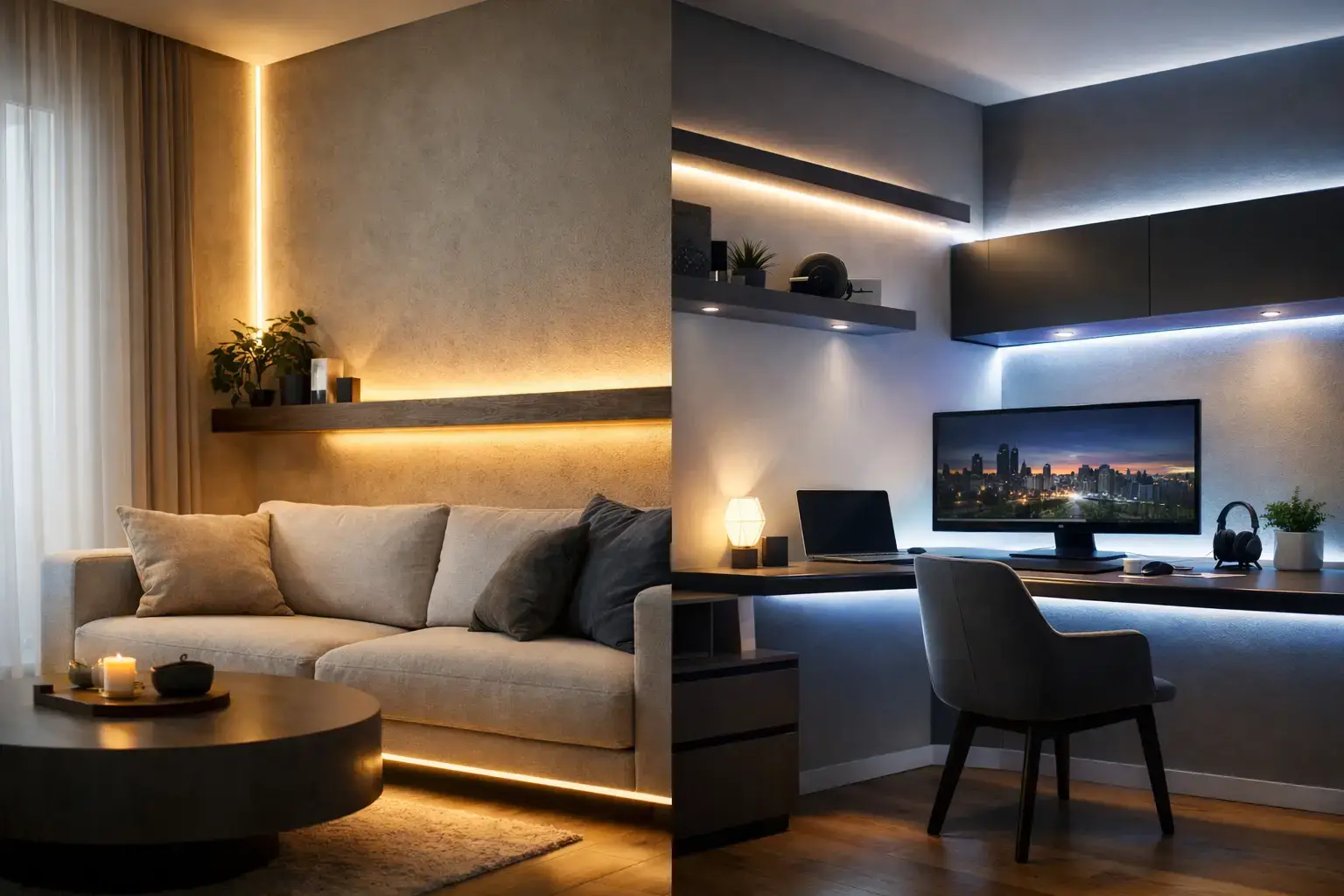
    A harsh downlight can make a renovated kitchen feel flat. A dark hallway can make a great home feel unfinished. That is where led strip decorative lights earn their keep – not as a gimmick, but as a practical way to add warmth, visibility and character to a space without major building work.

    Used well, strip lighting can highlight joinery, soften hard surfaces and improve the way a room functions after dark. Used poorly, it can peel away, show bright individual dots, fail early or create glare that is more annoying than useful. The difference usually comes down to planning, product choice and installation quality.

    Where led strip decorative lights work best

    The appeal of led strip decorative lights is flexibility. They can fit into places where traditional fittings do not make sense, and they can create an effect that feels considered rather than obvious. In homes, the most common applications are under kitchen cabinets, in bathroom niches, along stair treads, behind mirrors, inside wardrobes and under floating vanities. In outdoor areas, they are often used for deck edges, seating, pathways and alfresco zones.

    Commercial spaces can get just as much value from them. Retail displays, reception counters, shelving, bars and waiting areas all benefit from subtle lighting that supports the fit-out without overpowering it. For property managers, strip lighting can also be a smart upgrade in shared areas where appearance and visibility both matter.

    Not every location suits every product, though. A wardrobe light has very different demands from a poolside installation or a busy café counter. That is why the early decisions matter more than most people expect.

    What to get right before installation

    The first question is not colour. It is purpose. If the lighting is there purely for ambience, the output can be softer and the placement can be more concealed. If it needs to improve visibility on stairs, in a pantry or along a path, brightness and beam control become more important.

    After that, the key factors are colour temperature, ingress protection, driver quality and the surface the strip will be mounted to. Warm white often suits living areas, bedrooms and hospitality spaces because it feels more relaxed. Cooler light can work in task areas, but if it is too blue it can make a room feel clinical. In many homes, the best result comes from choosing a colour temperature that complements the main lighting rather than fighting against it.

    Moisture and dust ratings matter as well. A dry indoor shelf and an outdoor pergola should not use the same strip by default. Bathrooms, laundries, external walls and landscaping areas need products suited to those conditions. If water, steam or weather are involved, guessing is a risk.

    Then there is the driver and control setup. Cheap drivers are one of the biggest causes of flicker, buzzing and premature failure. Dimming compatibility can also catch people out. A strip light may look simple on the surface, but the supporting components are what determine whether it performs reliably over time.

    Why aluminium channels make such a difference

    One of the most overlooked parts of strip lighting is the channel. Many people assume the strip can simply be stuck in place and forgotten. Sometimes that works for a short period. Often it does not.

    An aluminium channel helps manage heat, improve adhesion and create a cleaner finish. It can also diffuse the light so you see a smooth line instead of individual LED points. That matters in visible locations like kitchen splashbacks, hallway joinery and feature walls, where the whole point is a polished result.

    There is also a durability benefit. Heat is the enemy of LED lifespan, and strips mounted without proper heat dissipation are more likely to degrade early. If you are spending money on custom cabinetry, a bathroom renovation or a commercial fit-out, it makes sense to protect the finish and the lighting system at the same time.

    Common mistakes with LED strip decorative lights

    The most common mistake is buying based on price alone. Lower-cost strips may look similar in the packet, but differences in chip quality, adhesive backing, driver performance and waterproofing become obvious once they are installed. It is frustrating to pull apart joinery or external cladding later because a bargain product failed early.

    Another issue is poor placement. If the strip is visible from normal standing or seated angles, glare can become a problem. Good strip lighting usually works best when the source is concealed and the effect is what you notice. That takes a bit of forethought during design, especially around mirrors, television units and overhead shelving.

    DIY wiring is another risk. Plug-in options have their place, but many permanent installations involve low-voltage systems, hardwired drivers, switched circuits or integration with existing lighting controls. That work needs to be done safely and to standard. In some settings, especially kitchens, bathrooms, outdoor areas and commercial premises, there is very little margin for error.

    Choosing strip lights for homes and businesses

    For homeowners, the right setup often comes down to comfort and simplicity. You want lighting that looks good, turns on when expected and does not need constant adjustment. A well-designed kitchen installation might use under-cabinet strip lighting for meal prep, toe-kick lighting for evening ambience and separate switching so each layer serves a purpose.

    For businesses, the priorities can shift slightly. Reliability, presentation and maintenance access become more important, especially in customer-facing spaces. A restaurant may want warm, dimmable strip lighting to shape atmosphere. A retail store may prefer a brighter, cleaner look that helps merchandise stand out. An office reception might need a subtle feature line that reinforces the fit-out without adding glare on screens.

    Property managers usually need something else again – practical upgrades that improve appeal while keeping maintenance predictable. In that case, product quality and access for future servicing can matter more than the most advanced lighting effects.

    When a licensed electrician adds real value

    There is a reason strip lighting projects often look easy online and end up more complicated on site. Power supply locations, switch access, cable routes, existing load, compliance requirements and the material you are fixing to all affect the end result.

    A licensed electrician can assess whether the installation should be hardwired, whether the circuit is suitable and how best to conceal cabling and drivers without compromising ventilation or future access. That becomes especially important during renovations, when lighting is being added alongside new cabinetry, plastering, tiling or outdoor works. Timing matters. It is much easier to get a neat result when the electrical plan is coordinated early.

    For larger homes, commercial spaces or mixed-use upgrades, there can also be value in treating strip lighting as part of a bigger lighting and electrical strategy rather than a stand-alone add-on. Voltricity often sees better long-term outcomes when decorative lighting is planned alongside task lighting, switchboard capacity and any future automation or security upgrades.

    Getting the finish right

    The best strip lighting rarely announces itself. It supports the room. It makes a vanity feel more refined, a staircase safer at night, or an outdoor entertaining area more inviting after sunset. You notice the effect before you notice the fitting.

    That is why final details matter. Even brightness, tidy terminations, concealed drivers and sensible switching all contribute to a result that feels deliberate. Good installation is not just about making the light turn on. It is about making the space feel better to live or work in.

    If you are considering led strip decorative lights, think beyond the reel itself. Focus on where the light will land, how it will be controlled and what the environment demands. A well-planned installation can add style and function for years. A rushed one usually looks temporary from day one.

    If you want the upgrade to look clean, perform properly and meet safety requirements, it pays to treat decorative lighting with the same care as any other electrical work. A small lighting detail can change the whole feel of a property when it is done properly.

  • 11 Outdoor Landscape Lighting Ideas for Front of House

    Pull up outside a home after dark and you can tell straight away whether the lighting was thought through or added as an afterthought. The best outdoor landscape lighting ideas for front of house do more than make a property look good. They help visitors find the path, improve security, highlight the home’s best features and make the whole frontage feel cared for.

    For most Australian homes, front-of-house lighting works best when it balances three things – appearance, function and safety. Too little light leaves dark spots around paths, steps and entry points. Too much light can make the façade look harsh, create glare and annoy the neighbours. A better approach is layered lighting, where each fitting has a job and the overall effect feels clean and intentional.

    What makes front-of-house lighting work

    A strong lighting plan starts by thinking about how the front yard is actually used. Some homes need better visibility from the street to the front door. Others need practical illumination for steps, driveways or side access. If security is a concern, the design should reduce shadowy areas without turning the front of the home into a floodlit car park.

    That is why a one-size-fits-all layout rarely works. A narrow block, a wide frontage, a sloping garden and a modern rendered façade all call for different choices. The fittings matter, but placement matters more.

    11 outdoor landscape lighting ideas for front of house
    1. Light the path, not just the garden

    Path lights are often the first thing homeowners think of, and for good reason. They make the front approach safer and guide people naturally to the entrance. The key is spacing them properly so the light overlaps gently rather than creating a row of bright dots.

    Low-level fittings usually look better than tall decorative posts, especially in smaller front gardens. If the path is curved, staggered placement tends to feel more natural than a rigid line on both sides.

    2. Use wall lights to frame the entry

    A front door should be easy to find at night. Wall-mounted lights on either side of the entry help define the doorway and add a welcoming feel. This can suit both classic and contemporary homes, depending on the fitting style.

    You do not need oversized fixtures to make an impact. A pair of well-positioned lights with a warm, even spread is often enough. It also helps with key access, parcel drop-offs and visitor visibility.

    3. Highlight architectural features

    If your home has textured brickwork, stone cladding, timber battens, columns or a distinctive façade, accent lighting can bring those details forward after dark. This is where narrow-beam uplights or carefully aimed spotlights can do a lot with very little.

    The trade-off is precision. Accent lighting looks polished when it is subtle and correctly positioned. If it is too bright or pointed awkwardly, it can flatten the feature or create glare from the street.

    4. Add uplighting to feature trees

    A feature tree in the front yard can become a major focal point at night. Uplighting through the trunk and canopy adds depth and gives the whole frontage more presence. This works particularly well with ornamental trees, sculptural trunks and layered foliage.

    It depends on the tree’s size and shape. A small Japanese maple needs a different beam spread from a mature gum or frangipani. Good placement is essential so the effect feels soft rather than theatrical.

    5. Wash the façade with light

    Wall washing is a useful option for homes with broad front walls or simple modern exteriors. Instead of spotlighting a single feature, it creates an even spread of light across the façade. This can make the house feel larger, cleaner and more secure.

    Used well, wall washing avoids the patchy look that comes from a few random fittings. Used poorly, it can feel flat and overly bright. The colour temperature and beam angle need to suit the material of the wall, especially on lighter renders that can reflect a lot of glare.

    6. Improve driveway visibility

    Driveways often get left out of the plan, even though they are one of the most used access points. Lighting the driveway edges, garage approach or turning area can improve visibility and make arriving home easier, particularly on winter evenings.

    This does not always mean strong floodlights. In many cases, subtle bollard lighting, low wall lights or carefully shielded fittings near the garage are a better choice. They provide guidance without blasting the whole frontage with light.

    7. Step lights for raised entries

    If the front entry includes stairs, split levels or retaining walls, step lighting is one of the most practical additions you can make. Recessed fittings or low-mounted lights on adjacent walls improve footing and reduce trip hazards.

    This is where appearance and safety line up neatly. Step lights can look sharp, but their real value is functional. They are especially worthwhile for family homes, rental properties and homes with frequent evening visitors.

    8. Layer in garden bed lighting

    Garden bed lighting adds depth between the street and the home. A few discreet spike lights aimed at planting can soften the transition from hard surfaces to the house itself. This works well with layered planting, grasses, feature pots and low shrubs.

    The mistake is trying to light every plant. A selective approach usually looks more refined and is easier to maintain. Light the strongest shapes and textures, then let the rest fall into the background.

    9. Use sensor lighting where it makes sense

    Not every front-of-house light needs to stay on all evening. Sensor lighting can be ideal for side access, driveways, entry zones and darker corners where security matters most. It offers practical illumination when movement is detected and can help reduce unnecessary energy use.

    The important part is choosing the right fitting and detection range. A poorly aimed sensor can trigger every time a car passes or the neighbour’s cat wanders through. Placement should be tested, not guessed.

    10. Keep the front gate visible

    If your property has a front gate, fence line or pedestrian access point, that area should be clearly visible at night. A modest light at the gate or along the fence return can help visitors, delivery drivers and residents move around more confidently.

    This is particularly useful on wider blocks or homes set back from the street. It also strengthens the sense that the whole frontage has been designed, not just the part closest to the front door.

    11. Choose warm light for a more welcoming finish

    One of the most overlooked front yard lighting decisions is colour temperature. In most residential settings, warm white lighting creates a softer and more inviting result than cooler tones. It tends to suit garden elements, façade materials and entry lighting far better.

    Cool white can still have a place for certain security applications or very modern exteriors, but it can also feel stark. If the goal is street appeal as well as function, warm light is usually the safer choice.

    Common mistakes with outdoor landscape lighting ideas for front of house

    The biggest mistake is overlighting. Many homeowners assume brighter means better, but too much light can wash out the very features you want to highlight. It can also create contrast problems, where one area is glaringly bright and the next is difficult to see.

    Another common issue is poor fixture placement. Lights that shine into windows, across the footpath or directly into the eyes of someone approaching the home do not feel welcoming. They feel uncomfortable. Shielding, beam control and mounting height all matter more than people expect.

    There is also the practical side. Outdoor lighting needs to handle weather, garden maintenance and long-term use. Cheap fittings may look fine initially, then start failing after exposure to rain, dust and heat. For front-of-house installations, durability is just as important as appearance.

    Why professional design and installation matter

    Front yard lighting looks simple from the street, but getting it right takes planning. Cable runs, switching, load capacity, placement, weather protection and compliance all need to be considered before the fittings go in. That is particularly true if the work is being added to an older home or combined with upgrades such as new entry lighting, security lighting or switchboard work.

    A licensed electrician can help you avoid the piecemeal look that often happens when lights are added one by one over time. Instead, the layout can be planned as a complete system that suits how the property is used now and how you want it to look at night. For homeowners who want reliable results without trial and error, that makes a real difference.

    At Voltricity, the focus is on practical lighting solutions that improve safety, presentation and day-to-day use without overcomplicating the job.

    Good front-of-house lighting should feel easy once it is finished. You arrive home, the path is clear, the entry feels welcoming and the house looks its best after dark – exactly as it should.

  • When to Change Lights and When to Upgrade

    When to Change Lights and When to Upgrade

    A flickering downlight in the kitchen, a yellowed oyster light in the hallway, or an office fit-out that still feels dim at 3 pm – most people start with the same question: should you just change lights, or is it time for something more substantial?

    The answer depends on what is actually causing the problem. Sometimes it is as simple as replacing a failed globe. Other times, the fitting is outdated, the circuit is overloaded, or the lighting layout no longer suits how the space is used. If you get that call wrong, you can spend money on quick fixes that do not last.

    Change lights or replace the whole fitting?

    This is where many homeowners and property managers get caught out. Not every lighting issue is solved by changing a bulb, and not every old fitting needs a full replacement either.

    If the light fitting is modern, in good condition, and designed for replaceable globes, a straightforward change may be all that is needed. That is often the case with table lamps, some pendants, and selected outdoor fittings. But with many LED downlights and integrated fixtures, the light source is built into the fitting. Once it starts failing, you are not really there to change lights in the traditional sense – you are replacing the unit.

    There is also the age factor. Older fittings can look fine from the outside while the internal wiring, connections, or lampholders are deteriorating. Heat, dust, moisture, and years of use all take a toll. In those cases, replacing the globe might get the light back on briefly, but it does not deal with the real issue.

    For commercial spaces, the decision usually comes down to efficiency and presentation as much as function. If staff are working under patchy, uneven light or customers are walking into a dim reception area, keeping outdated fittings alive can cost more in the long run than upgrading to something better suited to the space.

    Signs it is time to change lights

    There are a few clear situations where changing lights makes sense, provided the fitting itself is safe and compatible.

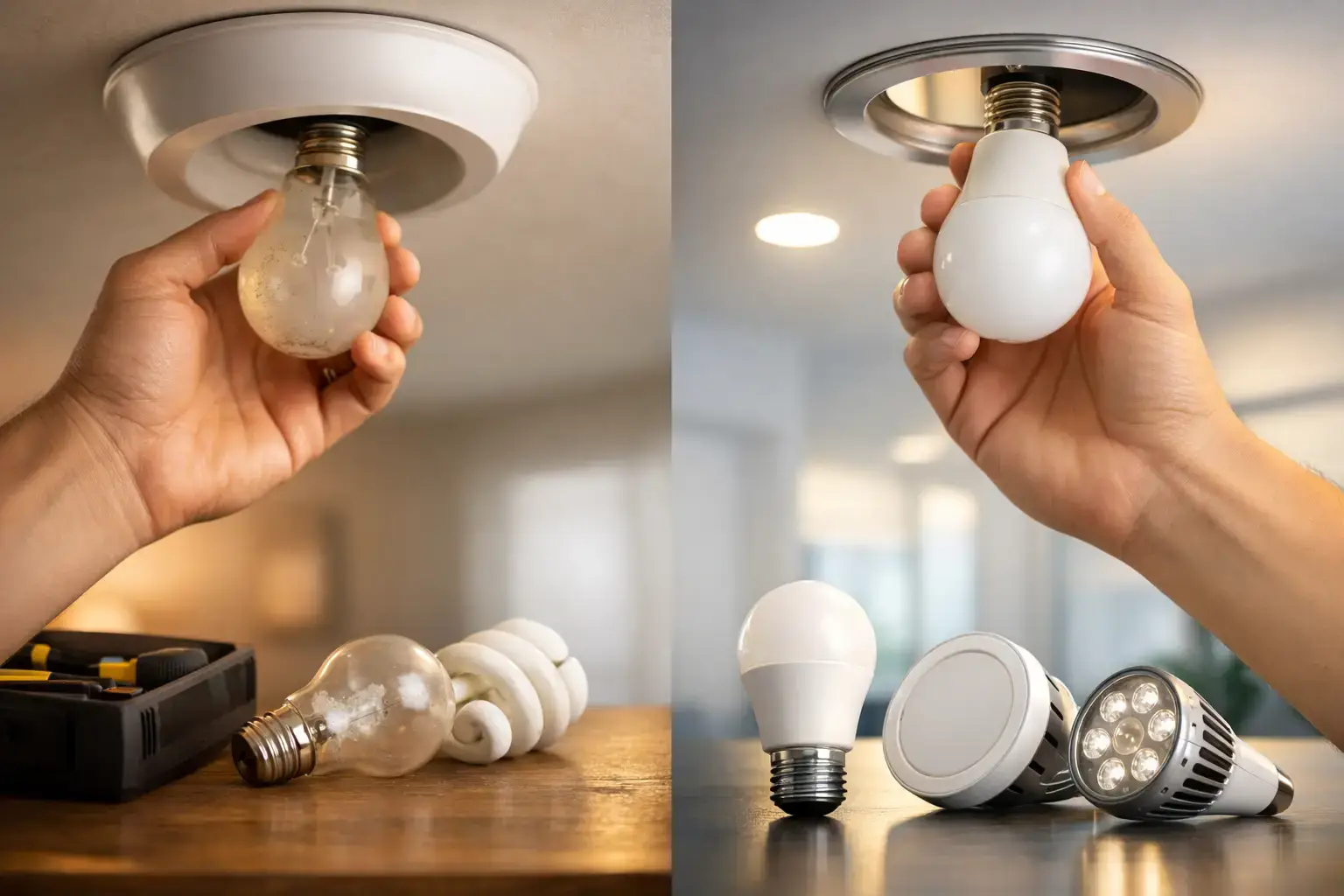
    A globe that has simply reached the end of its life is the obvious one. If there is no flickering before failure, no tripping circuit, and no visible damage to the fitting, a replacement may be all that is required. The same applies if the current globe type is working but the room feels too dark or too harsh. Swapping from an old halogen or CFL to a suitable LED option can improve brightness, reduce power use, and cut down maintenance.

    This is also common during renovations or property updates. Owners often want to change lights to improve the feel of a room without moving wiring or opening up ceilings. A warmer colour temperature in living areas, brighter task lighting in kitchens, or cleaner exterior lighting around entry points can make a property feel more modern without turning the job into a full electrical rework.

    That said, compatibility matters. Not every LED works properly with every dimmer, transformer, or fitting. If the wrong parts are mixed together, you can end up with buzzing, flashing, shortened lifespan, or poor performance from day one.

    When changing lights is not enough

    If the same fitting keeps blowing globes, that is a warning sign. So is flickering that continues after a replacement, lights that take time to come on, switches that feel hot, or any burning smell around the fitting. Those are not cosmetic problems. They can point to loose connections, failing components, overloaded circuits, or damage hidden in the ceiling space.

    You should also be cautious with older homes and commercial premises that have had multiple alterations over time. It is not unusual to find mismatched fittings, ageing cabling, or lighting that was installed to older standards. What looks like a small replacement job on the surface can expose bigger issues once inspected properly.

    Bathrooms, laundries, car parks, workshops, and outdoor areas bring another layer of risk because moisture and environmental exposure affect both safety and product choice. In those spaces, the right IP rating, installation method, and circuit protection matter just as much as the fitting itself.

    If you are changing several lights at once, that is often the right time to step back and assess the whole setup. A piecemeal approach can work, but it can also leave you with inconsistent brightness, mixed colour temperatures, and fittings that age at different rates.

    The practical difference a lighting upgrade makes

    A proper lighting upgrade is not only about making a place look newer. It changes how a space works.

    In homes, the biggest gains are usually comfort, visibility, and energy efficiency. Better lighting in kitchens and bathrooms improves day-to-day use. Updated exterior lighting can make access safer at night and improve security around driveways, entry points, and side paths. In living areas, the right combination of ambient and task lighting makes the home feel more comfortable without relying on overly bright single fittings.

    For businesses, lighting affects staff performance, customer experience, and maintenance costs. Harsh or uneven lighting can make a workplace fatiguing. Poorly lit stockrooms, stairwells, and access areas can also create avoidable safety risks. Newer LED systems usually offer longer life, lower running costs, and better consistency across the site.

    This is where a licensed electrician adds real value. The job is not just to install a new fitting. It is to assess the load, confirm compliance, check the condition of existing wiring, and make sure the final result works properly in the real world.

    Choosing the right lights for the space

    The best replacement is not always the brightest one. Light output, beam angle, colour temperature, dimming compatibility, fitting size, and intended use all matter.

    Warm white generally suits bedrooms, lounges, and hospitality-style spaces where comfort matters. Neutral white often works well in kitchens, bathrooms, offices, and retail settings because it gives a cleaner look without feeling too cold. Cooler temperatures can suit task-heavy commercial environments, but they are not always the right choice for customer-facing or residential areas.

    Then there is placement. A single central fitting may technically light a room, but it often leaves shadows exactly where people need visibility most. That is why downlights, feature lighting, under-cabinet lighting, sensor lights, and outdoor security lighting are usually planned together rather than chosen one by one.

    Property managers also need to think beyond the immediate install cost. Standardised fittings across multiple tenancies or common areas can simplify future maintenance. In strata and commercial sites, that kind of forward planning saves time and avoids repeated call-outs for mismatched replacements.

    Safety comes first when you change lights

    There is a difference between replacing a standard globe and carrying out electrical work on a fitting or circuit. Once wiring, fittings, switches, or hardwired components are involved, it is licensed work.

    That matters because poor installation does not just lead to nuisance faults. It can create fire risk, electric shock risk, and compliance issues – especially in rental properties, workplaces, and shared buildings. Insurance complications can follow if unlicensed work causes damage.

    A professional approach also means checking the surrounding system, not only the failed light. If a fitting has been overheating, there may be insulation clearance issues. If lights dim when other appliances start, the problem could be elsewhere on the circuit. If outdoor lights keep failing, water ingress or incorrect product selection may be the cause.

    For customers, the real benefit is certainty. You want to know the lights are safe, correctly installed, and set up to last.

    Why timing matters

    Many people wait until a light stops working completely before acting. Sometimes that is fine. Often, though, the earlier signs were there – occasional flickering, reduced brightness, intermittent switching, or a fitting that had clearly aged beyond its best.

    Dealing with it early usually gives you more options. You can plan the right replacement, coordinate multiple jobs in one visit, and avoid the inconvenience of sudden failures. For businesses, that can mean less disruption to staff and customers. For homeowners, it means getting the job sorted before it turns into an urgent repair.

    Whether you need to change lights in one room or rethink lighting across an entire property, the smartest move is to treat lighting as part of the bigger electrical picture. A well-lit space should not only look better. It should be safer, more efficient, and better suited to the way you actually use it.

    If you are unsure whether a light needs a simple replacement or a proper upgrade, a licensed electrician can help you make the call with confidence – and that is usually the difference between a quick patch-up and a result that lasts.

  • How to Design Lighting for a Building

    How to Design Lighting for a Building

    A building can have quality finishes, a practical layout and solid electrical work, yet still feel uncomfortable if the lighting is wrong. Too dim, and people strain to work or move safely. Too bright, and the space feels harsh. If you are working out how to design lighting for a building, the best place to start is not with fittings – it is with how the space will actually be used day to day.

    Good lighting design balances visibility, comfort, efficiency and compliance. It also needs to suit the people using the building, the hours it operates and the kind of tasks happening inside. For homeowners, that might mean making a kitchen easier to cook in and a hallway safer at night. For business owners or property managers, it may mean creating a workplace that supports productivity while keeping running costs under control.

    How to design lighting for a building from the ground up

    The most reliable way to approach lighting design is to think in layers. One light in the middle of the ceiling rarely solves everything, especially in larger homes, offices, retail spaces or mixed-use buildings. A better result comes from combining ambient lighting for general visibility, task lighting for specific activities and accent lighting to highlight features or improve atmosphere.

    Ambient lighting is the base layer. It helps people move through the space safely and comfortably. Task lighting supports practical jobs such as reading, food preparation, administration work or detailed trade tasks. Accent lighting is more selective and often used in entry areas, boardrooms, landscaped zones, display areas or living spaces where appearance matters.

    Before any product is selected, it helps to map the building room by room. Ask what happens in each area, who uses it, how long they stay there and whether lighting needs to change across the day. A storeroom, reception area and bathroom all need different outcomes. The same is true in a home – a bedroom should not be lit like a garage, and an outdoor entertaining area should not be treated the same as a security pathway.

    Start with function, not fittings

    One of the most common mistakes is choosing lights based on style alone. Appearance matters, but performance matters first. In practical spaces, poor lighting creates frustration quickly. In commercial settings, it can also affect safety, staff comfort and presentation.

    Think about ceiling height, room dimensions, surface colours and natural light. Dark floors and walls absorb more light, so the space may need a different arrangement from a room with pale finishes. High ceilings often require stronger output or more thoughtful placement to avoid shadows and dead zones. Windows can help during the day, but they also create contrast and glare if artificial lighting is not planned properly.

    It is also worth considering when the building is used most. A daytime office with strong natural light has different demands from a warehouse, medical suite or home theatre used mainly at night. That affects the type of fittings, controls and colour temperature you choose.

    Choosing the right light levels

    Light level should match the task. Too little light can make a space unsafe or tiring to use. Too much can feel clinical and uncomfortable. This is where experience matters, because the right answer is rarely the same across an entire building.

    As a general rule, circulation areas such as corridors and stairs need clear, even lighting for safety. Kitchens, laundries, workstations and bathrooms need stronger, more targeted light. Living rooms, waiting areas and hospitality spaces often benefit from softer, more flexible lighting that can be adjusted depending on time of day or use.

    Uniformity is just as important as brightness. If one part of a room is bright and another is noticeably dim, the space feels awkward and people’s eyes work harder to adjust. A lighting plan should reduce harsh transitions and avoid creating glare on screens, reflective benches or polished floors.

    Colour temperature changes the feel of a space

    Colour temperature has a big impact on how a building feels. Warmer light tends to create a more relaxed, welcoming atmosphere, which suits living areas, bedrooms and some hospitality spaces. Cooler light can feel cleaner and sharper, which often works well in kitchens, bathrooms, offices and task-focused commercial areas.

    There is no single best option for every building. In fact, using the same colour temperature everywhere can be a missed opportunity. A home usually benefits from variation across different rooms. A commercial property may need more consistency, but still with adjustments for staff areas, customer zones and external spaces.

    Getting this balance right also affects how materials and finishes appear. Timber, paint, stone and fabrics can look quite different under various light tones. That is another reason lighting design should be considered early, not left until the end of a build or renovation.

    How to design lighting for a building with energy use in mind

    Running costs matter, especially in larger homes and commercial premises where lighting is used for long hours. Efficient fittings and smart controls can make a noticeable difference over time, but efficiency should never come at the expense of usability.

    LED lighting is now the standard choice for most projects because it offers strong performance, lower power consumption and long service life. Beyond that, control strategy becomes important. Sensors, timers and dimmers can all help reduce unnecessary use. In offices, meeting rooms, bathrooms and external areas, these controls are often practical rather than fancy.

    That said, automation should match the building. A sensor in a storeroom makes sense. A sensor in a living room may annoy people if it switches off while they are sitting still. This is where a tailored design is better than applying the same system across every part of the property.

    Don’t overlook maintenance and access

    A lighting design should still work well years after installation. That means thinking about access for replacement, cleaning and servicing. Decorative fittings in high ceilings may look impressive, but if they are difficult to maintain, they can become an expensive headache.

    For strata, retail and commercial properties, maintenance planning is especially important. Consistent lamp type, sensible placement and durable fittings help reduce downtime and simplify future work. In outdoor areas, weather resistance and installation quality are critical if you want reliable performance through heat, rain and coastal conditions.

    Safety, compliance and the electrical side of the job

    Lighting is not only about appearance. It is part of the building’s electrical system and must be installed safely and to code. That includes correct circuit design, load management, switching, emergency lighting where required and appropriate protection for wet areas, outdoor zones and specialised environments.

    Older buildings often need more than new fittings. They may require rewiring, switchboard upgrades or additional circuits to support a modern lighting plan safely. This is especially common in renovations where new lighting is added to a property that was never designed for current demands.

    For commercial buildings, compliance obligations can be broader, particularly in workplaces, common areas and public-facing environments. Emergency and exit lighting, testing requirements and safe access all need to be considered early. Leaving these details until installation day usually leads to delays, variation costs or compromise.

    Matching lighting to different building types

    Homes, offices, retail shops, warehouses and apartment complexes all have different priorities. In a home, comfort and flexibility are often the focus. In an office, the goal may be visual comfort, energy control and a professional atmosphere. In retail, lighting can influence how products look and how customers move through the space.

    Industrial and service environments tend to place more weight on visibility, durability and safety. Outdoor areas also need their own approach. Pathways, car parks, entry points and landscape features should be lit with a clear purpose, whether that is wayfinding, presentation or security.

    This is why a one-size-fits-all solution rarely works. A good lighting design responds to the building, the people and the practical outcomes required.

    If you are planning a new build, fit-out or upgrade, it pays to involve a licensed electrician early. A proper lighting plan can prevent rework, improve comfort and make the whole building easier to live in or operate. For many property owners, that is where working with an experienced team like Voltricity adds value – not just in installation, but in getting the design right before the first fitting goes in.

    The best lighting does not call attention to itself every minute of the day. It simply makes the building work better, feel better and stay safer for the people using it.