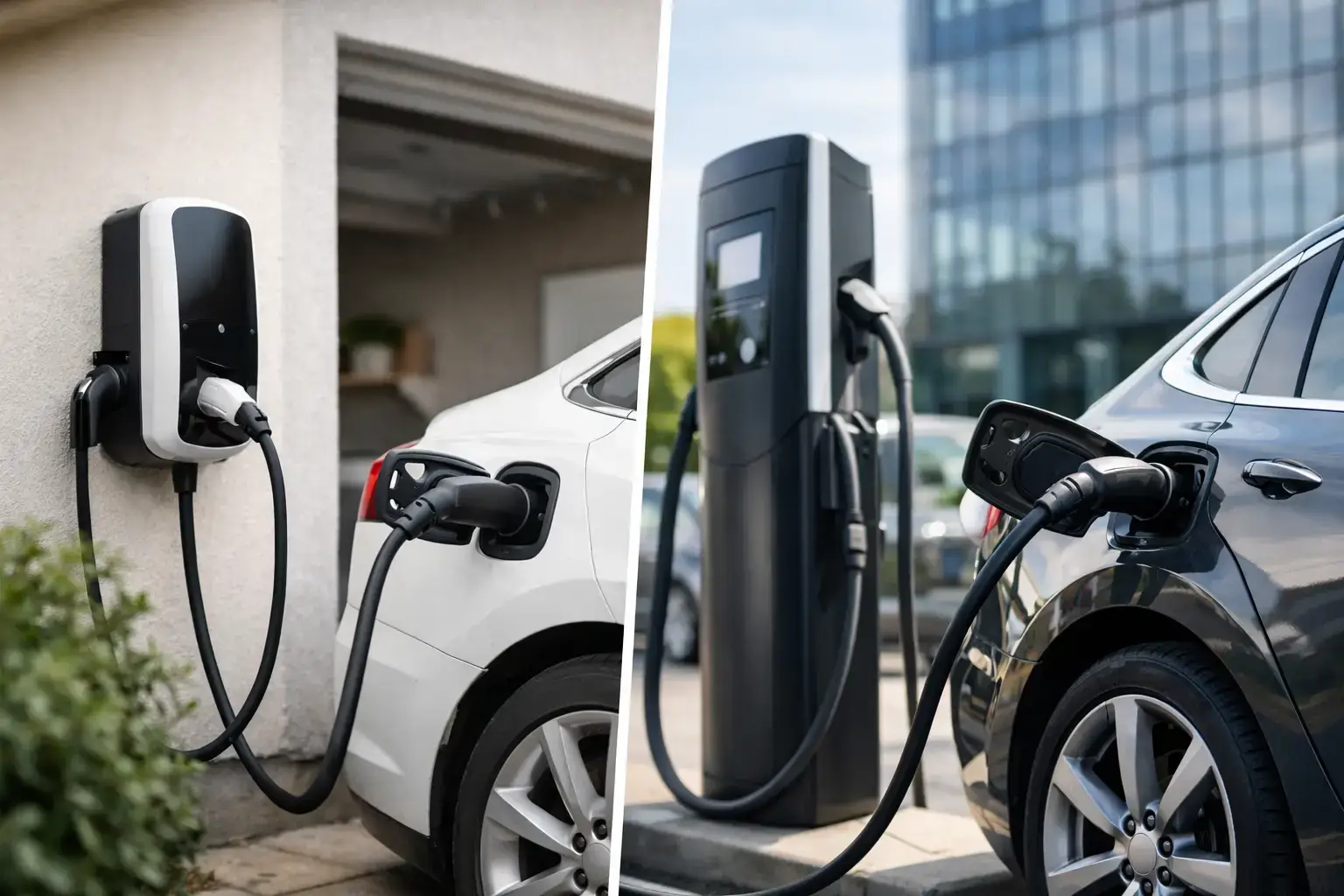
If you are relying on a standard power point to charge an electric vehicle, you have probably already felt the limits. Charging is slow, cables can be awkward to manage, and not every property is set up to handle that load comfortably. Proper EV chargers solve those problems by giving you a safer, faster and more reliable way to charge at home or at work.
For most property owners, the real question is not whether an EV charger is useful. It is which setup makes sense for the way the vehicle is used, what the existing electrical system can support, and how to get it installed properly the first time. That matters whether you are a homeowner wanting overnight charging in the garage, a strata manager planning for multiple residents, or a business operator looking to future-proof your site.
Why EV chargers are worth installing properly
A dedicated charger does more than cut charging time. It creates a controlled charging environment that is designed for regular, high-demand use. That means better safety, more predictable performance and less day-to-day hassle.
For homeowners, that often comes down to convenience. You come home, plug in, and the vehicle is ready by morning. There is no need to plan around long charging sessions or wonder whether the circuit is being pushed too hard.
For businesses, the benefits can be broader. EV chargers can support staff, tenants, fleet vehicles and customers. They can also add value to a property and signal that the site is keeping pace with how people travel now. In some settings, they are quickly shifting from a nice extra to a practical expectation.
Home EV chargers: what usually makes sense
Most homes do not need the most advanced charging system on the market. They need something dependable, compliant and suited to the home’s electrical capacity. In many cases, a Level 2 AC charger is the right fit because it offers a strong balance of charging speed, cost and practicality.
That said, the best option depends on the property. A newer home with a modern switchboard and spare capacity may be relatively straightforward. An older property with outdated wiring or a crowded switchboard may need upgrades before installation can happen safely.
The charger is only part of the job
This is where many people get caught out. They focus on the charger itself and not the condition of the electrical system behind it. A quality unit will not perform properly if the circuit design is poor, the switchboard is outdated or the installation has not been planned around the home’s total power demand.
A proper assessment should consider cable runs, circuit protection, load requirements and where the charger will actually be used. The best install is not just technically compliant. It is practical for daily life, with sensible positioning, cable management and straightforward operation.
Speed matters, but not always in the way people think
Faster charging sounds better on paper, but it is not always the deciding factor. If a car is parked overnight for eight to ten hours, many households do not need the highest charging rate available. What they need is enough charging capacity to comfortably cover daily driving.
Oversizing can add cost without adding much real benefit. On the other hand, undersizing may become frustrating if the vehicle is used heavily or if a second EV is added later. The right answer sits in the middle and depends on how the household actually uses the car.
EV chargers for commercial properties
Commercial charging brings a different set of priorities. A business or property manager may be looking at user access, multiple charging points, billing, durability and future expansion rather than a single vehicle in a private garage.
The location also matters. A small office car park, a retail site, a warehouse and a residential complex all have different traffic patterns and charging needs. A charger that works well for a private staff bay may be completely unsuitable for customer turnover or shared access.
Planning for growth avoids rework later
One of the smartest decisions in a commercial setting is to think beyond the immediate need. You may only want one or two chargers now, but if the site is likely to need more later, the infrastructure should reflect that. Capacity planning, conduit routes and switchboard allowance can make expansion much simpler and more cost-effective.
Retrofitting in stages is possible, but it often costs more when the original design does not leave room to grow. A good installation plan looks at current demand and future demand together.
Shared and public-facing charging needs more structure
When chargers are used by multiple people, the install needs more than electrical compliance. It also needs practical control. That may include access restrictions, usage tracking, signage, protection from damage and placement that does not create traffic or parking issues.
Commercial environments are less forgiving than residential ones. Equipment needs to stand up to heavier use, and the layout needs to work for people who are unfamiliar with the site. A clean, well-considered installation reduces confusion and makes the charger easier to manage.
Does your switchboard need an upgrade?
Sometimes yes, sometimes no. It depends on the age of the property, current electrical demand and how much spare capacity is available. Homes and businesses with older switchboards may need upgrades before EV chargers can be installed safely.
This is not a box-ticking exercise. The switchboard is the control point for electrical safety and load management across the property. If it is outdated or overloaded, adding a charger can expose underlying issues that were already there.
In practical terms, a switchboard upgrade may be needed if there is no room for additional protection devices, if existing components no longer meet current standards, or if the property’s power demand has outgrown the original setup. It is better to identify that early than to force a charger into a system that is already under strain.
Installation quality makes a real difference
EV chargers are not a DIY-friendly add-on, and they are not something to hand to the cheapest installer without checking credentials. The quality of the electrical work directly affects safety, performance and long-term reliability.
A licensed electrician should assess the property, recommend a charger that suits the site, and install it in line with current standards. Just as importantly, they should explain what is being done and why. Clear advice matters because most customers do not need jargon. They need confidence that the job is being handled properly.
At Voltricity, that means looking at the full picture rather than treating the charger as a stand-alone item. Placement, protection, wiring path, future use and the condition of the existing electrical system all affect the result.
Common mistakes people make with EV chargers
The most common mistake is choosing based on price alone. A cheaper charger or rushed installation can look appealing at first, but the value disappears quickly if the system is unreliable, inconvenient or unsafe.
Another mistake is ignoring how the property will change over time. A home with one EV today may have two in a few years. A business that only wants staff charging now may later want tenant or visitor access. Planning around likely growth can save a lot of disruption.
There is also the issue of charger location. A poorly placed charger can make everyday use frustrating, even if the electrical work itself is sound. Cable reach, vehicle position, weather exposure and foot traffic all need to be considered before the install begins.
Choosing the right setup
There is no single best charger for every property. The right setup depends on your vehicle, driving habits, parking arrangement, electrical capacity and budget. For some customers, a straightforward residential charger is the obvious choice. For others, load management, multiple units or switchboard works will be part of the solution.
The good news is that this does not need to be complicated when it is handled by the right team. A proper site assessment can narrow down the options quickly and identify any upgrade requirements before work starts. That gives you a clearer scope, fewer surprises and a charger that actually suits the property.
If you are considering EV chargers for your home, commercial site or managed property, the best place to start is with honest advice and a safe installation plan. A good system should make everyday charging feel easy, not like another electrical problem waiting to happen.