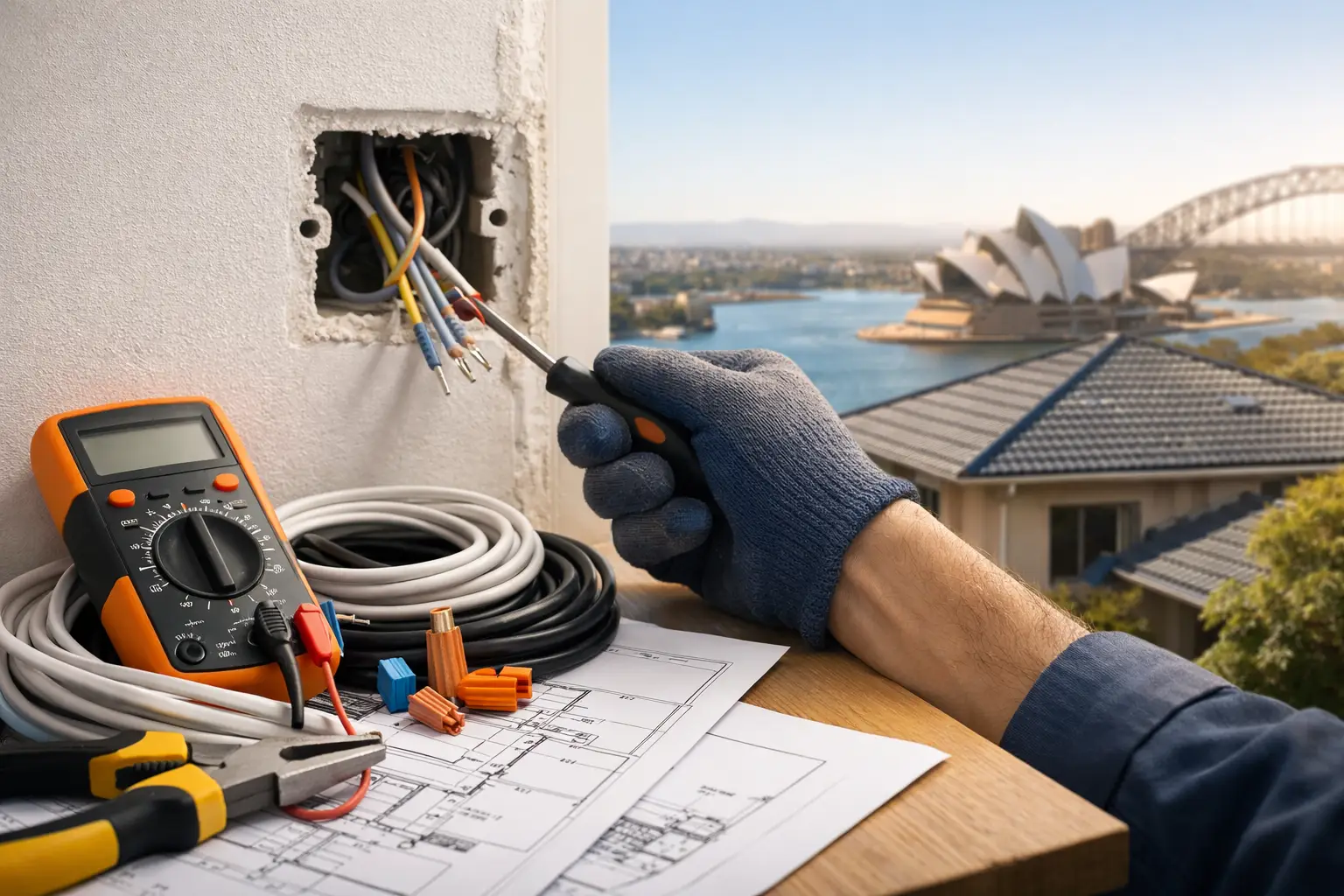
A rewiring project is rarely something property owners plan for. It usually begins with a tripping circuit, flickering lights, an ageing switchboard, or the discovery of old cabling during a renovation. So, how much does rewiring cost? In Australia, the answer depends on the property, the condition of the existing installation and how much access is available – but a clear, site-specific quote is the only reliable way to budget safely.
For a straightforward partial rewire, costs may start from a few thousand dollars. A full rewire of an occupied home can commonly range from around $8,000 to $20,000 or more, particularly where switchboard upgrades, difficult access, plaster repairs or substantial new circuits are required. Commercial projects are quoted individually because building layout, operating hours and compliance requirements can change the scope significantly.
The key point is that rewiring is not simply replacing a length of cable. It is a safety upgrade to the electrical system that supplies your property every day.
How much does rewiring cost for an Australian property?
Indicative figures can help with early planning, but they should not be treated as a fixed price list. Electrical work must be assessed by a licensed electrician, who can identify what is behind the walls, in the roof space and at the switchboard before providing an accurate proposal.
As a broad guide, a small partial rewire – such as replacing a damaged circuit, updating wiring to one room or adding circuits for a kitchen renovation – may sit in the $2,000 to $6,000 range. A full rewire of a smaller unit or townhouse may be around $6,000 to $12,000 where access is reasonable and finishes are not overly complex.
For a three or four-bedroom house, a complete rewire commonly falls between $10,000 and $20,000-plus. Larger homes, heritage properties, properties with multiple levels, or homes with solid brick walls and limited roof access can cost more. If the work includes a new switchboard, new lighting, additional power points, smoke alarms, data cabling, outdoor circuits or an EV charger allowance, the overall investment will rise accordingly.
For businesses, the cost may be driven less by floor area and more by the number of circuits, equipment loads, emergency lighting, data needs and the requirement to keep the premises operating while works are underway.
What changes the cost of a rewiring job?
Every property has a different electrical history. A careful inspection prevents assumptions and helps ensure the quote covers the work needed to bring the installation up to the required safety standard.
The age and condition of existing wiring
Older homes may contain deteriorated insulation, undersized circuits, old-style fuses, or wiring that has been altered over several decades. Some properties have a mix of old and new wiring, which can make fault-finding and safe integration more involved.
If hazardous materials, damaged cable runs or unapproved work are found, additional rectification may be necessary. This is not scope creep for its own sake. It is the practical reality of making sure the finished installation is safe, compliant and dependable.
Access behind walls, ceilings and floors
Access is one of the largest cost variables. A home with an accessible roof cavity and suspended timber floor can be easier to rewire than an apartment with concrete slabs, limited ceiling space and finished walls throughout.
Electricians may need to lift sections of flooring, make controlled openings in plaster, work through tight roof spaces or use existing conduits where suitable. The electrical contractor’s role is to minimise disruption, but some cutting and patching may be unavoidable during a full rewire. Clarify from the outset whether plastering, painting and other making-good work are included or need to be arranged separately.
Switchboard and safety switch upgrades
Rewiring often reveals that the switchboard also needs attention. Older fuse boards may not have the circuit capacity or protection required for a modern household, particularly one running air conditioning, induction cooking, pool equipment, solar, home office equipment or electric vehicle charging.
Upgrading the switchboard can add to the initial project cost, but it gives new circuits appropriate protection and makes the system easier to manage. Modern circuit breakers and safety switches are a critical part of a safer electrical installation, not an optional finishing touch.
Number of circuits, outlets and fixtures
Replacing existing cables is one part of the job. Many owners take the opportunity to improve how their property works: extra power points near bedsides, better kitchen circuits, dedicated appliance circuits, USB outlets, ceiling fans, feature lighting, external lighting or security cameras.
These upgrades make sense while access points are open, but they need to be included in the scope. A quote based on like-for-like replacement will look very different from one that also modernises lighting and power throughout the building.
Occupied versus vacant properties
A vacant property generally gives electricians more freedom to access rooms, isolate circuits and complete work efficiently. In an occupied home or active business, the work may need to be staged to keep essential power available and reduce disruption to family life, tenants, staff or customers.
Staging can be worthwhile, especially for a business that cannot afford to close. It may, however, involve more labour and coordination than completing all work at once. Discuss working hours, noise restrictions and temporary power needs before the project begins.
Signs your property may need rewiring
Not every electrical issue means a full rewire is required. A licensed electrician can determine whether targeted repairs or a circuit upgrade will solve the problem. Still, recurring warning signs deserve prompt attention.
Look out for frequent circuit trips, lights that dim when appliances start, warm or discoloured power points, cracking or brittle cable insulation, buzzing switches, burning smells, shocks or tingles, and reliance on power boards because there are too few outlets. Ceramic fuses, fabric-insulated wiring and a lack of safety switches are also common indicators that an older installation should be assessed.
If you are buying, renovating or managing an older property, an electrical inspection is a sensible step before committing to broader building works. Finding an issue early allows you to budget properly rather than reopening finished walls later.
What should a rewiring quote include?
A lower number is not always better value if important work has been excluded. A professional rewiring quote should explain the proposed scope in clear language, including which circuits, rooms and components are covered.
Ask whether the price allows for new cabling, power points, switches, light points, switchboard work, safety switches, testing and required certification. It should also state any assumptions about roof access, wall repairs, excavation, after-hours work or unexpected conditions discovered once work starts.
It is reasonable to ask how disruptions will be managed, how long the property may be without power and whether the work can be completed in stages. For commercial premises, confirm the plan for isolations, access control, emergency systems and safe operation around staff and customers.
The right contractor will not promise a figure without understanding the property. They will inspect, explain the options and give you a practical scope that matches your safety needs and future plans.
Can you reduce rewiring costs without compromising safety?
There are sensible ways to control cost, but electrical safety is not the place to cut corners. Combining rewiring with a planned renovation can reduce repeat access work, particularly if walls or ceilings are already being opened. Finalising the locations of kitchens, appliances, furniture, lighting and charging points before work starts also reduces variations later.
Where possible, allow clear access to rooms, the switchboard and roof space. If you are planning future additions such as solar, a battery, air conditioning or an EV charger, mention them during the initial consultation. Allowing for suitable circuits or capacity now can be more economical than modifying a new installation later.
Avoid relying on temporary fixes, unlicensed work or overloaded power boards to delay a known issue. These approaches can create a larger repair bill and, more importantly, expose people and property to preventable risk.
Rewiring is an investment in how your property performs
The cost of rewiring reflects labour, safe access, quality materials, testing and the expertise required to leave your property compliant and ready for modern electrical demand. It is also an opportunity to make the space more practical, whether that means better lighting at home, reliable circuits for a business, improved security infrastructure or capacity for future technology.
Voltricity can assess the condition of your electrical installation, explain the work in plain terms and provide a transparent quote based on your property rather than a guess. A timely inspection gives you the confidence to plan the work properly and move forward with a safer, more reliable electrical system.