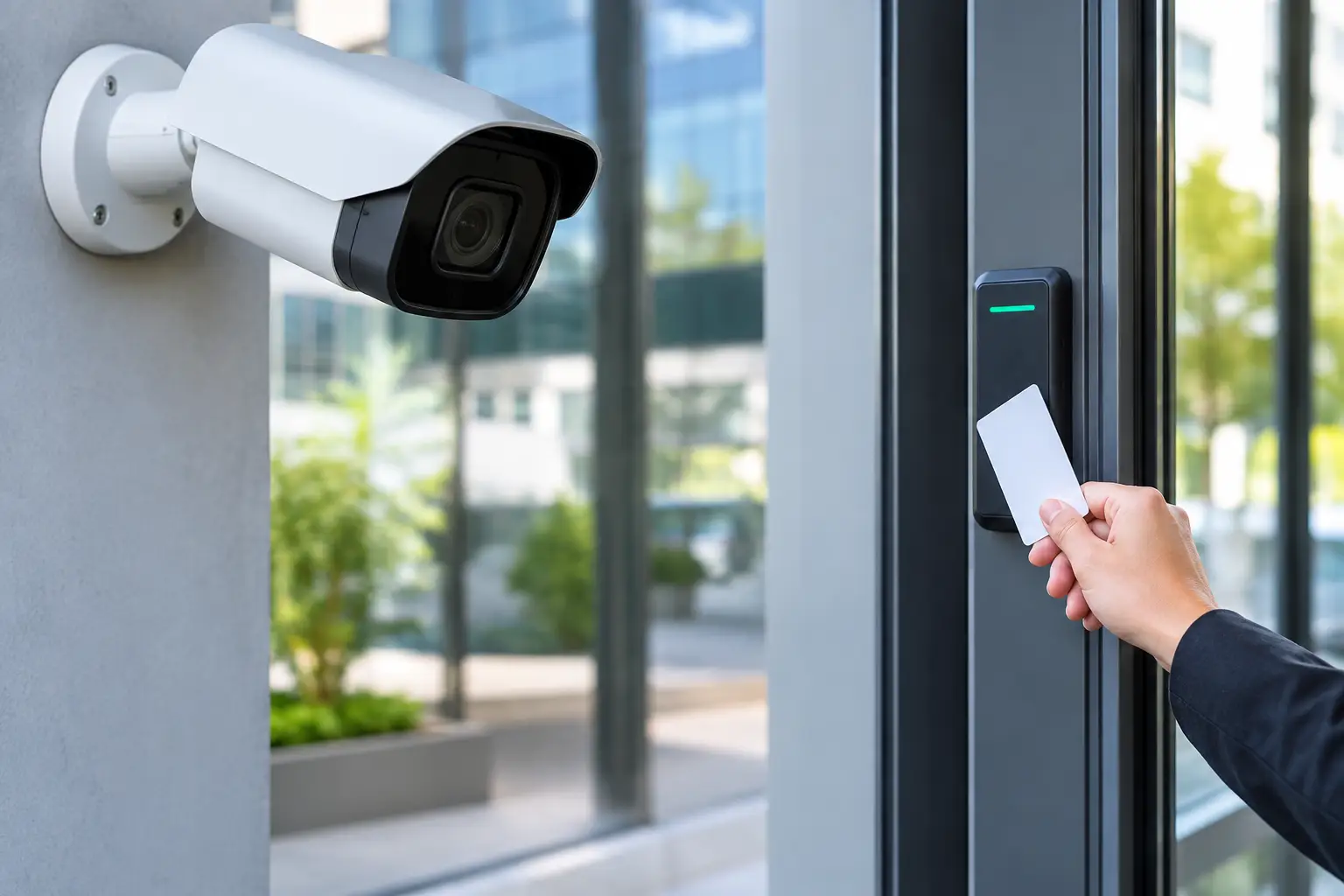
A CCTV access control comparison starts with a simple question: do you need to see what happened, control who can enter, or do both? Cameras provide a clear visual record around your property. Access control manages doors, gates and authorised entry. Used together, they give homeowners, property managers and business operators much stronger visibility over the places that matter.
The right choice depends on the property, the risks you are managing and how people use the site each day. A family home may need camera coverage at the front door, driveway and side access. A commercial tenancy may need controlled entry, an audit trail for staff access and footage that can be reviewed after an incident. There is no one-size-fits-all package, but there is a sensible way to decide.
CCTV vs access control: what each system does
CCTV is designed to observe and record activity. Modern systems can send alerts to a mobile, capture clear footage in low light and store recordings locally or through approved cloud services. Cameras are valuable for deterring opportunistic behaviour, checking deliveries, monitoring vulnerable areas and providing evidence when an event needs to be investigated.
Access control is designed to manage entry. Instead of relying on a conventional key, a door or gate can be opened with a fob, PIN, swipe card, mobile credential or intercom release. The system can restrict access by person, door and time of day. For example, a cleaner may be permitted through a rear service door after hours, while office staff can access the main entrance during standard operating times.
The difference is practical. CCTV can show that someone entered through a door. Access control can limit whether they can open that door in the first place. Cameras are reactive and preventative through visibility; access control is preventative through permission management.
CCTV access control comparison: the key differences
When comparing the two, start with the outcome you need rather than the technology itself. CCTV is often the first security upgrade because it gives broad coverage at a relatively accessible starting point. It suits homes, small retail sites, car parks, workshops and common areas where seeing activity is the main priority.
Access control becomes more valuable where keys are difficult to manage or certain spaces need tighter protection. This includes offices, apartment buildings, medical rooms, stock areas, server cupboards, education facilities and shared commercial sites. If a staff member or tenant leaves, their credential can be removed without the cost and disruption of rekeying multiple doors.
CCTV also has limits. A camera cannot physically stop an unauthorised person from following someone through a door, forcing a lock or accessing an unsecured gate. Footage may identify the issue afterwards, but it does not replace proper locks, lighting, door hardware or controlled entry.
Access control has its own limits. An access log may confirm that a credential was used at 7:42 pm, but it may not show whether the cardholder entered alone, held the door open or was under pressure to provide access. That is where a correctly positioned camera adds context.
For many commercial properties, the best answer is an integrated system. A camera can cover the entry point while the access system records the event. When an incident occurs, the manager has both the visual evidence and the entry history to review. Integration should be planned carefully, however. It is useful when it solves a real operational problem, not simply because it is available.
Choosing the right system for your property
For a home, CCTV is usually the more practical first step. Coverage of entry doors, the driveway, backyard and any side passage can help you monitor arrivals, deliveries and unusual movement. Pairing cameras with sensor lighting is often a cost-effective way to improve security and visibility after dark.
Access control can make sense for larger homes, gated properties, home offices or properties with regular contractors. A video intercom and electric gate release, for example, lets you confirm who is at the entrance before granting access. The priority should be reliable operation, safe cabling and hardware suited to the gate or door, rather than an overly complicated setup.
For a small business, consider how many people need access and which doors create risk. A café may only need staff control at the rear entry and storeroom. A professional office may need credential access at the main entry, restricted access to records and cameras covering reception. In each case, a system should be easy for authorised staff to use and straightforward for a manager to administer.
Property managers often benefit from access control in common areas, plant rooms, bin stores, garages and shared facilities. Lost keys, uncontrolled copying and tenant turnover can quickly become expensive. Managed credentials create more control, while CCTV can help investigate damage, dumping or unauthorised use of shared spaces.
Larger commercial sites need a more detailed plan. Consider shift patterns, delivery access, visitor management, emergency exits, high-value stock, network requirements and future expansion. A system that works for ten users may not be the right fit for 100 staff across several entry points.
What to consider before installation
Good security starts with a site assessment. Camera placement matters more than camera quantity. A camera facing bright afternoon sun, mounted too high or aimed only at the top of a person’s head may not provide useful footage. Entrances, paths of travel, cash-handling areas and vehicle access points should be assessed based on what you need to identify or monitor.
For access control, the existing door and frame are just as important as the reader on the wall. The locking method must suit the door type, fire and egress requirements, building use and level of security required. Emergency exit paths must remain safe and compliant, so access control should always be designed and installed by appropriately qualified professionals.
Privacy also deserves attention. Cameras should be aimed at your own property and legitimate areas of concern, not into neighbouring homes or private spaces. Businesses should be clear with employees and visitors where surveillance is in use. Storage periods, who can view footage and how credentials are managed should be decided before the system goes live.
Network capacity and power requirements can affect both performance and cost. Wired systems are generally a strong option for permanent commercial installations because they can provide stable connections and centralised power. Wireless cameras can suit selected residential applications, but they still require dependable coverage, power planning and ongoing battery management where applicable.
Budgeting for value, not just equipment
A lower upfront price can become costly if cameras do not capture usable footage or an access system is difficult to manage. The total cost includes equipment, cabling, electrical work, door hardware, configuration, storage, maintenance and any ongoing software or monitoring fees.
It is worth asking what happens when the internet drops out, power is interrupted or a credential is lost. Ask how footage is retrieved, who owns administrator access, whether the system can be expanded and how faults will be supported. These details make a major difference after installation.
You may not need every feature on day one. A staged approach can work well: install the cabling and core equipment for future doors or cameras, then add devices as the site grows. This avoids unnecessary disruption later and gives you a clearer path for upgrades.
When a combined system is the better choice
Choose CCTV on its own when broad visibility, deterrence and incident review are the main needs. Choose access control on its own when managing keys, staff permissions or restricted doors is the primary concern. Combine them when an entry point needs both control and accountability.
A well-designed integrated solution does not need to feel complicated. It should make everyday access easier for authorised people while giving the property owner or manager clear, reliable information when something is not right. Voltricity can assess the electrical, cabling and security requirements together, helping avoid the common problem of separate systems that do not properly support one another.
The best security decision is the one that fits how your property is actually used. Start with the doors, areas and routines that cause concern, then build a system that protects them reliably and can grow with you.