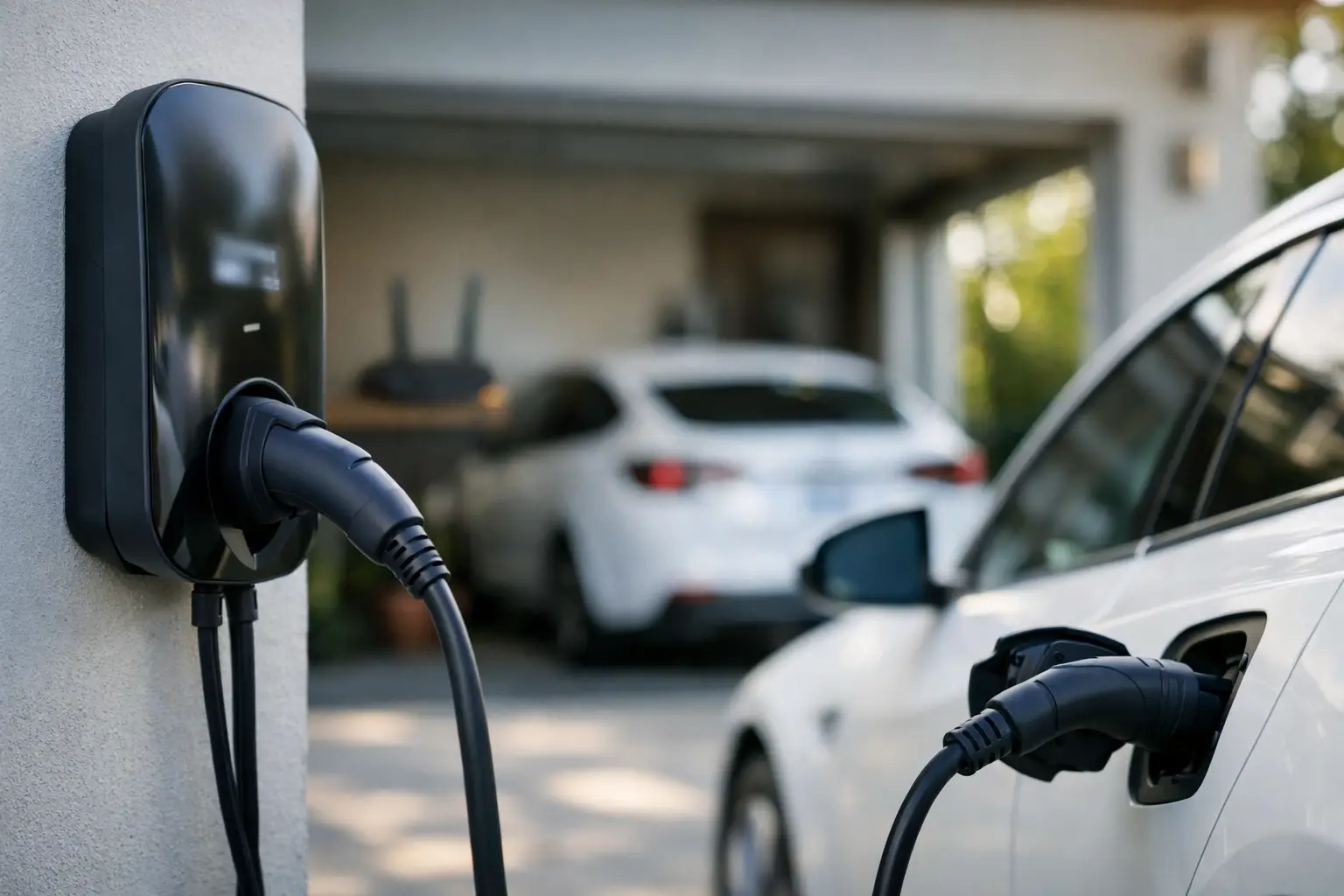
A new EV charger can look like a simple addition to the garage, but homeowners often pause at one practical question: do EV chargers need Wi‑Fi? The short answer is no. A properly installed charger can deliver safe, reliable charging without a Wi‑Fi connection. Wi‑Fi can add useful features, though, particularly if you want to monitor electricity use, schedule charging or manage more than one charger.
The right choice depends less on the charger itself and more on how you use your vehicle, your internet coverage at the switchboard or car park, and whether your electrical system is ready for the extra load.
Do EV chargers need Wi‑Fi to charge?
No. Most home EV chargers are designed to charge a vehicle locally, even when the internet is down or the charger has never been connected to Wi‑Fi. Once the vehicle is plugged in and the charger has been installed and commissioned correctly, it can supply power based on its built-in settings.
For many households, that is all they need. You arrive home, plug in after dinner and wake up with enough range for the next day. A charger with no internet connection can still be a major upgrade over a standard power point, offering faster charging, a dedicated circuit and safety protections suited to ongoing EV use.
There is an important distinction here: a charger may be called “smart” because it has app features, but that does not necessarily mean it stops working without Wi‑Fi. In most cases, Wi‑Fi affects remote functions rather than the fundamental charging process. The exact behaviour varies by manufacturer and model, so it is worth confirming this before purchase if offline operation matters to you.
What Wi‑Fi adds to an EV charger
Connectivity is useful when it solves a real problem in your household or business. It is not simply a feature to have because it is available.
A connected charger can usually show charging status and energy consumption in an app. This is helpful if you want to check whether the vehicle is charging without walking to the garage, or if you are comparing EV running costs with your household electricity use.
Wi‑Fi also makes scheduled charging easier. If your electricity retailer offers lower off-peak rates overnight, you may be able to set the charger to start when rates are cheaper. Some vehicles can schedule charging independently, so this feature may be optional rather than essential. The best approach is to look at which controls you will actually use, rather than paying for duplicate functionality.
Software updates are another benefit. Manufacturers may release improvements to app functions, compatibility or load-management settings. A connected charger can often receive these updates remotely, while an offline unit may need an electrician or manufacturer support process to update it.
For households with solar, compatible smart chargers can sometimes adjust charging according to solar generation. This can help direct surplus daytime solar power into the vehicle instead of exporting it to the grid. It depends on the charger, inverter, meter arrangement and control system, so it should be planned as part of the installation rather than assumed.
When an offline charger is the better option
Not every garage has reliable Wi‑Fi. Detached garages, concrete walls, metal sheds and basement car parks can all weaken a wireless signal. A charger that relies heavily on an app may become frustrating if it regularly drops offline.
An offline-capable charger is often a sensible choice for straightforward home charging, rental properties where the owner wants a dependable fixed solution, or sites with limited internet access. It also avoids adding another connected device to a home network where simplicity is the priority.
This does not mean choosing a basic or lower-quality installation. The electrical design still matters. Your electrician needs to assess the existing switchboard, available capacity, cable route, circuit protection and charger location. A reliable charger is built on correct installation and suitable electrical infrastructure, not just an internet connection.
Wi‑Fi is not the only connectivity option
Wi‑Fi is common, but it is not the only way a charger can communicate. Some units use Ethernet, which provides a physical network connection and can be more stable where cabling is practical. Others use a mobile network connection, often through an in-built SIM or separate data service.
For commercial sites and apartment buildings, wired Ethernet or mobile connectivity may be more practical than asking every charger to connect to a local Wi‑Fi network. These sites may need central reporting, user access controls, billing or remote fault monitoring. The connection method should suit the building and management requirements.
It is also worth understanding that some public and workplace chargers depend on a network connection for payment, access or usage reporting. If that connection fails, the charger may still be technically capable of supplying power but unavailable to users until the network is restored. That is very different from a private home charger, where the owner can usually keep charging locally.
Wi‑Fi, load management and your switchboard
One of the most valuable smart-charger features is dynamic load management. This allows a charger to reduce or increase its charging output based on how much power the property is using at the time. For example, it can avoid adding maximum EV load while the air conditioner, oven and hot water system are all running.
Some load-management systems communicate directly through dedicated hardware or wiring rather than Wi‑Fi. Others use a combination of local connection and internet-based controls. The details matter because load management is fundamentally a safety and capacity issue, not just an app convenience.
Before installing an EV charger, a licensed electrician should assess whether your existing supply and switchboard can support the additional demand. Older homes, properties with electric cooking and heating, or homes planning solar batteries and other upgrades may need a switchboard upgrade, a supply assessment or a charger configured to a lower output.
A Wi‑Fi-enabled charger cannot compensate for an undersized circuit, outdated protection devices or poor installation. The right equipment needs to be matched to the property from the beginning.
Practical questions to ask before choosing a charger
Start with your daily driving distance and how long the vehicle is normally parked at home. Someone driving modest distances and parking overnight may not need the fastest charger or advanced remote controls. A household with two EVs, irregular work hours or high daytime solar production may gain more from smart scheduling and energy monitoring.
Then consider the physical location. Check whether your home Wi‑Fi reaches the intended charger position reliably. A quick mobile test can be useful, but it is not a substitute for considering the charger’s permanent location, walls, distance and network equipment. If the signal is weak, options may include improving Wi‑Fi coverage, using Ethernet where practical, selecting a charger with mobile connectivity, or simply choosing a model that works well offline.
For strata properties, workplaces and managed car parks, ask who will control access, pay for electricity, approve equipment and maintain the system. These questions often shape the charging solution more than the choice between Wi‑Fi and no Wi‑Fi.
A safer way to plan your EV charging setup
An EV charger is a high-load electrical appliance that may run for hours at a time. It should be installed on a dedicated circuit by a licensed electrician, with appropriate protection and configuration for the charger and property. Avoid treating it like a standard appliance purchase where the app features are the main decision.
A site assessment gives you a clearer picture of what is needed. It can identify switchboard limitations, recommend the right charger capacity, assess cable routes and confirm whether connectivity features will be useful at your location. It also creates an opportunity to plan for future needs, such as a second EV, solar integration or an upgraded electrical supply.
Voltricity can help homeowners and businesses select and install an EV charging solution that suits their property, electrical capacity and everyday routine. The aim is dependable charging first, with smart features added where they deliver genuine value.
The best charger is not necessarily the one with the longest feature list. It is the one that charges your vehicle safely, fits your property and continues working when you need it most – whether the Wi‑Fi is on or off.