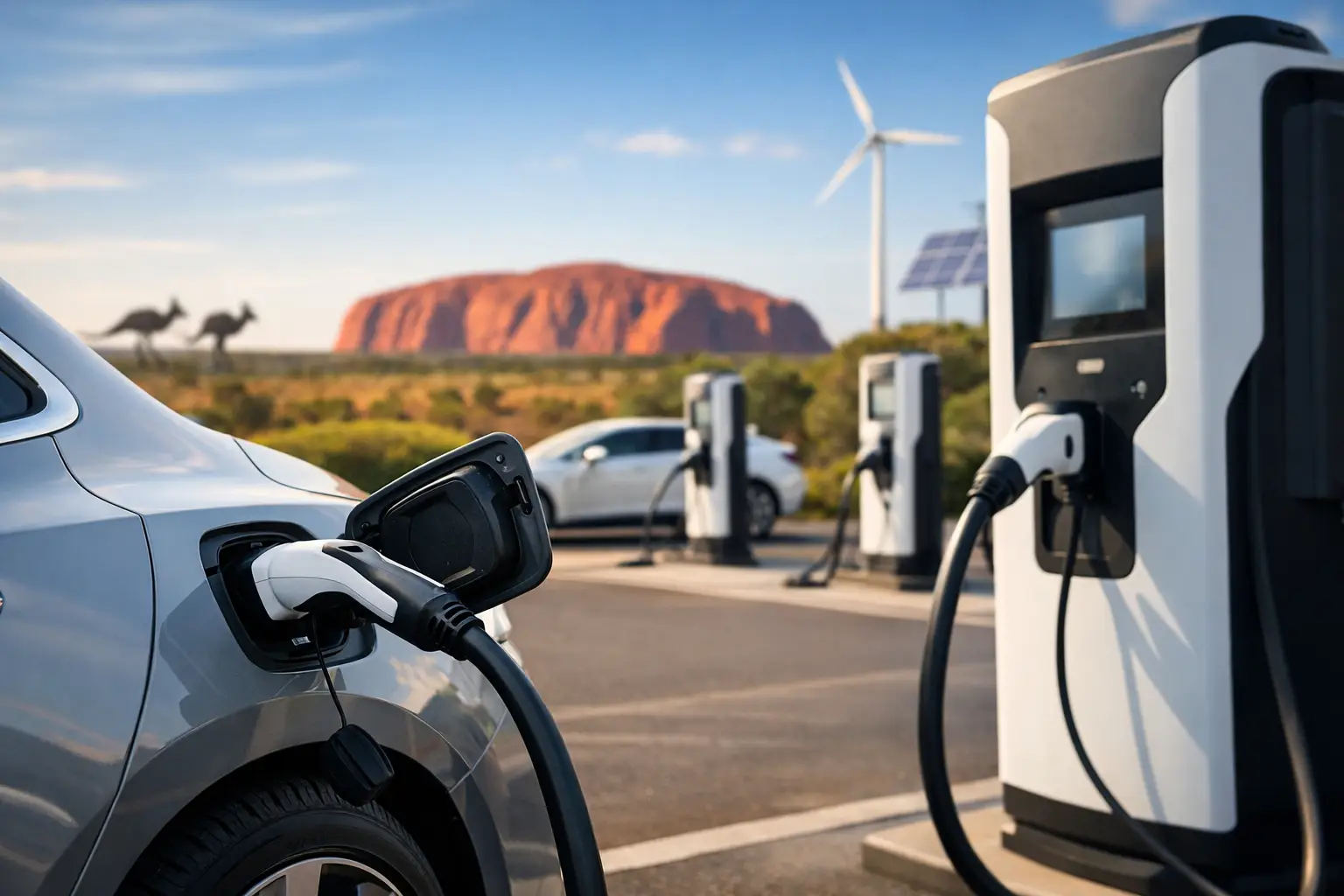
A charger purchase can look straightforward until it meets the property’s existing electrical system. For people searching EV charging trends Australia, the real shift is not simply towards more electric vehicles on the road. It is towards smarter, safer charging that works with a home, apartment building or business premises without overloading the supply.
For homeowners and business operators, that means looking beyond the charger’s price tag. Available power, switchboard capacity, parking layout, future vehicle needs and electricity tariffs all affect the right solution. A well-planned installation should make daily charging convenient now while avoiding expensive rework later.
EV Charging Trends Australia Is Seeing Right Now
The most practical trend is the move from occasional charging at a standard power point to dedicated AC charging equipment. A portable charger may be useful in a pinch, but it is rarely the best long-term answer for regular EV ownership. Charging for extended periods places sustained demand on an electrical circuit, so a purpose-designed charger on a dedicated circuit provides a safer and more dependable setup.
Home charging remains the foundation for many EV owners. When a vehicle can charge overnight, drivers start the day with useful range and spend less time relying on public chargers. This is especially appealing for households with predictable routines, off-street parking and access to lower overnight electricity rates.
At the same time, workplaces, retail sites and managed properties are recognising that charging is now part of property infrastructure. For an employer, one or two chargers can support staff and visitors. For a property manager, it can improve the appeal of a building and help prepare for tenant demand. The key is to install with a plan, rather than adding chargers one by one until the electrical capacity becomes a problem.
Smart charging is becoming standard
Smart chargers can schedule charging, monitor energy use and adjust charging output in response to the property’s load. This is particularly valuable when several large electrical loads may operate at once, such as air conditioning, electric hot water, ovens or commercial equipment.
Load management does not create extra power from the grid connection. What it does is help use the available supply more intelligently. If household demand rises, the charger can reduce its draw temporarily. When demand falls, charging can increase again. This can often prevent unnecessary supply upgrades, although it depends on the existing installation and how much charging capacity is required.
For commercial sites, smart controls can also help allocate charging access, track consumption and set rules for different users. A business offering charging to staff may want a different arrangement from a fleet depot where vehicles need to be ready by a fixed departure time.
Solar, tariffs and the changing cost of charging
Solar is shaping many EV charging decisions across Australia. Owners naturally want to use excess daytime solar generation to charge their vehicles, and smart charging can help match charging periods to solar output. This approach can make good use of energy that might otherwise be exported to the grid at a lower rate.
There is a trade-off, though. Many vehicles are away from home during daylight hours. If the car is parked at a workplace, overnight charging on an off-peak tariff may be more practical than chasing solar production at home. Households with flexible work arrangements, a second vehicle at home or a battery system may find daytime solar charging easier to use.
The best approach depends on driving patterns, electricity plan, solar system size and how quickly the vehicle needs to recharge. Rather than choosing a charger based on a single advertised feature, it is worth considering when the vehicle is actually parked and how the property uses electricity across the day.
Faster is not always better
A higher-powered charger can shorten charging time, but it is not automatically the right choice. A typical home may be suited to a 7 kW single-phase charger, while properties with three-phase supply may have options for 11 kW or 22 kW charging. The vehicle itself also limits the rate it can accept on AC power.
The practical question is how much range needs to be replaced between trips. For a commuter travelling a moderate distance each day, overnight charging at a sensible rate is often more than enough. Paying for a substantial electrical upgrade to achieve the fastest possible home charging may not deliver meaningful day-to-day value.
That said, faster charging can be worthwhile for homes with multiple EVs, high daily kilometres, irregular working hours or little time between trips. It is a decision that should be based on the property and the driver, not just the charger specification.
Apartment and strata charging needs early planning
Apartment buildings are one of the more complex areas of EV charging. A resident may own their parking bay, but the electrical supply, distribution boards, cable pathways and common areas can be shared. Installing a charger can involve strata approval, metering considerations and careful coordination with building management.
The growing trend is towards building-wide charging strategies rather than isolated installations. This may involve allowing for future cable routes, allocating electrical capacity across bays and using load management so multiple chargers can operate without exceeding the building’s available supply.
For strata managers, planning ahead is usually more cost-effective than responding to each request independently. Even if only one resident needs a charger today, a staged design can establish a clear pathway for future owners and tenants. It also gives the building a better chance of maintaining fair access and accurate energy billing.
Workplaces and fleets are moving from convenience to planning
Workplace charging can be a useful staff benefit, but businesses are also looking at how it supports operations. Sales teams, service vehicles, delivery fleets and company cars all have different charging patterns. A charger that works for a visitor car park may not suit a fleet that must leave fully charged before 7 am.
Businesses are increasingly considering charger location, cable protection, parking policies and access control alongside electrical capacity. A charger placed too far from the switchboard can add installation cost. A charger in a busy car park may need physical protection. Where chargers are available to visitors, a clear policy helps prevent disputes over parking bays and charging time.
Scalability matters here. Installing infrastructure for a small number of chargers while allowing for additional units later can reduce disruption as EV use grows. This does not always mean installing every charger upfront. It means assessing the electrical system and cable routes with the next stage in mind.
The switchboard is often the deciding factor
An EV charger is only as reliable as the electrical installation supporting it. Older switchboards, limited capacity, unsuitable protective devices or existing high electrical demand can all affect what is possible. This is why a site assessment should come before selecting the final charger model.
A licensed electrician can assess the incoming supply, switchboard condition, available capacity, earthing, cable route and likely maximum demand. They can also identify whether a switchboard upgrade, load management system or supply upgrade may be needed. These details are not extras. They are central to safe, compliant charging.
For homes, this assessment can also uncover unrelated electrical issues that deserve attention, such as ageing wiring or crowded switchboards. For businesses and strata properties, it creates a clearer record for future planning and maintenance.
Choosing an installation that will still work in five years
The right charger is not always the most expensive model or the one with the highest output. It should suit the vehicle, the property’s electrical capacity and the way people use the parking space. Tethered chargers are convenient where the same vehicle parks in the same place, while socketed models may offer more flexibility for changing cable types and future vehicles.
Consider whether the charger needs app controls, scheduled charging, solar integration, access restrictions or usage reporting. These features can be genuinely useful, but only when they solve a real need. A simple, reliable charger installed correctly may be a better result than a feature-heavy unit that is difficult to use or poorly matched to the site.
Weather exposure also matters. Outdoor chargers need a suitable location, sound cable routing and protection from vehicle impact where required. In shared parking areas, clear signage and practical cable management make the installation safer for drivers and pedestrians.
The most useful next step is a proper on-site assessment before committing to equipment. A qualified electrician can turn broad EV charging trends into a practical plan for your property, with safety, capacity and future needs considered from the start. Voltricity can help homeowners, strata managers and businesses assess the electrical work required and install a charging solution built for dependable everyday use.