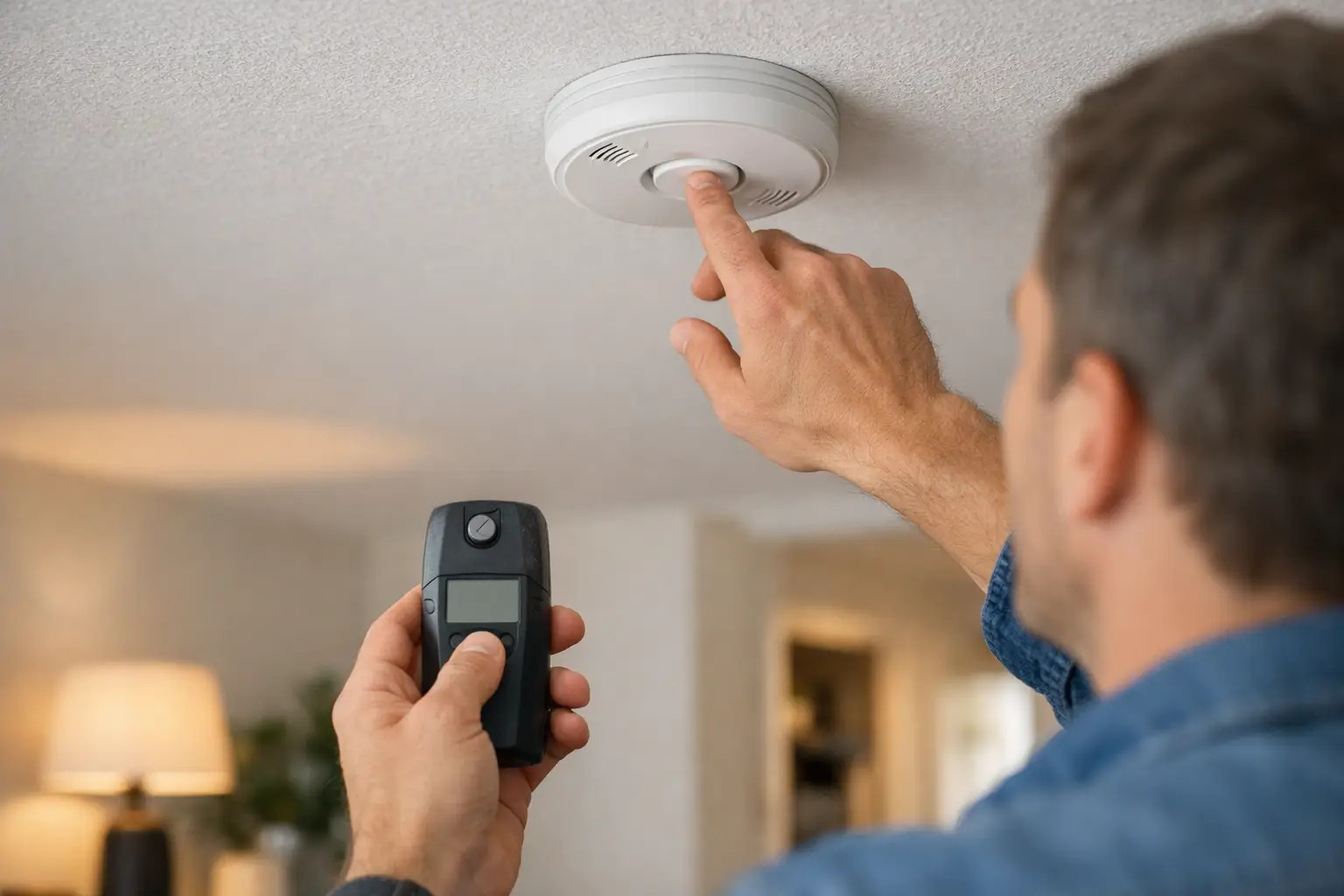
A smoke alarm can look perfectly normal on the ceiling while its battery is flat, its sensor is clogged with dust, or its warning sound cannot be heard where people sleep. Knowing how to test smoke alarms is one of the simplest safety checks you can do around your home or business – and it takes less than a minute per alarm.
The test button is not there for decoration. Used regularly, it confirms that the alarm has power, the internal electronics are responding and the siren can sound. That gives you valuable warning if an alarm needs attention before there is an actual fire.
How to test smoke alarms using the test button
Before starting, let everyone in the property know you are testing the alarms. The sound is deliberately loud and can be upsetting for young children, pets and anyone sensitive to noise. If your alarm system is connected to security monitoring, follow the provider’s procedure first so the test does not trigger an unnecessary call-out.
Stand beneath the alarm and press and hold the test button. Depending on the model, you may need to hold it for a few seconds before the alarm sounds. A working unit should produce a strong, clear alarm tone. Release the button once the test is complete.
If the alarm is out of reach, use a stable ladder and have someone hold it steady. Do not stand on chairs, benchtops or anything that could slip. For high ceilings, a purpose-made test pole is the safer option.
Where alarms are interconnected, testing one unit should usually trigger every connected alarm in the property. Walk through the building and listen for the alarms in bedrooms, hallways, living areas and other protected spaces. This matters because an interconnected system is designed to give occupants warning throughout the property, not just in the room where smoke is detected.
A successful button test confirms the alarm can receive power and produce an audible warning. It does not always prove that the smoke-sensing chamber is clean or responding properly to smoke. That is why regular cleaning and replacement at the end of the unit’s service life are just as important.
How often should smoke alarms be tested?
For most homes, a monthly test is a sensible routine and aligns with many manufacturer recommendations. Pick an easy date to remember, such as the first weekend of each month, and test every alarm at the same time. Property managers can include the check in their regular maintenance schedule, while business operators should incorporate alarm testing into documented site safety procedures.
You should also test alarms after replacing batteries, returning from a long trip, completing dusty building work, or experiencing a power interruption. Renovations deserve particular attention. Fine plaster dust, paint fumes and accidental damage can affect alarms, especially where ceilings have been sanded or sprayed.
The right schedule can depend on the alarm type, the building and the manufacturer’s instructions. A hardwired alarm with battery backup still needs regular testing. Mains power does not remove the need to check the backup battery, which is there to keep the unit operating during a blackout.
What to do if a smoke alarm does not sound
If pressing the test button produces no sound, do not assume the alarm is fine because there is no chirping. Start with the basics. Check whether the battery is installed correctly and replace it with the type specified by the manufacturer. Then press the test button again.
For a hardwired unit, check whether other electrical items on the circuit are operating and whether the alarm’s power indicator light is on. Do not remove covers, alter wiring or work inside the alarm base. Smoke alarms connected to mains power should be assessed by a licensed electrician if there is any concern about the electrical supply or interconnection.
If a fresh battery does not resolve the issue, the alarm may be faulty, disconnected or beyond its replacement date. Most smoke alarms have a service life of around 10 years, but always check the date marked on the unit and the manufacturer’s instructions. Replacing only the battery will not restore an ageing or failed sensor.
An alarm that sounds weak, distorted or noticeably quieter than the others also needs attention. The warning needs to be loud enough to wake sleeping occupants, not merely make a noise at the ceiling.
Clean the alarm without damaging it
Dust, insects and cobwebs can find their way into an alarm’s sensing chamber. A light clean helps reduce nuisance alarms and supports reliable operation. Use the soft brush attachment on a vacuum cleaner around the outside vents, following the manufacturer’s instructions. Avoid pressing hard against the unit or inserting anything into the openings.
Do not spray cleaning products, insecticide, air freshener, paint or water directly onto a smoke alarm. Aerosols and vapours can contaminate the sensor. Steam from bathrooms and cooking fumes can also cause false alarms when units are poorly located.
If an alarm repeatedly activates without an obvious reason, do not disable it or remove the battery and forget about it. The cause may be dust, low battery power, an ageing unit, poor placement or a genuine fault. A professional inspection can identify whether relocation or replacement is the safer solution.
Should you use smoke spray or a candle?
Only use smoke alarm test aerosol if the manufacturer permits it and you follow the product directions carefully. Purpose-made smoke test aerosol can check whether the sensing chamber responds, but it should not replace the test button or routine maintenance.
Never test an alarm with a candle, match, cigarette, incense, barbecue smoke or a burning piece of paper. Open flames and improvised smoke tests create unnecessary fire risk, leave residue in the alarm and can produce unreliable results. They are particularly unsuitable in workplaces, apartment buildings and properties with monitored systems.
For commercial sites, smoke detector testing may be part of a broader fire safety and compliance program. Devices connected to a fire indicator panel, emergency warning system or monitored security system require the correct isolation, notification and reinstatement process. This work should be planned and completed by appropriately qualified professionals so the building is not left unprotected.
Battery alarms, hardwired alarms and interconnected systems
Battery-powered alarms are straightforward to test, but they rely on regular battery checks and timely replacement. If your model uses a sealed 10-year battery, the whole unit is generally replaced at the end of its stated life rather than having the battery changed.
Hardwired smoke alarms are connected to the property’s electrical supply and usually include a backup battery. They offer an added layer of reliability, but only when correctly installed and maintained. If the power light is off, the alarms fail to interconnect, or a unit has been removed during renovations, arrange an inspection rather than attempting electrical repairs yourself.
Interconnected alarms offer a major safety benefit in larger homes, multi-storey properties and commercial settings. When one alarm detects smoke, all connected alarms sound, giving people in distant rooms more time to respond. Test the system as a whole, not just the alarm nearest the kitchen or hallway.
When to call a licensed electrician
A licensed electrician can help where smoke alarms are hardwired, interconnected incorrectly, frequently false alarming or due for replacement. This is also the right step after a renovation, switchboard upgrade or change in building layout, when alarm coverage may no longer suit the property.
For landlords, property managers and business operators, professional help is particularly useful when managing multiple alarms and compliance responsibilities. Accurate records of testing, replacement dates and maintenance work make it easier to stay on top of the system and respond quickly when an issue arises.
At Voltricity, we assess smoke alarm systems with the same focus we bring to all electrical safety work: clear advice, quality workmanship and practical solutions that suit the property.
Set a reminder for your next monthly test, listen closely to every alarm, and act promptly if one is silent, weak or unreliable. A few minutes of attention now can make a meaningful difference when every second counts.