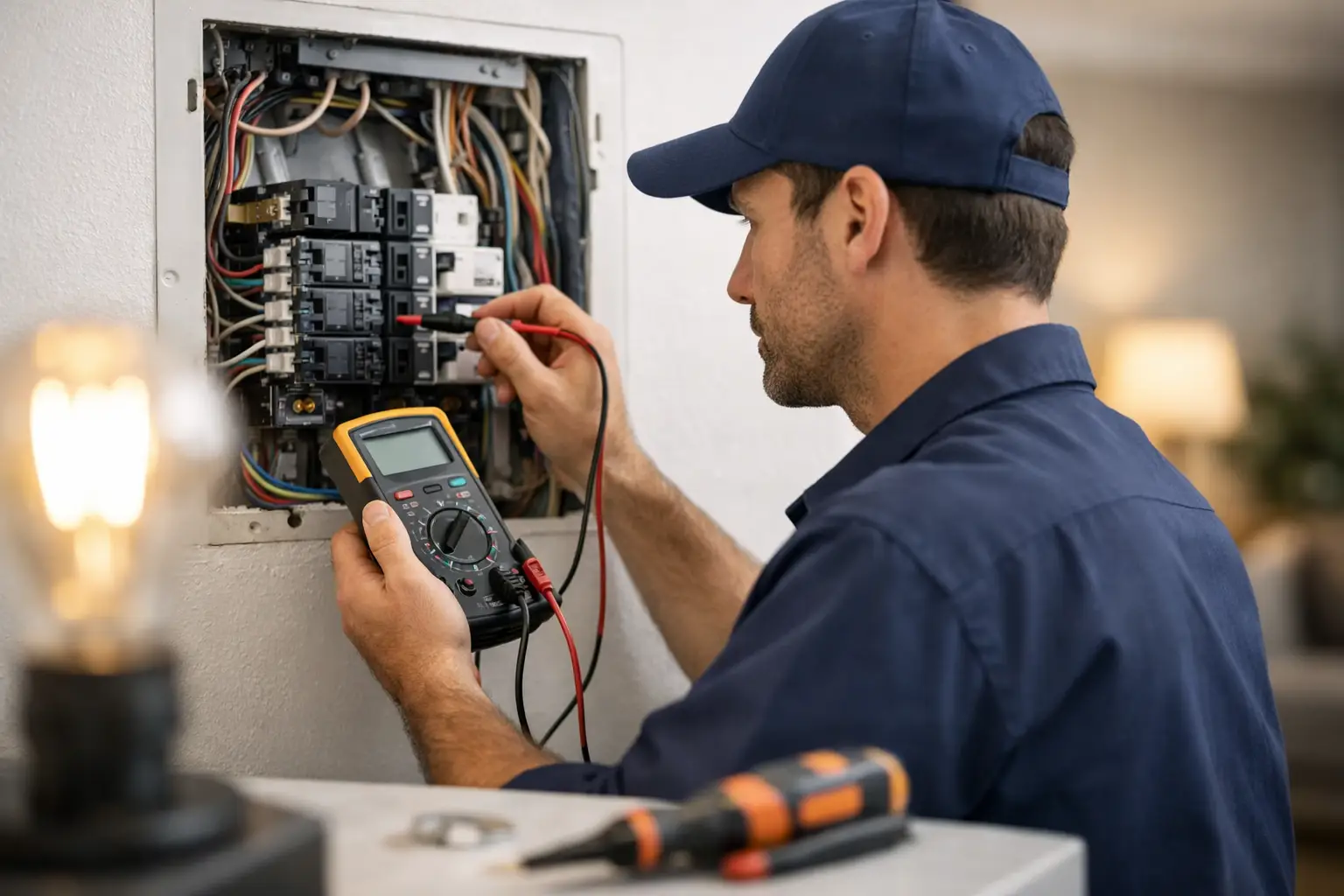
A power point that feels warm, lights that flicker when the kettle boils, or a safety switch that will not stay on are not problems to ignore. This electrical fault finding guide helps homeowners, property managers and business operators recognise what may be happening, take sensible first steps and know when a licensed electrician is required.
Electrical faults are not always dramatic. Many begin as small changes in how an appliance, circuit or fitting performs. Acting early can prevent damage to equipment, unexpected downtime and, more importantly, serious electrical or fire risk.
Start With Safety, Not Investigation
Fault finding should never mean taking electrical equipment apart. In Australia, electrical installation work must be carried out by a licensed electrician. Do not remove switchboard covers, dismantle power points, touch exposed wiring or attempt repairs to a damaged lead, fitting or appliance.
If there is a burning smell, smoke, sparks, buzzing from a switchboard, visible charring, a tingling sensation from a tap or appliance, or an electric shock, stop using the affected area immediately. Switch off power at the main switch only if it is safe to do so without touching damaged equipment. Keep people clear and arrange urgent help. For fire, danger to life or fallen powerlines, call 000. Never use water on an electrical fire.
A fault can also be hidden behind a wall, in a ceiling space, underground cable or inside an appliance. The absence of visible damage does not make the issue safe to leave.
Electrical Fault Finding Guide: Read the Warning Signs
The pattern of the problem gives a licensed electrician useful clues. Note what was operating when the fault occurred, which rooms are affected, whether it happens at a particular time and whether weather changes make it worse. This information can shorten diagnosis and help avoid unnecessary disruption.
A circuit breaker or safety switch keeps tripping
A tripping device is doing its job by cutting power when it detects an overload, short circuit or current leakage. An overloaded circuit may occur when too many high-demand appliances are running from the same circuit, such as a heater, kettle, toaster and microwave in one kitchen area.
A safety switch that trips may indicate a faulty appliance, damaged cord, moisture in an outdoor fitting or an issue in fixed wiring. You may unplug portable appliances on the affected circuit and reset the switch once. If it holds, reconnect appliances one at a time and stop using any item that causes another trip. If the switch will not reset, trips again with nothing plugged in, or affects fixed equipment, leave it off and call an electrician.
Repeated resetting is not a repair. It can conceal a developing problem and expose the circuit to further damage.
Lights flicker, dim or fail intermittently
One flickering globe may simply be loose, incompatible with its dimmer or nearing the end of its service life. Turn the light off before checking that the globe is correctly fitted, and replace it with a suitable type if needed.
However, multiple lights flickering across a property, lights dimming unexpectedly, or lights changing brightness when larger appliances start can point to a loose connection, overloaded circuit, supply issue or switchboard fault. These symptoms deserve professional assessment, particularly in older homes or commercial premises with expanding electrical loads.
Power points, switches or plugs feel hot
A little warmth from some chargers can be normal, but a power point, switch, plug or extension lead should never become hot enough to be uncomfortable to touch. Discolouration, cracking, scorch marks, melted plastic or a burnt smell are urgent warning signs.
Turn off and unplug what you can safely, without pulling on damaged cords. Do not use that outlet again until it has been checked. Overloaded power boards, worn outlets and poor connections can all create heat, and the cause is not something to guess at.
A tingling sensation or mild shock occurs
A tingle from a metal appliance, tap, shower fitting or computer casing is never normal. Even if it seems minor or only happens occasionally, stop using the equipment and arrange a licensed electrician as soon as possible. Faulty earthing, damaged insulation and appliance faults can all be involved.
This is especially urgent in bathrooms, laundries, kitchens and outdoor areas, where moisture increases the risk of serious injury.
Outdoor circuits fail after rain
Water can enter aged light fittings, cracked junctions, damaged cables and poorly sealed outdoor outlets. If a circuit trips after heavy rain or irrigation, do not keep resetting it. Leave the circuit isolated and have the installation inspected.
Outdoor lighting, garden equipment, pool equipment and security systems need fittings and cable protection suited to their location. A quick replacement without finding the water entry point can leave the same fault waiting for the next storm.
A Safe Process Before You Call
You do not need to diagnose the technical cause yourself. A clear, safe record of the symptoms is far more valuable than a risky DIY inspection. Before contacting an electrician, follow this practical sequence:
- Make the area safe. Turn off affected equipment, unplug portable appliances where safe and keep children, staff and visitors away from damaged fittings or cords.
- Check the switchboard from the outside only. Identify which circuit has tripped, but do not remove any covers or touch internal components.
- Record the details. Note the time, affected rooms, appliances in use, weather conditions and any smell, noise or visible marks.
- Take clear photos of external damage if this can be done safely. Photos of a scorched outlet, damaged lead or switchboard label can help explain the issue.
- Arrange a licensed electrician if the issue repeats, involves fixed wiring, shows heat damage or cannot be clearly linked to a portable appliance.
For tenants and managed properties, report the fault promptly to the property manager or responsible maintenance contact. Do not wait for a small issue to become an after-hours emergency.
Common Causes Behind Electrical Faults
Electrical issues can come from the installation, the connected equipment or the way a property is now being used. Older homes, for example, were often not designed for modern demand from air conditioning, induction cooking, home offices, electric vehicle chargers and multiple entertainment devices.
Overloaded circuits are common where power boards and double adaptors have become a permanent solution. Power boards are intended for limited, low-demand use, not for chaining together or powering high-load appliances. A better long-term answer may be additional circuits, correctly located outlets or a switchboard upgrade.
Wear and age also matter. Insulation can deteriorate, connections can loosen, and older switchboards may lack the safety features expected in modern installations. Renovations can introduce another layer of risk if old wiring has been disturbed, overloaded or incorrectly connected.
In commercial spaces, faults can stem from changing layouts, added workstations, new machinery, signage, refrigeration or security equipment. An electrical assessment before a fit-out or equipment upgrade helps ensure the supply and circuit design match the load.
When the Fault May Be Outside Your Property
Not every power issue originates in your wiring. If neighbours are also without power, streetlights are out, or an outage has been announced, check your electricity distributor’s outage information. Keep refrigerator and freezer doors closed, use torches rather than candles where possible, and avoid connecting generators unless they have been installed with appropriate changeover equipment by a licensed electrician.
If only your property is affected, or power returns but one circuit continues to trip, the problem is more likely within your installation or connected equipment. That is the point to arrange an electrical inspection rather than relying on repeated resets.
The Value of Professional Fault Diagnosis
A proper electrical diagnosis is methodical. A licensed electrician can test circuits, insulation resistance, earthing, safety switches and connections using the right equipment, then isolate the cause before recommending a repair. Depending on the fault, the solution may be as straightforward as replacing a damaged outlet or as involved as repairing wiring, separating overloaded circuits or upgrading a switchboard.
The right repair depends on the property, its age, the condition of the installation and the demands placed on it. The cheapest immediate option is not always the safest long-term one, particularly when a recurring fault points to a wider capacity or wiring issue.
Voltricity provides clear communication, licensed workmanship and practical recommendations for homes and businesses. If something does not look, sound or feel right electrically, trust that instinct: isolate what you safely can, avoid DIY repairs and have the fault checked before it becomes a larger problem.