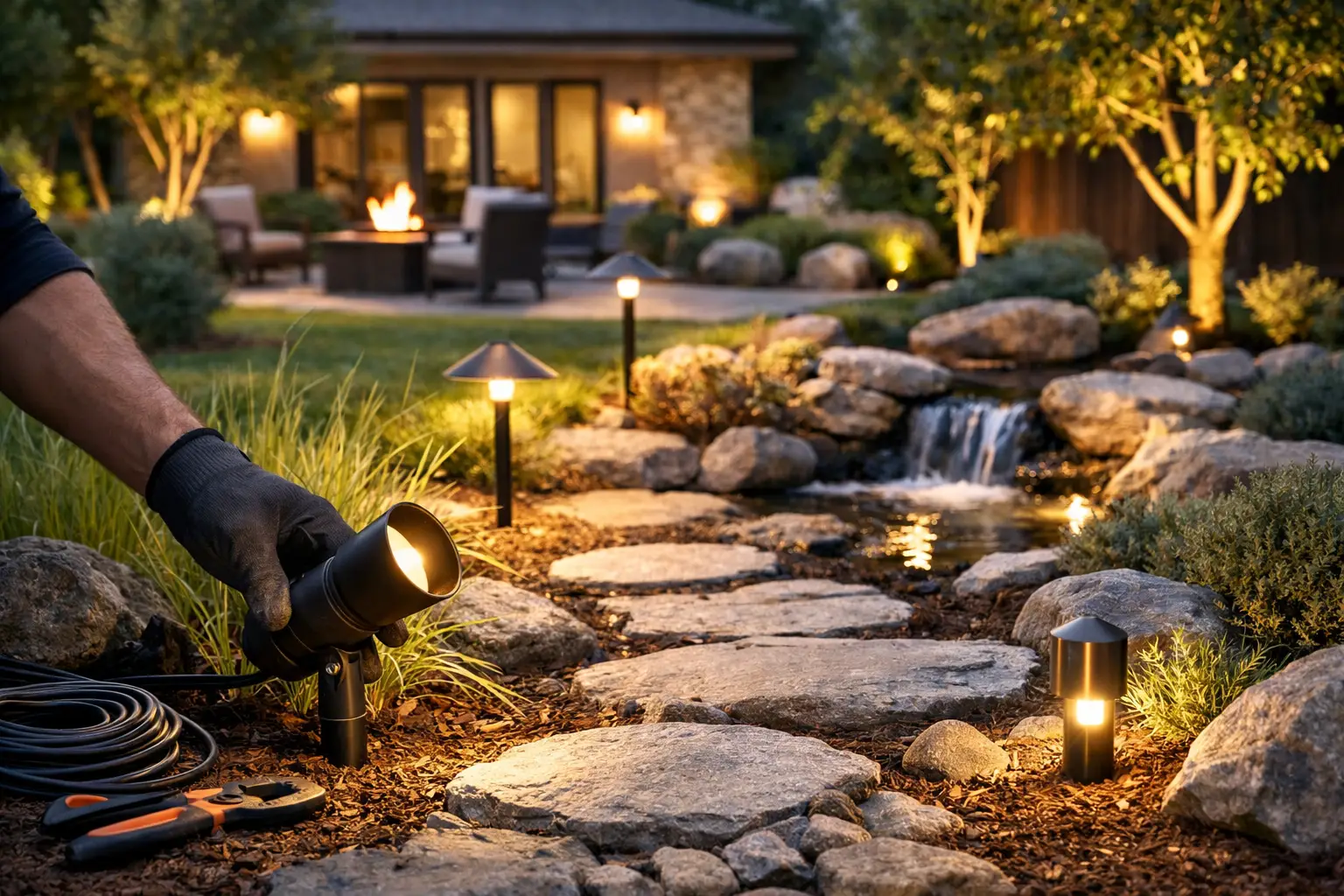
The right outdoor lighting changes how a property feels the moment the sun goes down. If you have been searching for landscape lighting design and installation near me, you are probably not just after a few lights in the garden. You want a safer entry, a more usable outdoor area, and a finished look that adds value without creating glare, dark spots or ongoing maintenance headaches.
That is where good design matters as much as good electrical work. Landscape lighting should feel intentional. It should guide people along paths, highlight key features, improve visibility around steps and driveways, and make the outside of your home or business look cared for after hours. When it is done properly, you notice the effect more than the fittings.
What good landscape lighting design actually does
A lot of outdoor lighting jobs go wrong because they start with products instead of purpose. Brighter is not always better, and more fittings do not automatically create a better result. The best lighting plans begin by asking how the space is used.
For a home, that might mean making the front path safer, giving the backyard enough light for entertaining, and adding subtle feature lighting to trees, walls or garden beds. For a commercial property, the priorities may shift towards customer visibility, after-hours security, car park safety and a more professional street presence.
A proper design balances four things at once – function, appearance, energy use and durability. If one of those is ignored, the installation can become frustrating very quickly. A fitting that looks great in a catalogue is not much use if it lets in water, throws light into a neighbour’s window or needs replacing every season.
Why local landscape lighting design and installation near me matters
When people search for local help, they are usually trying to avoid a common problem: hiring someone who can install a light but cannot design an outdoor lighting system that suits the property. Local experience matters because outdoor conditions vary more than many people expect.
Soil type, drainage, salt exposure, weather, vegetation growth and even the layout of surrounding homes all affect the right lighting approach. A coastal property may need more corrosion-resistant fittings. A shaded garden may need a different beam spread to stop important features disappearing at night. A narrow side path may need lower-glare lighting than an open front lawn.
Working with a licensed electrician who understands outdoor applications also means the installation is planned with safety and compliance in mind from the start. That includes cable routing, load considerations, switching, weather protection and the practical realities of maintaining the system later.
Design first, then installation
The strongest landscape lighting projects usually follow a simple sequence. First, identify what needs to be lit. Then decide how it should look. Only after that should fixture selection and installation begin.
This sounds obvious, but plenty of properties end up with mismatched bollards, overly bright floodlights or random garden spikes because the install came before the design. That approach can cost more in the long run, especially when fittings need to be moved, replaced or upgraded.
A thoughtful design typically considers the front entry, pathways, steps, driveway edges, outdoor entertaining areas, feature planting, walls, fences and any places where visibility affects safety. It also takes into account how the property looks from inside. Harsh light outside a bedroom window or glare bouncing back through living room glass can ruin the effect.
Choosing the right fittings for the space
Not every outdoor light does the same job. A path light, spike light, wall light and floodlight all solve different problems, and a quality result often uses a combination rather than relying on one style across the whole property.
Path lighting should help people move safely without creating a runway effect. Feature lighting works best when it adds depth, drawing the eye to a tree canopy, textured wall or architectural detail. Entertaining areas need practical visibility, but they should still feel comfortable rather than overlit. Security lighting needs stronger coverage, yet it should be aimed and controlled properly so it does not become intrusive.
There is also the question of colour temperature. Warm white often suits residential gardens and outdoor living areas because it feels more welcoming. Cooler temperatures can work in some commercial settings or where visibility is the main priority, but they can look stark if used everywhere. This is one of those decisions where it depends on the property, the materials used outside and the result you want after dark.
Installation is where quality really shows
Anyone can place a fitting in a garden bed. The real difference is in how the system is installed and finished. Outdoor electrical work needs to stand up to weather, moisture, movement in the ground and day-to-day use over time.
That means using suitable fittings, correct connections, proper cable protection and careful placement. It also means thinking beyond the day of installation. Will the lights still be accessible for servicing? Are timers, sensors or control points set up in a way that makes sense for the owner? Has the layout allowed for garden growth so plants do not block the beam in six months?
For homes and businesses alike, neatness matters. Cables should be discreet, fittings should sit square and stable, and the lighting should feel integrated with the property rather than added as an afterthought. Good workmanship is often quiet. You may not notice every technical detail, but you can see the difference in the finished result.
Common mistakes to avoid
One of the most common mistakes is overlighting. Too much brightness flattens the space and creates glare, which can make a garden or entry area less inviting rather than more useful. Outdoor lighting should create contrast and direction, not wash everything out.
Another issue is poor placement. Lights installed too close to paths can create harsh hotspots. Uplights aimed carelessly can shine into windows or straight into people’s eyes. Security fittings positioned without thought can leave blind spots while still annoying everyone nearby.
Cheap fittings are another false economy. Outdoor lighting takes more punishment than many indoor electrical products, and lower-grade materials often show it quickly. Rust, water ingress, fading finishes and early failure can turn a budget job into a replacement project sooner than expected.
The last mistake is treating landscape lighting as separate from the rest of the property’s electrical planning. If you are already renovating, upgrading outdoor areas or adding security features, it makes sense to consider lighting as part of the bigger picture.
For homes, rentals and commercial sites
Landscape lighting is not only for high-end homes with large gardens. Even a modest front yard, townhouse entry or small courtyard can benefit from a well-planned setup. A simple design can improve safety, make access easier at night and give the property a more polished look from the street.
For property managers, reliable outdoor lighting can reduce maintenance complaints and improve tenant safety around shared walkways, entries and car parks. For business operators, it can support visibility, customer confidence and after-hours presentation without wasting power or creating uneven coverage.
That is why the best approach is tailored, not generic. A family home, retail frontage, strata complex and office site all need different lighting decisions, even if they are using similar fixture types.
What to expect from a professional quote
A proper quote for landscape lighting should do more than give you a number. It should reflect an understanding of the site, the goals of the project and the practical requirements of installation.
You should expect clear communication about what is being installed, where fittings will go, what controls are included and whether any existing wiring or upgrades are required. Transparent pricing matters because outdoor electrical work can involve variables that are not obvious until the site is assessed. The key is to have those explained early, not added as surprises later.
This is also where responsiveness counts. If you are contacting a provider for landscape lighting, you want a business that turns up, communicates clearly and treats the job with the same care whether it is a front path upgrade or a full property lighting plan. That reliability is part of the service, not an extra.
At Voltricity Pty Ltd, that is the standard clients expect – licensed work, practical advice, transparent pricing and installations built to last.
The best result is the one that still works six months later
Outdoor lighting is easy to judge on the first night and harder to judge over time. The real test comes after rain, after plants grow, after the seasons change and after the property has been used properly. A strong design still feels right months later. It still improves safety, still looks balanced, and still works without constant adjustments.
If you are weighing up landscape lighting design and installation near me, look for a provider who can handle both the visual side and the electrical side with equal care. The right system should not just light the garden. It should make the whole property easier to use, safer to move through and better to come home to after dark.
A well-lit outdoor space should feel effortless, and that usually means a lot of careful thinking went into it before the switch was ever turned on.