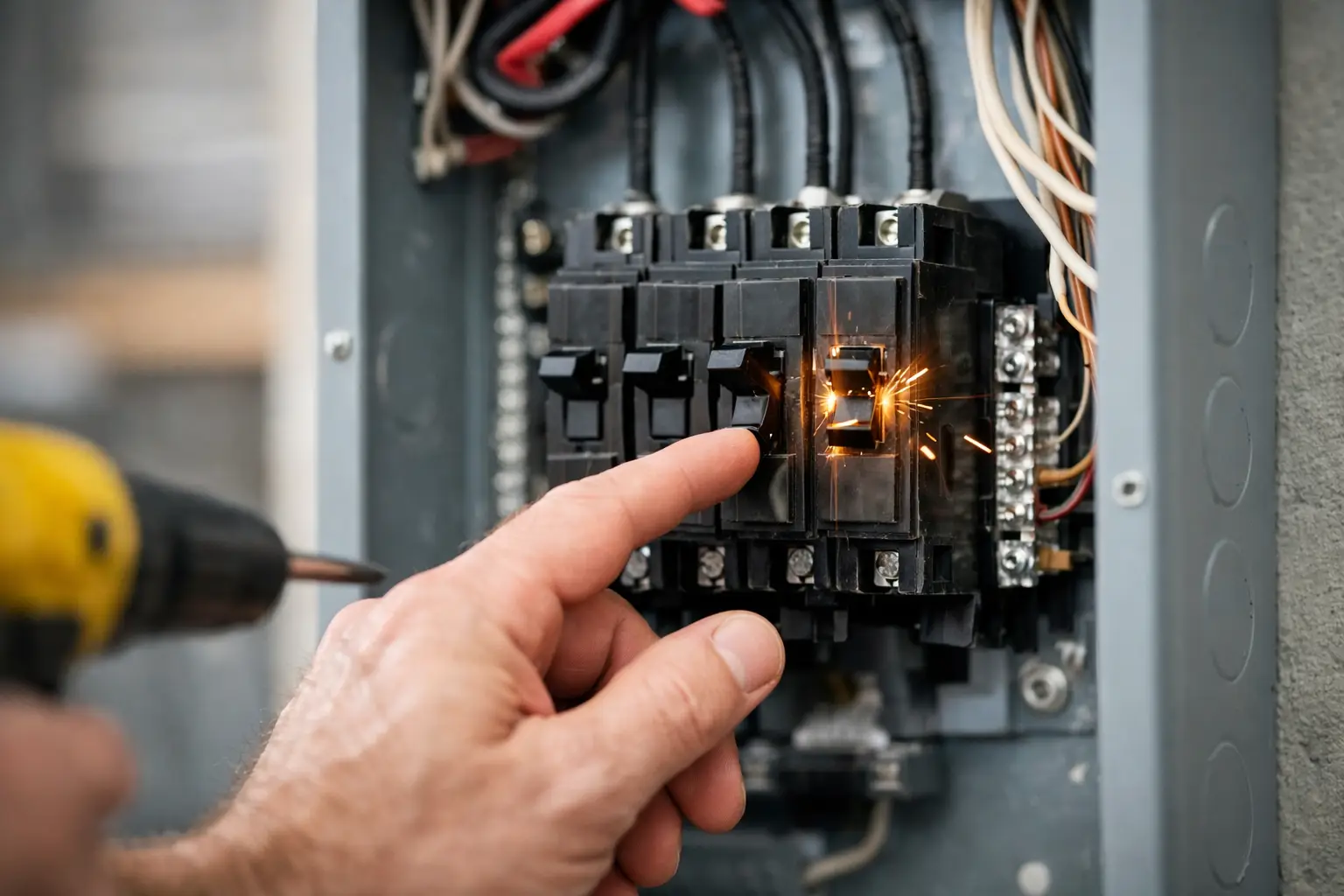
You notice the power cut out halfway through making dinner, head to the switchboard, and there it is again – the same breaker has tripped. If you are wondering what causes circuit breaker tripping, the short answer is that the breaker is doing its job. It is shutting power off because something on that circuit is unsafe, overloaded, or faulty.
A tripping breaker is not just an annoyance. In many cases, it is an early warning sign. Sometimes the issue is simple, like too many appliances running at once. Other times, it points to damaged wiring, a faulty appliance, moisture getting where it should not, or a switchboard that is no longer suited to the way the property is used.
What a circuit breaker is actually protecting
A circuit breaker is designed to stop electrical current when it detects a problem. That might be too much current flowing through the circuit, a short circuit, or an earth fault. Rather than letting wires overheat or equipment keep running under unsafe conditions, the breaker trips and cuts power.
That protection matters in homes, offices, retail spaces, and workshops alike. Without it, minor faults could quickly turn into damaged appliances, melted insulation, or fire risk. So while repeated tripping is frustrating, the breaker itself is usually not the problem at first. It is responding to a condition that needs attention.
The most common answer to what causes circuit breaker tripping
In day-to-day properties, overload is one of the most common causes. This happens when too many devices are drawing power from the same circuit at the same time.
A good example is a kitchen circuit running a kettle, microwave, toaster and dishwasher together. In a commercial setting, it might be heaters, computers, monitors and kitchen equipment all sharing one line. The breaker trips because the circuit is being asked to carry more current than it was designed for.
This does not always mean the installation is poor. It can simply mean the electrical setup no longer matches how the space is being used. Renovations, added appliances, home offices, EV chargers and upgraded equipment all place extra demand on older systems.
Short circuits and why they are more serious
A short circuit happens when active and neutral conductors come into contact in a way they should not. That causes a sudden surge in current and the breaker trips almost instantly.
This type of fault is more serious than a basic overload because it usually points to damaged wiring, a failed appliance, loose connections, or worn insulation. You might notice a burning smell, scorching around a powerpoint, buzzing sounds, or the breaker tripping the moment you reset it.
If that happens, it is best not to keep trying to force the breaker back on. Repeated resetting can make the situation worse, especially if the fault is in fixed wiring or inside an appliance that is still connected.
Earth leakage and safety switch confusion
People often use the terms breaker and safety switch interchangeably, but they are not the same thing. A circuit breaker protects wiring from overloads and short circuits. A safety switch, also called an RCD, protects people by detecting current leaking to earth.
That said, the two issues can feel similar from the user side because both result in power going off. Moisture in outdoor lighting, a damaged appliance cord, water near a socket, or deteriorated insulation can all lead to leakage current and tripping.
If one section of your property loses power during rain, after cleaning, or when an outdoor circuit is in use, moisture is worth considering. This is common in exterior outlets, garden lighting, garages, and older installations where seals and fittings have aged.
Faulty appliances are often the real culprit
Sometimes the fixed wiring is fine and the issue sits with one appliance. Heaters, kettles, dishwashers, dryers, fridges, power tools and older microwaves are frequent offenders because they use significant current or contain heating elements and motors that wear over time.
A simple pattern can help narrow it down. If the breaker only trips when a particular appliance is switched on, that appliance is a likely cause. If it trips randomly with nothing obvious connected, the fault may be in the circuit itself or in a hardwired item such as an oven, air conditioner or hot water system.
This is where a bit of caution matters. Unplugging portable appliances one by one is reasonable. Opening equipment, checking internal wiring, or attempting DIY electrical repair is not. Licensed diagnosis is the safer path.
Old switchboards and ageing wiring
Older homes and older commercial tenancies often have electrical systems that were adequate when installed but are now under far more pressure. More lighting, more kitchen equipment, more electronics, and more charging demands all add up.
Ageing wiring can become brittle, insulation can break down, and older boards may not offer the level of protection expected in modern installations. In some properties, circuits were also added over time without a full rethink of overall capacity.
That is why tripping sometimes starts after a renovation, new tenancy fit-out, or the addition of larger loads such as air conditioning or EV charging. The new equipment is not necessarily faulty. It may just be exposing a system that needs upgrading.
Loose connections and hidden damage
Not every electrical fault is obvious. Loose terminals behind outlets, damaged cables in roof spaces, rodent damage, heat-stressed connections and wear inside switches can all create intermittent problems.
These faults are frustrating because they do not always trip at the same time or under the same conditions. One day the circuit works fine. The next day it trips when lights, a fan, or a seemingly unrelated appliance is used.
Intermittent tripping deserves proper investigation because hidden faults can worsen over time. Heat build-up at a loose connection, for example, may not cut power immediately every time, but it can damage surrounding components and increase risk.
What causes circuit breaker tripping after new equipment is installed
This is a question electricians hear often, especially after upgrades. A new oven, split system, induction cooktop, hot water unit, workshop machine or EV charger can reveal capacity issues quickly.
The key point is that new equipment often draws power differently from older models. Some appliances have high start-up current. Others require a dedicated circuit. Some homes and businesses simply do not have enough circuit separation for the way they now operate.
This is not something to guess at. If tripping starts after installation, the right response is to have the load, circuit design and protection checked properly. In many cases, the fix is straightforward once the demand and wiring are assessed together.
When you can do a basic check
There are a few safe observations property owners can make before booking an electrician. You can note which breaker is tripping, what was running at the time, whether the issue affects one area or the whole property, and whether weather or moisture seem to be involved.
You can also unplug portable appliances on the affected circuit and see whether the breaker resets with everything disconnected. If it holds until one item is plugged back in, that is useful information.
What you should not do is remove switchboard covers, replace breakers yourself, or keep resetting a breaker that trips immediately. If it will not stay on, there is a reason.
When it is time to call a licensed electrician
If a breaker trips more than once, trips instantly when reset, affects essential equipment, or comes with heat, smell, sparks or visible damage, it is time to get professional help. The same applies if the property has an older switchboard, recent upgrade works, or circuits that seem overloaded by normal daily use.
For homeowners, fast diagnosis protects your family, appliances and wiring. For property managers and business operators, it also reduces downtime and helps avoid larger repair costs later. A proper fault-finding visit can identify whether the issue is the breaker itself, the connected load, the appliance, the wiring, or the wider switchboard setup.
At Voltricity, this is the sort of problem that benefits from a practical, no-fuss approach. Test the circuit, identify the cause, explain the options clearly, and carry out the repair or upgrade safely.
Circuit breaker tripping is your electrical system asking for attention, not something to ignore or work around. The sooner the cause is identified, the sooner the property is safer, more reliable, and back to running the way it should.