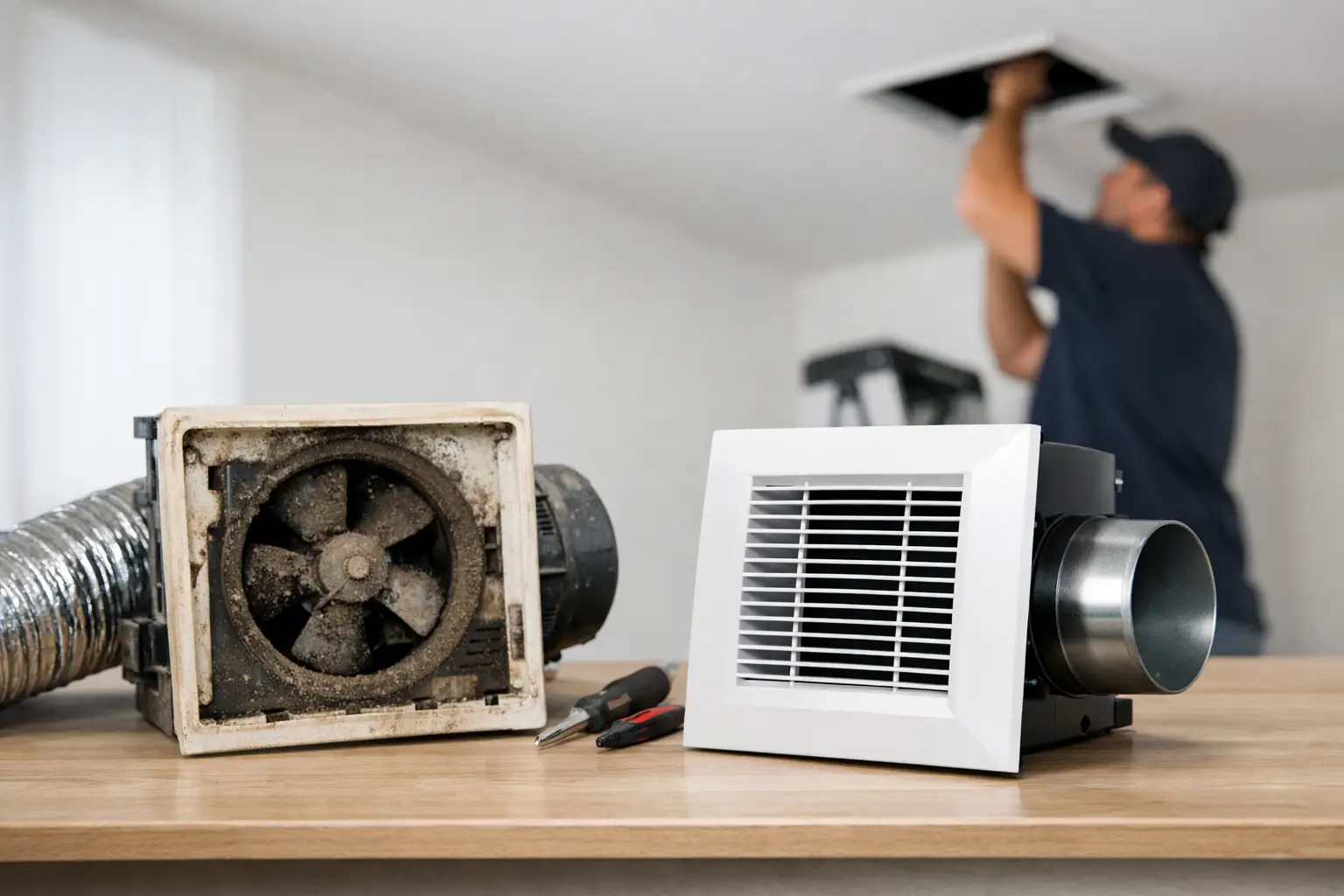
That bathroom fan that rattles for ten minutes after a shower is not just annoying. It can be a sign the unit is no longer clearing moisture properly, which means steam lingers, paint peels, and mould gets a head start. If you are planning to change exhaust fans in a home, rental, office or shop, timing matters just as much as the fan you choose.
For most property owners, the question is not whether an exhaust fan matters. It is whether the current one is still doing its job safely and efficiently. A tired fan can keep spinning without actually moving enough air, and that creates problems you usually notice too late.
When should you change exhaust fans?
A good exhaust fan should remove moisture, odours and stale air quickly, with noise levels that feel reasonable for the space. If it is struggling to do that, replacement is often more practical than repeated patch-up repairs.
In bathrooms, signs tend to show up first. Mirrors stay fogged long after a shower, ceilings collect condensation, and corners start showing mould despite regular cleaning. In kitchens, smoke and cooking odours hang around longer than they should. In laundries and commercial washrooms, poor ventilation can leave surfaces damp and air heavy.
Age also matters. Many exhaust fans will run for years, but performance drops over time as motors wear, dust builds up and ducting issues develop. If the unit is older, noisy, slow to start, or no longer suited to the room size, changing it is often the smarter long-term option.
Common signs it is time to change exhaust fans
The most obvious sign is noise. Grinding, rattling, humming or squealing usually points to motor wear, loose parts or mounting problems. Sometimes a clean-out helps, but when the noise keeps coming back, the unit may be at the end of its service life.
Weak airflow is another red flag. If toilet odours linger, steam stays trapped, or air movement feels barely noticeable, the fan may be underperforming. That can happen because the motor is failing, the blades are clogged, or the fan was undersized from the start.
Some warning signs are electrical. A fan that cuts out, trips a circuit, smells hot, or only works intermittently should be checked promptly. Electrical faults are not something to ignore, especially in wet areas where compliance and safety are critical.
Then there is visible damage. Cracked covers, rust, discolouration and moisture stains around the fitting can all suggest the fan is not coping well with the environment. In commercial settings, that can affect not just comfort but also maintenance costs and presentation.
Repair or replace?
There are cases where a repair makes sense. If the fan is relatively new and the issue is limited to a loose grille, minor wiring fault or blocked duct, a targeted fix may get it back on track.
But if the fan is old, noisy and ineffective all at once, replacement is usually the better investment. Paying for repeat call-outs on a unit that still leaves the room damp rarely saves money.
Why replacing an exhaust fan is not just about comfort
Ventilation affects the condition of the property. In homes, excess moisture can damage plaster, cabinetry and paintwork. In rental properties, it can lead to ongoing complaints and preventable maintenance issues. In businesses, poor airflow can make amenities unpleasant for staff and customers and add to wear on interiors.
There is also the safety side. Exhaust fans are electrical appliances installed in areas where moisture is common. Correct selection, wiring and installation are essential. A fan that is badly installed, poorly vented or not appropriate for the room can create more problems than it solves.
That is why many owners choose a licensed electrician rather than treating it as a simple swap-over. What looks straightforward from the outside can involve circuit checks, ducting condition, ceiling access, load considerations and compliance requirements.
Choosing the right replacement fan
Not every exhaust fan suits every room. One of the biggest mistakes is replacing like for like without checking whether the old unit was adequate in the first place.
Room size comes first. A small ensuite has different airflow needs from a family bathroom, commercial kitchenette or change room. If the fan is too small, it will run without clearing enough moisture. If it is too large, you may pay more than necessary and deal with unnecessary noise.
Noise is a close second. Many people put up with loud fans because they assume that is normal. It is not. Modern units can be much quieter while still moving air effectively, which makes a noticeable difference in homes and client-facing commercial spaces.
Energy efficiency also deserves attention. A fan that runs regularly should not be wasting power. Newer models can offer better performance with lower energy use, which becomes more relevant across multiple bathrooms or larger facilities.
Ducted and vented properly
The fan itself is only part of the system. Ducting has to carry moist air to the right discharge point. If ducting is damaged, poorly routed or venting into the wrong area, moisture can build up where you do not want it – including inside roof spaces.
This is one of those details that often gets missed in older properties and quick renovations. Replacing the fan without addressing poor ducting can leave the underlying issue unresolved.
Residential and commercial needs are not the same
Homeowners usually focus on bathrooms, toilets, laundries and kitchens. Their priorities are clear – reduce moisture, keep noise down and avoid future damage. A neat finish matters too, especially if the room has recently been updated.
Property managers often need something slightly different. They want durable, compliant installations that reduce maintenance calls and tenant complaints. In that context, choosing the cheapest unit is not always the cheapest outcome.
For business operators, ventilation affects customer experience and staff comfort. In offices, retail spaces, hospitality venues and amenities areas, a failing exhaust fan can create odour issues, stale air and moisture problems that reflect poorly on the premises. Fast, tidy replacement work is often essential to minimise disruption.
What to expect when you change exhaust fans
A professional replacement usually starts with an assessment of the room, existing fan, wiring and ducting. That helps determine whether a direct replacement is suitable or whether the installation should be upgraded.
Sometimes the opening in the ceiling can be reused. Sometimes a different size or style is a better fit, which may require minor adjustment work. If the existing wiring is outdated or the switch arrangement is unsuitable, that should be addressed at the same time rather than worked around.
For older homes and commercial buildings, there can be a few unknowns once access is gained. That is normal. The value of experienced electrical work is not just fitting the new unit – it is identifying issues early, explaining the options clearly and completing the job to a proper standard.
At Voltricity, that approach matters because clients are not just paying for a fan to be swapped. They are paying for safe workmanship, clear communication and a result that lasts.
Is it worth upgrading instead of replacing like for like?
Often, yes. If your current fan is undersized, very loud or poorly placed, a straight replacement may miss the chance to improve the room properly. Upgrading can mean better airflow, lower noise and more reliable moisture control.
That said, it depends on the property, the room layout and your budget. In a rental or commercial site, you may prioritise durability and quick installation. In a renovated home, you may care more about low-profile appearance and quieter operation. The right answer is not always the most expensive fan. It is the fan that matches the room and is installed correctly.
A smart change now can prevent a bigger problem later
Exhaust fans are easy to ignore because they sit quietly on the ceiling until they stop doing their job. By then, the real cost might not be the fan at all. It might be mould treatment, repainting, tenant complaints, damaged finishes or ongoing moisture issues that could have been prevented with a timely replacement.
If a fan is noisy, weak, unreliable or simply no longer suited to the space, changing it sooner is usually the practical move. Good ventilation protects the property, improves comfort and removes one more maintenance issue from your list.
If you are unsure whether your current fan needs attention, trust the signs the room is giving you. Damp air, persistent odours and noisy operation rarely fix themselves.