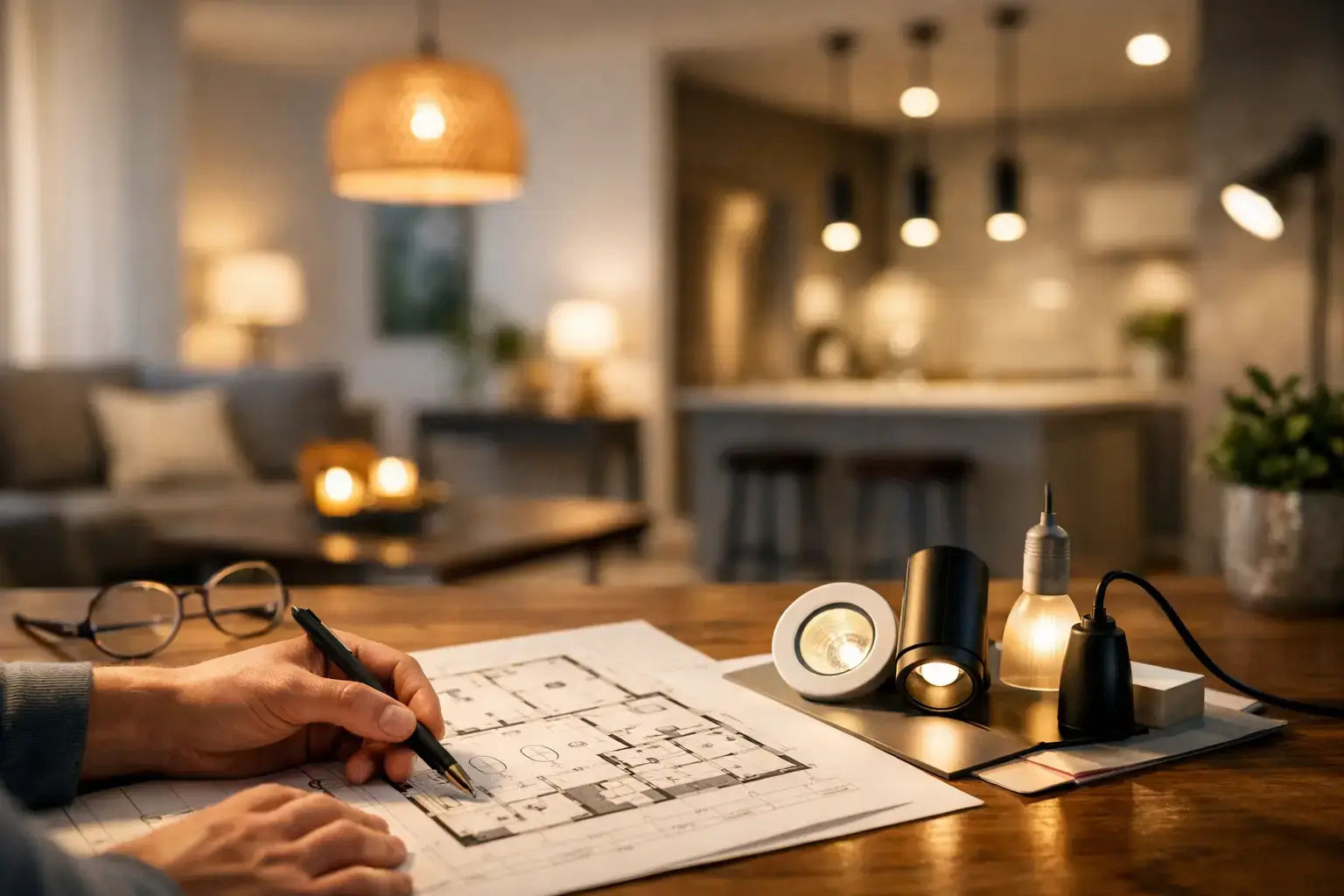
A room can have beautiful flooring, fresh paint and quality furniture, then still feel flat the moment the sun goes down. That is usually not a styling problem. It is a lighting problem. If you are working out how to design lighting for home, the goal is not simply to make rooms brighter. It is to make each space safer, more comfortable and easier to use.
Good lighting starts with how you live in the space. A kitchen needs clear task light. A living room needs flexibility. Bedrooms should help you wind down, not feel like a waiting room. When lighting is planned properly, your home feels more settled because every room supports what happens there.
How to design lighting for home without overdoing it
The biggest mistake people make is relying on one ceiling fitting in the centre of the room and expecting it to do everything. It rarely does. You end up with dark corners, glare where you do not want it, and a space that feels harsh or underlit at the same time.
A better approach is to layer your lighting. In practical terms, that means thinking in three parts – ambient lighting for general visibility, task lighting for specific activities, and accent lighting to add depth or highlight features. Most rooms need at least two of these layers, and the rooms you use most often usually need all three.
Ambient light gives the room its base level of brightness. This might come from downlights, a ceiling fitting or indirect wall lights. Task lighting is more focused, such as pendant lights over a kitchen island, under-cabinet strips on a benchtop, or bedside reading lights. Accent lighting is where the room starts to feel considered rather than merely functional. It might be a wall light washing texture across a stone feature, lighting for artwork, or soft shelving illumination.
The right balance depends on the room, ceiling height, natural light, and how much control you want. More fittings are not always better. Smarter placement usually matters more than quantity.
Start with function, then shape the mood
Before choosing fittings, ask what the room needs to do during the day and at night. A dining room, for example, often has one job during the day and another after dark. In daylight it may barely need artificial light. At night it needs enough brightness for meals, but not so much that it feels clinical.
That is why dimming matters in so many parts of the home. A dimmer gives you control over atmosphere without changing the fittings themselves. In living areas, bedrooms and dining spaces, it is often one of the simplest upgrades with the biggest payoff. In bathrooms and kitchens, dimmers can still work well, but you need to keep visibility and practicality front of mind.
Colour temperature matters just as much as brightness. Warm white light usually suits living rooms, bedrooms and dining areas because it feels softer and more relaxed. Cooler light tends to work better in laundries, bathrooms and task-heavy kitchen zones where clarity is useful. If you mix colour temperatures badly across open-plan spaces, the result can feel patchy. Consistency helps the home feel more cohesive.
Room-by-room lighting design that actually works
In the kitchen, start with task lighting because that is where the room succeeds or fails. Benchtops, cooktops and sinks need clear visibility. Ceiling downlights can provide general light, but they are often not enough on their own, especially if they cast shadows from overhead cabinets or from the person standing at the bench. Under-cabinet lighting solves that problem neatly. If you have an island bench, pendants can add visual interest, but they still need to be positioned for function, not just looks.
Living rooms need flexibility more than raw brightness. This is where layered light makes the biggest difference. Use ambient lighting to establish an even base, then add lamps or wall lights to soften the room and create smaller zones. If you watch television in the space, avoid overly bright downlights aimed directly at the seating area. Reflection and glare quickly become annoying.
Bedrooms should feel calm. That does not mean they should be dim all the time, but they should offer softer options. Bedside wall lights or table lamps work well because they keep light close to where it is needed without flooding the whole room. If the wardrobe area needs better visibility, a separate light source there makes more sense than making the entire bedroom brighter.
Bathrooms need a careful balance of safety, visibility and comfort. Mirror lighting is especially important. If the only light source is a ceiling fitting behind you, shadows fall across your face, which is frustrating for shaving, makeup and general use. Wall-mounted mirror lights or well-positioned vertical lighting can improve this dramatically. Bathrooms also have stricter safety requirements, so fittings and placement need to suit wet areas properly.
Hallways, stairs and entry points are often overlooked, yet they shape how the home feels at night. If these areas are too dark, they become a safety issue. If they are too bright, they feel stark. Soft, even light works best. Stair lighting, step lights or well-spaced wall lights can make movement safer while also improving the overall finish of the home.
Choosing fittings that suit the house
Not every fitting suits every home, even if it looks good in a showroom. Ceiling height, room proportions and surface finishes all affect the result. A large pendant may look impressive, but in a room with a lower ceiling it can dominate the space or interrupt sightlines. Gloss surfaces can bounce glare around more than expected. Dark walls may absorb light and need a different approach than pale interiors.
Downlights are popular because they are clean and unobtrusive, but they should not be treated as a default solution everywhere. In some rooms, too many downlights create a flat, overlit look. In others, they are exactly right. Wall lights, pendants, strip lighting and feature fittings all have their place when they are chosen to support the room rather than compete with it.
Energy efficiency should also be part of the conversation. LED lighting is now the obvious choice for most homes because it lasts longer, uses less power and gives you better control over brightness and colour temperature. That said, quality still matters. Cheap fittings and drivers can lead to flicker, poor dimming performance and premature failure.
Plan the layout early if you are renovating
If you are renovating or building, lighting should be planned alongside the electrical layout, not after the plaster is up and the paint is done. This is the point where you can think properly about switch positions, circuit separation, feature lighting and practical task zones.
Early planning also helps avoid the common compromise of placing lights where it is easiest to wire them rather than where they should actually go. A well-designed layout considers furniture position, cabinetry, artwork, mirrors, door swings and how people move through the space. That level of detail is where a home starts to feel polished.
For existing homes, upgrades are still very achievable. Replacing outdated fittings, adding dimmers, improving exterior lighting or introducing layered lighting in key rooms can make a noticeable difference without a full renovation. Sometimes the best results come from improving a few problem areas rather than changing everything at once.
When professional advice makes the difference
There is a point where lighting stops being a decorating choice and becomes an electrical planning job. If you are adding circuits, moving fittings, upgrading switchboards, changing outdoor lighting or working in wet areas, licensed electrical advice matters. It is not only about compliance. It is also about getting a result that performs properly over time.
An experienced electrician can help translate ideas into a practical layout, recommend suitable fittings, and make sure brightness, spacing and controls all work together. For homeowners who want a reliable outcome without second-guessing every decision, that guidance saves time and avoids expensive rework later. It is one reason many clients ask Voltricity to be involved early, before lighting choices become fixed.
Outside the home, the same thinking applies. Entry lighting, pathways, patios and garden features should improve visibility and security without making the property feel harsh. Sensor lighting can be useful, but it needs to be placed carefully. Too sensitive and it becomes irritating. Not sensitive enough and it misses the moment you actually need it.
The best home lighting feels effortless once it is in place. You notice that the kitchen works better, the living room feels more inviting, and the hallway is safer at night. That is usually the result of careful planning, sensible product choices and a layout built around real life rather than guesswork.