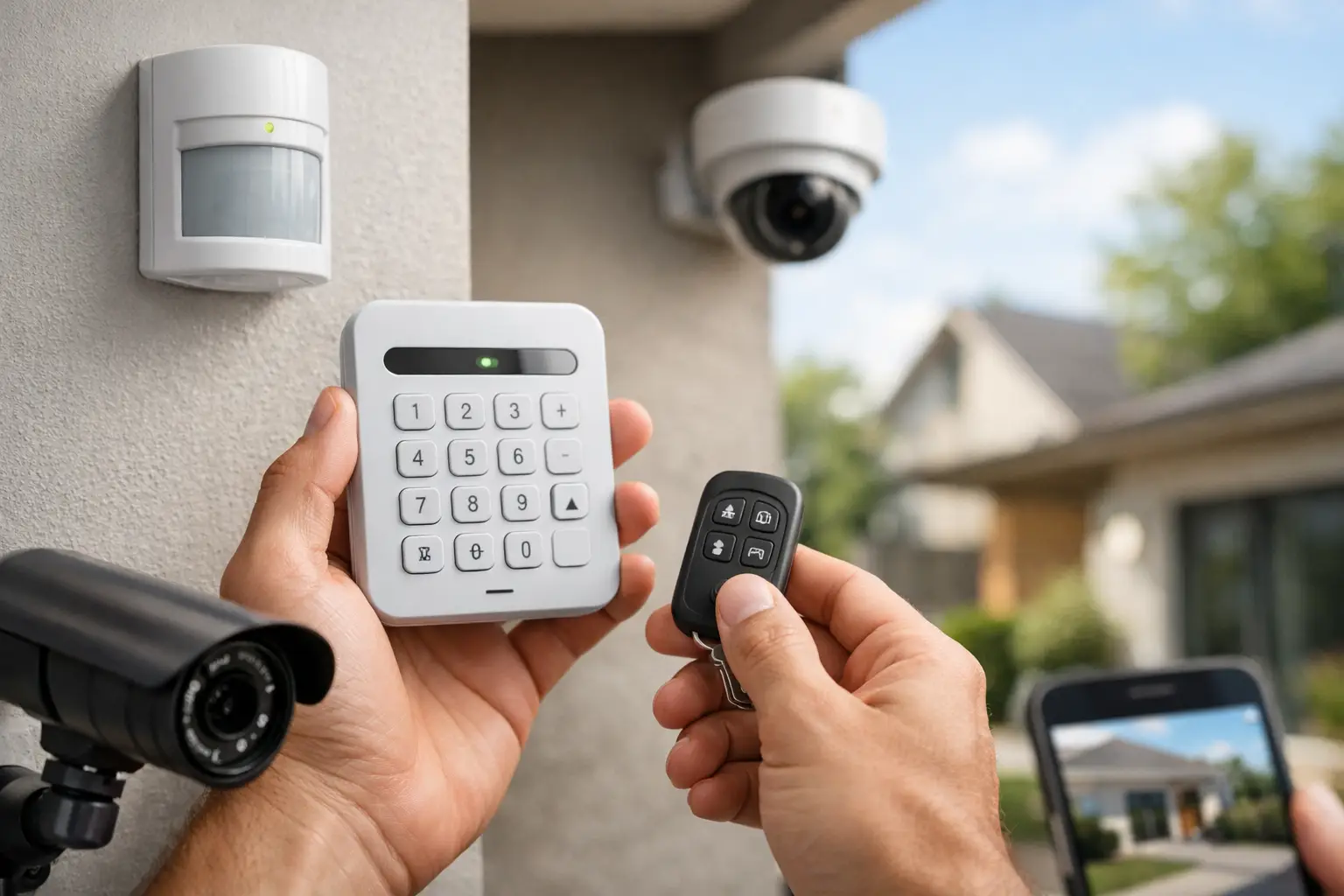
A front door camera can show who arrived. A good alarm system tells you when someone has entered somewhere they should not be, even when the property is empty. That distinction matters when working out how to choose security alarms for a home, rental, shop, office or warehouse. The right system should fit the way your property is used, provide practical warning when it counts and remain reliable long after installation day.
The cheapest package is not always the best value, and the most feature-heavy option is not automatically the safest. Start with the risks around your specific property, then choose equipment and installation that addresses them without making daily life harder.
Start with the property, not the alarm package
Before comparing brands, walk through the property as someone looking for an easy opportunity. Consider gates, side access, rear doors, accessible windows, roller doors, roof access and any areas hidden from the street. For a business, also consider stock rooms, server cabinets, cash handling areas, staff-only doors and entry points used after hours.
A family home may need protection focused on the perimeter and main living areas, while a commercial site may need separate alarm zones for offices, storage, reception and workshops. Property managers often need a setup that can be armed easily between tenancies and does not require major changes when occupants change.
Think about when the building is occupied too. A home alarm may need a night mode that protects downstairs doors and windows while people sleep upstairs. A business may require staff to move through reception during opening hours while restricted areas remain alarmed. These everyday details determine whether the system is used properly or regularly left off because it is inconvenient.
Choose the right mix of detection
Most effective alarm systems use more than one type of detector. The aim is not to place a sensor in every room. It is to create sensible layers of protection, so an intruder is detected early and their movement through the property is harder to miss.
Perimeter detection
Perimeter protection can include door contacts, window contacts, glass-break detectors and sensors on roller doors or gates. It provides an early alert when an entry point is opened or forced. This is particularly useful for homes with people inside overnight and businesses that store valuable equipment or stock.
Door and window contacts are unobtrusive and dependable when installed correctly. They are a strong choice for accessible entry points, but they do not replace internal detection if a window is broken without opening or an intruder enters through another route.
Internal motion detection
Passive infrared motion sensors are common because they cover hallways, living spaces, offices and key travel paths efficiently. They can be configured around pets in some situations, but pet-friendly does not mean pet-proof. A large dog, climbing cat or sensor positioned too low can still cause false alarms.
Sensor placement matters more than simply buying a pet-immune model. A licensed installer will consider room layout, air-conditioning vents, direct sunlight, heat sources and likely movement paths. Poor positioning can reduce detection quality or create nuisance alarms that undermine confidence in the system.
Specialist detection where needed
Some properties need additional protection. A jewellery display, liquor storage area, detached shed or equipment cage may benefit from vibration detection, beam sensors or duress buttons. A duress alarm is designed for a person to discreetly call for help during a threatening situation, making it valuable for reception areas, retail counters and sites where staff work alone.
Do not add specialist devices just because they sound impressive. Each component should solve a clear problem identified during the site assessment.
Decide how you want to be alerted
An alarm is only useful if the right person receives the warning and knows what to do next. Local audible alarms, app alerts and professional monitoring each have a place.
A siren and external strobe can deter intruders and alert neighbours, but they rely on someone nearby noticing and responding. Mobile app notifications give owners immediate visibility, which can work well for an owner-occupied home or a small business where a responsible person is always available.
Professional monitoring adds a response process. When an alarm event is received, the monitoring centre follows agreed procedures, such as calling nominated contacts or arranging a patrol response where available. This can be worthwhile for vacant properties, businesses with valuable stock, owners who travel regularly and sites where an alarm cannot be checked quickly.
The trade-off is ongoing cost and the need to keep contact details and response instructions current. Ask exactly what the monitoring service includes, how events are verified and what happens if you cannot be reached. Clear expectations are better than assuming a siren will automatically bring police attendance.
Prioritise reliable power and communication
Security systems need to keep working during the events that can expose a property to risk. A professionally installed alarm panel is generally powered from the mains and supported by a backup battery, allowing it to continue operating during a power outage for a defined period. Battery condition should be checked as part of regular maintenance rather than discovered after a failure.
Communication is equally important. Older systems may rely on a fixed phone line, while modern systems can use mobile, internet or dual-path communication. Internet-based reporting can be effective, but it may not work if the modem loses power or the connection is interrupted. Mobile communication provides another layer, although signal strength at the property needs to be assessed.
For higher-risk sites, dual-path communication offers greater resilience by using two independent methods. It costs more, but it reduces the chance that a single fault stops alarm signals from leaving the building.
Make arming simple for the people who use it
The best security alarm is one that occupants can operate confidently. Keypads, remotes, tags and mobile apps all offer different benefits. A keypad may suit a commercial site with multiple staff codes, while an app can make it easier for a homeowner to check status or arm the system remotely.
For businesses, individual user codes provide accountability and make it easier to remove access when a staff member leaves. For rental properties, avoid setups that depend solely on one person’s mobile phone or an undocumented code. The owner or property manager should retain secure control of administrator access.
Ask your installer to explain daily operation in plain language: how to arm the system, bypass a zone, respond to a false alarm, change authorised contacts and test the alarm. A short handover session prevents a great deal of frustration later.
Plan for integration, but avoid unnecessary complexity
Security alarms can work alongside CCTV, access control, intercoms and exterior lighting. For example, an alarm event may trigger selected lights, or a camera system can help verify what happened at an entry point. Integrated systems can make managing a property easier because the equipment is designed as part of one considered solution.
That said, integration should be purposeful. A simple, reliable alarm with well-placed sensors is better than a complicated system no one understands. Consider what you may need over the next few years, such as an extension, a new shed, EV charger work, extra access doors or a growing business, and choose a system that can be expanded without replacing the core panel.
Use professional installation to protect performance
Wireless alarms are convenient in finished homes and smaller upgrades, while wired systems can be an excellent option during construction, renovation or major electrical work. Neither is automatically superior. Wireless devices reduce cabling and can be easier to extend, but they require battery management and suitable signal coverage. Wired devices avoid individual sensor batteries, though cable routes need careful planning.
Professional installation is about more than fixing devices to walls. It includes selecting appropriate equipment, locating sensors correctly, protecting cabling, testing communication paths, programming zones and ensuring the alarm works as intended. For commercial properties, the system may also need to align with insurer requirements, site procedures and relevant Australian standards.
Choose a provider who can explain the recommended design and provide transparent pricing for equipment, installation, monitoring if required and future servicing. You should know what is included before work begins, not after the system is installed.
Allow for testing and maintenance
Like smoke alarms, security systems need occasional attention. Test the system as instructed, keep remotes and app access up to date, and arrange servicing when batteries reach their expected replacement period or faults appear. Renovations can also affect coverage. A new partition wall, tall shelving, changed furniture layout or air-conditioning upgrade may require sensors to be repositioned.
If you manage several properties, keep a simple record of alarm codes, administrator access, monitoring contacts, service dates and any known faults. This makes handovers easier and helps avoid a security gap when a tenant or staff member changes.
A considered alarm system should give you confidence without demanding constant attention. Whether you are protecting a family home, a tenancy or a busy workplace, a site assessment by a qualified security and electrical professional can turn broad concerns into a practical plan that suits the property and the people who rely on it.