Category: Blog

Your blog category

  • LED Strip Decorative Lights Done Right

    LED Strip Decorative Lights Done Right

    A harsh downlight can make a renovated kitchen feel flat. A dark hallway can make a great home feel unfinished. That is where led strip decorative lights earn their keep – not as a gimmick, but as a practical way to add warmth, visibility and character to a space without major building work.

    Used well, strip lighting can highlight joinery, soften hard surfaces and improve the way a room functions after dark. Used poorly, it can peel away, show bright individual dots, fail early or create glare that is more annoying than useful. The difference usually comes down to planning, product choice and installation quality.

    Where led strip decorative lights work best

    The appeal of led strip decorative lights is flexibility. They can fit into places where traditional fittings do not make sense, and they can create an effect that feels considered rather than obvious. In homes, the most common applications are under kitchen cabinets, in bathroom niches, along stair treads, behind mirrors, inside wardrobes and under floating vanities. In outdoor areas, they are often used for deck edges, seating, pathways and alfresco zones.

    Commercial spaces can get just as much value from them. Retail displays, reception counters, shelving, bars and waiting areas all benefit from subtle lighting that supports the fit-out without overpowering it. For property managers, strip lighting can also be a smart upgrade in shared areas where appearance and visibility both matter.

    Not every location suits every product, though. A wardrobe light has very different demands from a poolside installation or a busy café counter. That is why the early decisions matter more than most people expect.

    What to get right before installation

    The first question is not colour. It is purpose. If the lighting is there purely for ambience, the output can be softer and the placement can be more concealed. If it needs to improve visibility on stairs, in a pantry or along a path, brightness and beam control become more important.

    After that, the key factors are colour temperature, ingress protection, driver quality and the surface the strip will be mounted to. Warm white often suits living areas, bedrooms and hospitality spaces because it feels more relaxed. Cooler light can work in task areas, but if it is too blue it can make a room feel clinical. In many homes, the best result comes from choosing a colour temperature that complements the main lighting rather than fighting against it.

    Moisture and dust ratings matter as well. A dry indoor shelf and an outdoor pergola should not use the same strip by default. Bathrooms, laundries, external walls and landscaping areas need products suited to those conditions. If water, steam or weather are involved, guessing is a risk.

    Then there is the driver and control setup. Cheap drivers are one of the biggest causes of flicker, buzzing and premature failure. Dimming compatibility can also catch people out. A strip light may look simple on the surface, but the supporting components are what determine whether it performs reliably over time.

    Why aluminium channels make such a difference

    One of the most overlooked parts of strip lighting is the channel. Many people assume the strip can simply be stuck in place and forgotten. Sometimes that works for a short period. Often it does not.

    An aluminium channel helps manage heat, improve adhesion and create a cleaner finish. It can also diffuse the light so you see a smooth line instead of individual LED points. That matters in visible locations like kitchen splashbacks, hallway joinery and feature walls, where the whole point is a polished result.

    There is also a durability benefit. Heat is the enemy of LED lifespan, and strips mounted without proper heat dissipation are more likely to degrade early. If you are spending money on custom cabinetry, a bathroom renovation or a commercial fit-out, it makes sense to protect the finish and the lighting system at the same time.

    Common mistakes with LED strip decorative lights

    The most common mistake is buying based on price alone. Lower-cost strips may look similar in the packet, but differences in chip quality, adhesive backing, driver performance and waterproofing become obvious once they are installed. It is frustrating to pull apart joinery or external cladding later because a bargain product failed early.

    Another issue is poor placement. If the strip is visible from normal standing or seated angles, glare can become a problem. Good strip lighting usually works best when the source is concealed and the effect is what you notice. That takes a bit of forethought during design, especially around mirrors, television units and overhead shelving.

    DIY wiring is another risk. Plug-in options have their place, but many permanent installations involve low-voltage systems, hardwired drivers, switched circuits or integration with existing lighting controls. That work needs to be done safely and to standard. In some settings, especially kitchens, bathrooms, outdoor areas and commercial premises, there is very little margin for error.

    Choosing strip lights for homes and businesses

    For homeowners, the right setup often comes down to comfort and simplicity. You want lighting that looks good, turns on when expected and does not need constant adjustment. A well-designed kitchen installation might use under-cabinet strip lighting for meal prep, toe-kick lighting for evening ambience and separate switching so each layer serves a purpose.

    For businesses, the priorities can shift slightly. Reliability, presentation and maintenance access become more important, especially in customer-facing spaces. A restaurant may want warm, dimmable strip lighting to shape atmosphere. A retail store may prefer a brighter, cleaner look that helps merchandise stand out. An office reception might need a subtle feature line that reinforces the fit-out without adding glare on screens.

    Property managers usually need something else again – practical upgrades that improve appeal while keeping maintenance predictable. In that case, product quality and access for future servicing can matter more than the most advanced lighting effects.

    When a licensed electrician adds real value

    There is a reason strip lighting projects often look easy online and end up more complicated on site. Power supply locations, switch access, cable routes, existing load, compliance requirements and the material you are fixing to all affect the end result.

    A licensed electrician can assess whether the installation should be hardwired, whether the circuit is suitable and how best to conceal cabling and drivers without compromising ventilation or future access. That becomes especially important during renovations, when lighting is being added alongside new cabinetry, plastering, tiling or outdoor works. Timing matters. It is much easier to get a neat result when the electrical plan is coordinated early.

    For larger homes, commercial spaces or mixed-use upgrades, there can also be value in treating strip lighting as part of a bigger lighting and electrical strategy rather than a stand-alone add-on. Voltricity often sees better long-term outcomes when decorative lighting is planned alongside task lighting, switchboard capacity and any future automation or security upgrades.

    Getting the finish right

    The best strip lighting rarely announces itself. It supports the room. It makes a vanity feel more refined, a staircase safer at night, or an outdoor entertaining area more inviting after sunset. You notice the effect before you notice the fitting.

    That is why final details matter. Even brightness, tidy terminations, concealed drivers and sensible switching all contribute to a result that feels deliberate. Good installation is not just about making the light turn on. It is about making the space feel better to live or work in.

    If you are considering led strip decorative lights, think beyond the reel itself. Focus on where the light will land, how it will be controlled and what the environment demands. A well-planned installation can add style and function for years. A rushed one usually looks temporary from day one.

    If you want the upgrade to look clean, perform properly and meet safety requirements, it pays to treat decorative lighting with the same care as any other electrical work. A small lighting detail can change the whole feel of a property when it is done properly.

  • 11 Outdoor Landscape Lighting Ideas for Front of House

    Pull up outside a home after dark and you can tell straight away whether the lighting was thought through or added as an afterthought. The best outdoor landscape lighting ideas for front of house do more than make a property look good. They help visitors find the path, improve security, highlight the home’s best features and make the whole frontage feel cared for.

    For most Australian homes, front-of-house lighting works best when it balances three things – appearance, function and safety. Too little light leaves dark spots around paths, steps and entry points. Too much light can make the façade look harsh, create glare and annoy the neighbours. A better approach is layered lighting, where each fitting has a job and the overall effect feels clean and intentional.

    What makes front-of-house lighting work

    A strong lighting plan starts by thinking about how the front yard is actually used. Some homes need better visibility from the street to the front door. Others need practical illumination for steps, driveways or side access. If security is a concern, the design should reduce shadowy areas without turning the front of the home into a floodlit car park.

    That is why a one-size-fits-all layout rarely works. A narrow block, a wide frontage, a sloping garden and a modern rendered façade all call for different choices. The fittings matter, but placement matters more.

    11 outdoor landscape lighting ideas for front of house
    1. Light the path, not just the garden

    Path lights are often the first thing homeowners think of, and for good reason. They make the front approach safer and guide people naturally to the entrance. The key is spacing them properly so the light overlaps gently rather than creating a row of bright dots.

    Low-level fittings usually look better than tall decorative posts, especially in smaller front gardens. If the path is curved, staggered placement tends to feel more natural than a rigid line on both sides.

    2. Use wall lights to frame the entry

    A front door should be easy to find at night. Wall-mounted lights on either side of the entry help define the doorway and add a welcoming feel. This can suit both classic and contemporary homes, depending on the fitting style.

    You do not need oversized fixtures to make an impact. A pair of well-positioned lights with a warm, even spread is often enough. It also helps with key access, parcel drop-offs and visitor visibility.

    3. Highlight architectural features

    If your home has textured brickwork, stone cladding, timber battens, columns or a distinctive façade, accent lighting can bring those details forward after dark. This is where narrow-beam uplights or carefully aimed spotlights can do a lot with very little.

    The trade-off is precision. Accent lighting looks polished when it is subtle and correctly positioned. If it is too bright or pointed awkwardly, it can flatten the feature or create glare from the street.

    4. Add uplighting to feature trees

    A feature tree in the front yard can become a major focal point at night. Uplighting through the trunk and canopy adds depth and gives the whole frontage more presence. This works particularly well with ornamental trees, sculptural trunks and layered foliage.

    It depends on the tree’s size and shape. A small Japanese maple needs a different beam spread from a mature gum or frangipani. Good placement is essential so the effect feels soft rather than theatrical.

    5. Wash the façade with light

    Wall washing is a useful option for homes with broad front walls or simple modern exteriors. Instead of spotlighting a single feature, it creates an even spread of light across the façade. This can make the house feel larger, cleaner and more secure.

    Used well, wall washing avoids the patchy look that comes from a few random fittings. Used poorly, it can feel flat and overly bright. The colour temperature and beam angle need to suit the material of the wall, especially on lighter renders that can reflect a lot of glare.

    6. Improve driveway visibility

    Driveways often get left out of the plan, even though they are one of the most used access points. Lighting the driveway edges, garage approach or turning area can improve visibility and make arriving home easier, particularly on winter evenings.

    This does not always mean strong floodlights. In many cases, subtle bollard lighting, low wall lights or carefully shielded fittings near the garage are a better choice. They provide guidance without blasting the whole frontage with light.

    7. Step lights for raised entries

    If the front entry includes stairs, split levels or retaining walls, step lighting is one of the most practical additions you can make. Recessed fittings or low-mounted lights on adjacent walls improve footing and reduce trip hazards.

    This is where appearance and safety line up neatly. Step lights can look sharp, but their real value is functional. They are especially worthwhile for family homes, rental properties and homes with frequent evening visitors.

    8. Layer in garden bed lighting

    Garden bed lighting adds depth between the street and the home. A few discreet spike lights aimed at planting can soften the transition from hard surfaces to the house itself. This works well with layered planting, grasses, feature pots and low shrubs.

    The mistake is trying to light every plant. A selective approach usually looks more refined and is easier to maintain. Light the strongest shapes and textures, then let the rest fall into the background.

    9. Use sensor lighting where it makes sense

    Not every front-of-house light needs to stay on all evening. Sensor lighting can be ideal for side access, driveways, entry zones and darker corners where security matters most. It offers practical illumination when movement is detected and can help reduce unnecessary energy use.

    The important part is choosing the right fitting and detection range. A poorly aimed sensor can trigger every time a car passes or the neighbour’s cat wanders through. Placement should be tested, not guessed.

    10. Keep the front gate visible

    If your property has a front gate, fence line or pedestrian access point, that area should be clearly visible at night. A modest light at the gate or along the fence return can help visitors, delivery drivers and residents move around more confidently.

    This is particularly useful on wider blocks or homes set back from the street. It also strengthens the sense that the whole frontage has been designed, not just the part closest to the front door.

    11. Choose warm light for a more welcoming finish

    One of the most overlooked front yard lighting decisions is colour temperature. In most residential settings, warm white lighting creates a softer and more inviting result than cooler tones. It tends to suit garden elements, façade materials and entry lighting far better.

    Cool white can still have a place for certain security applications or very modern exteriors, but it can also feel stark. If the goal is street appeal as well as function, warm light is usually the safer choice.

    Common mistakes with outdoor landscape lighting ideas for front of house

    The biggest mistake is overlighting. Many homeowners assume brighter means better, but too much light can wash out the very features you want to highlight. It can also create contrast problems, where one area is glaringly bright and the next is difficult to see.

    Another common issue is poor fixture placement. Lights that shine into windows, across the footpath or directly into the eyes of someone approaching the home do not feel welcoming. They feel uncomfortable. Shielding, beam control and mounting height all matter more than people expect.

    There is also the practical side. Outdoor lighting needs to handle weather, garden maintenance and long-term use. Cheap fittings may look fine initially, then start failing after exposure to rain, dust and heat. For front-of-house installations, durability is just as important as appearance.

    Why professional design and installation matter

    Front yard lighting looks simple from the street, but getting it right takes planning. Cable runs, switching, load capacity, placement, weather protection and compliance all need to be considered before the fittings go in. That is particularly true if the work is being added to an older home or combined with upgrades such as new entry lighting, security lighting or switchboard work.

    A licensed electrician can help you avoid the piecemeal look that often happens when lights are added one by one over time. Instead, the layout can be planned as a complete system that suits how the property is used now and how you want it to look at night. For homeowners who want reliable results without trial and error, that makes a real difference.

    At Voltricity, the focus is on practical lighting solutions that improve safety, presentation and day-to-day use without overcomplicating the job.

    Good front-of-house lighting should feel easy once it is finished. You arrive home, the path is clear, the entry feels welcoming and the house looks its best after dark – exactly as it should.

  • When to Change Lights and When to Upgrade

    When to Change Lights and When to Upgrade

    A flickering downlight in the kitchen, a yellowed oyster light in the hallway, or an office fit-out that still feels dim at 3 pm – most people start with the same question: should you just change lights, or is it time for something more substantial?

    The answer depends on what is actually causing the problem. Sometimes it is as simple as replacing a failed globe. Other times, the fitting is outdated, the circuit is overloaded, or the lighting layout no longer suits how the space is used. If you get that call wrong, you can spend money on quick fixes that do not last.

    Change lights or replace the whole fitting?

    This is where many homeowners and property managers get caught out. Not every lighting issue is solved by changing a bulb, and not every old fitting needs a full replacement either.

    If the light fitting is modern, in good condition, and designed for replaceable globes, a straightforward change may be all that is needed. That is often the case with table lamps, some pendants, and selected outdoor fittings. But with many LED downlights and integrated fixtures, the light source is built into the fitting. Once it starts failing, you are not really there to change lights in the traditional sense – you are replacing the unit.

    There is also the age factor. Older fittings can look fine from the outside while the internal wiring, connections, or lampholders are deteriorating. Heat, dust, moisture, and years of use all take a toll. In those cases, replacing the globe might get the light back on briefly, but it does not deal with the real issue.

    For commercial spaces, the decision usually comes down to efficiency and presentation as much as function. If staff are working under patchy, uneven light or customers are walking into a dim reception area, keeping outdated fittings alive can cost more in the long run than upgrading to something better suited to the space.

    Signs it is time to change lights

    There are a few clear situations where changing lights makes sense, provided the fitting itself is safe and compatible.

    A globe that has simply reached the end of its life is the obvious one. If there is no flickering before failure, no tripping circuit, and no visible damage to the fitting, a replacement may be all that is required. The same applies if the current globe type is working but the room feels too dark or too harsh. Swapping from an old halogen or CFL to a suitable LED option can improve brightness, reduce power use, and cut down maintenance.

    This is also common during renovations or property updates. Owners often want to change lights to improve the feel of a room without moving wiring or opening up ceilings. A warmer colour temperature in living areas, brighter task lighting in kitchens, or cleaner exterior lighting around entry points can make a property feel more modern without turning the job into a full electrical rework.

    That said, compatibility matters. Not every LED works properly with every dimmer, transformer, or fitting. If the wrong parts are mixed together, you can end up with buzzing, flashing, shortened lifespan, or poor performance from day one.

    When changing lights is not enough

    If the same fitting keeps blowing globes, that is a warning sign. So is flickering that continues after a replacement, lights that take time to come on, switches that feel hot, or any burning smell around the fitting. Those are not cosmetic problems. They can point to loose connections, failing components, overloaded circuits, or damage hidden in the ceiling space.

    You should also be cautious with older homes and commercial premises that have had multiple alterations over time. It is not unusual to find mismatched fittings, ageing cabling, or lighting that was installed to older standards. What looks like a small replacement job on the surface can expose bigger issues once inspected properly.

    Bathrooms, laundries, car parks, workshops, and outdoor areas bring another layer of risk because moisture and environmental exposure affect both safety and product choice. In those spaces, the right IP rating, installation method, and circuit protection matter just as much as the fitting itself.

    If you are changing several lights at once, that is often the right time to step back and assess the whole setup. A piecemeal approach can work, but it can also leave you with inconsistent brightness, mixed colour temperatures, and fittings that age at different rates.

    The practical difference a lighting upgrade makes

    A proper lighting upgrade is not only about making a place look newer. It changes how a space works.

    In homes, the biggest gains are usually comfort, visibility, and energy efficiency. Better lighting in kitchens and bathrooms improves day-to-day use. Updated exterior lighting can make access safer at night and improve security around driveways, entry points, and side paths. In living areas, the right combination of ambient and task lighting makes the home feel more comfortable without relying on overly bright single fittings.

    For businesses, lighting affects staff performance, customer experience, and maintenance costs. Harsh or uneven lighting can make a workplace fatiguing. Poorly lit stockrooms, stairwells, and access areas can also create avoidable safety risks. Newer LED systems usually offer longer life, lower running costs, and better consistency across the site.

    This is where a licensed electrician adds real value. The job is not just to install a new fitting. It is to assess the load, confirm compliance, check the condition of existing wiring, and make sure the final result works properly in the real world.

    Choosing the right lights for the space

    The best replacement is not always the brightest one. Light output, beam angle, colour temperature, dimming compatibility, fitting size, and intended use all matter.

    Warm white generally suits bedrooms, lounges, and hospitality-style spaces where comfort matters. Neutral white often works well in kitchens, bathrooms, offices, and retail settings because it gives a cleaner look without feeling too cold. Cooler temperatures can suit task-heavy commercial environments, but they are not always the right choice for customer-facing or residential areas.

    Then there is placement. A single central fitting may technically light a room, but it often leaves shadows exactly where people need visibility most. That is why downlights, feature lighting, under-cabinet lighting, sensor lights, and outdoor security lighting are usually planned together rather than chosen one by one.

    Property managers also need to think beyond the immediate install cost. Standardised fittings across multiple tenancies or common areas can simplify future maintenance. In strata and commercial sites, that kind of forward planning saves time and avoids repeated call-outs for mismatched replacements.

    Safety comes first when you change lights

    There is a difference between replacing a standard globe and carrying out electrical work on a fitting or circuit. Once wiring, fittings, switches, or hardwired components are involved, it is licensed work.

    That matters because poor installation does not just lead to nuisance faults. It can create fire risk, electric shock risk, and compliance issues – especially in rental properties, workplaces, and shared buildings. Insurance complications can follow if unlicensed work causes damage.

    A professional approach also means checking the surrounding system, not only the failed light. If a fitting has been overheating, there may be insulation clearance issues. If lights dim when other appliances start, the problem could be elsewhere on the circuit. If outdoor lights keep failing, water ingress or incorrect product selection may be the cause.

    For customers, the real benefit is certainty. You want to know the lights are safe, correctly installed, and set up to last.

    Why timing matters

    Many people wait until a light stops working completely before acting. Sometimes that is fine. Often, though, the earlier signs were there – occasional flickering, reduced brightness, intermittent switching, or a fitting that had clearly aged beyond its best.

    Dealing with it early usually gives you more options. You can plan the right replacement, coordinate multiple jobs in one visit, and avoid the inconvenience of sudden failures. For businesses, that can mean less disruption to staff and customers. For homeowners, it means getting the job sorted before it turns into an urgent repair.

    Whether you need to change lights in one room or rethink lighting across an entire property, the smartest move is to treat lighting as part of the bigger electrical picture. A well-lit space should not only look better. It should be safer, more efficient, and better suited to the way you actually use it.

    If you are unsure whether a light needs a simple replacement or a proper upgrade, a licensed electrician can help you make the call with confidence – and that is usually the difference between a quick patch-up and a result that lasts.

  • How to Design Lighting for a Building

    How to Design Lighting for a Building

    A building can have quality finishes, a practical layout and solid electrical work, yet still feel uncomfortable if the lighting is wrong. Too dim, and people strain to work or move safely. Too bright, and the space feels harsh. If you are working out how to design lighting for a building, the best place to start is not with fittings – it is with how the space will actually be used day to day.

    Good lighting design balances visibility, comfort, efficiency and compliance. It also needs to suit the people using the building, the hours it operates and the kind of tasks happening inside. For homeowners, that might mean making a kitchen easier to cook in and a hallway safer at night. For business owners or property managers, it may mean creating a workplace that supports productivity while keeping running costs under control.

    How to design lighting for a building from the ground up

    The most reliable way to approach lighting design is to think in layers. One light in the middle of the ceiling rarely solves everything, especially in larger homes, offices, retail spaces or mixed-use buildings. A better result comes from combining ambient lighting for general visibility, task lighting for specific activities and accent lighting to highlight features or improve atmosphere.

    Ambient lighting is the base layer. It helps people move through the space safely and comfortably. Task lighting supports practical jobs such as reading, food preparation, administration work or detailed trade tasks. Accent lighting is more selective and often used in entry areas, boardrooms, landscaped zones, display areas or living spaces where appearance matters.

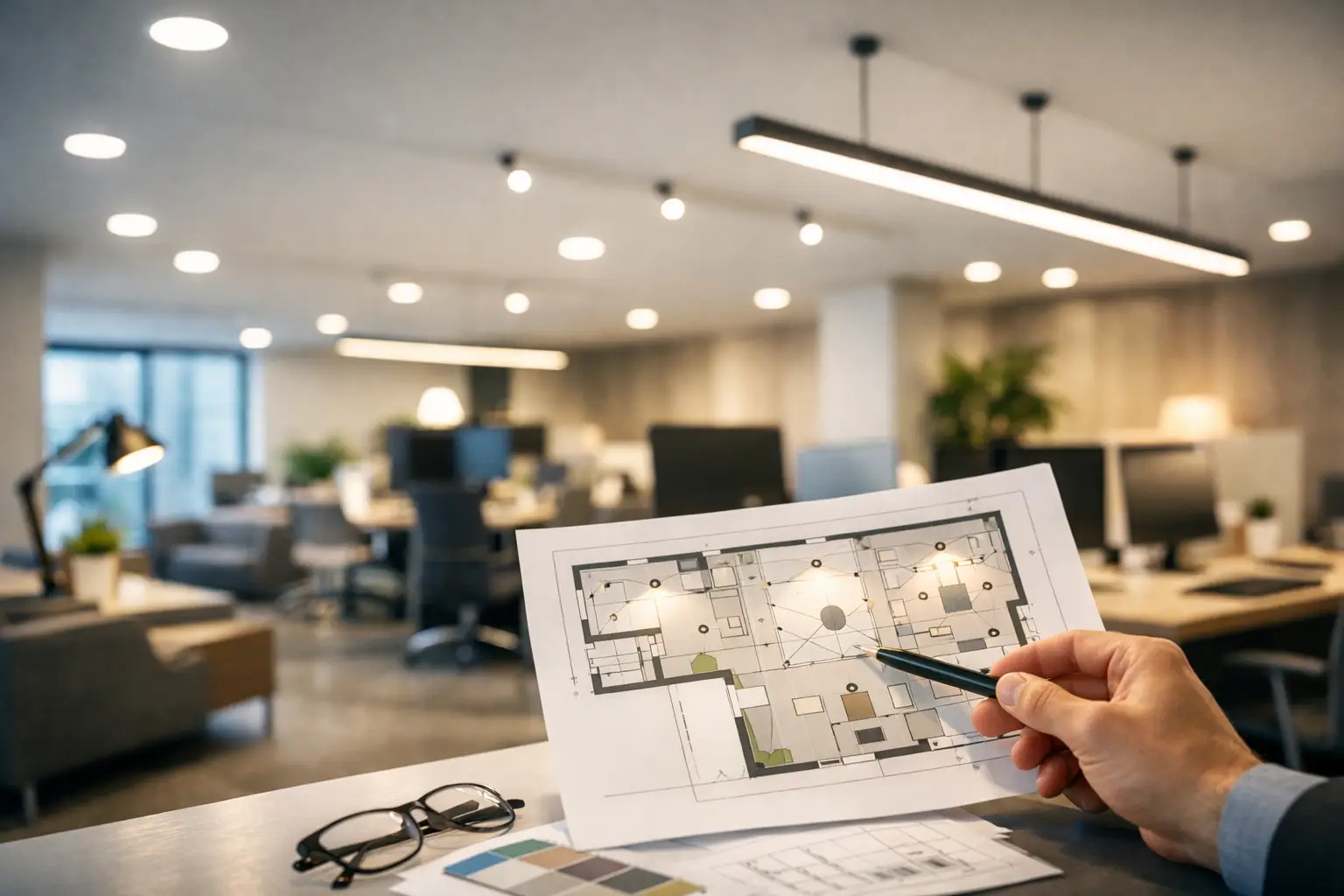
    Before any product is selected, it helps to map the building room by room. Ask what happens in each area, who uses it, how long they stay there and whether lighting needs to change across the day. A storeroom, reception area and bathroom all need different outcomes. The same is true in a home – a bedroom should not be lit like a garage, and an outdoor entertaining area should not be treated the same as a security pathway.

    Start with function, not fittings

    One of the most common mistakes is choosing lights based on style alone. Appearance matters, but performance matters first. In practical spaces, poor lighting creates frustration quickly. In commercial settings, it can also affect safety, staff comfort and presentation.

    Think about ceiling height, room dimensions, surface colours and natural light. Dark floors and walls absorb more light, so the space may need a different arrangement from a room with pale finishes. High ceilings often require stronger output or more thoughtful placement to avoid shadows and dead zones. Windows can help during the day, but they also create contrast and glare if artificial lighting is not planned properly.

    It is also worth considering when the building is used most. A daytime office with strong natural light has different demands from a warehouse, medical suite or home theatre used mainly at night. That affects the type of fittings, controls and colour temperature you choose.

    Choosing the right light levels

    Light level should match the task. Too little light can make a space unsafe or tiring to use. Too much can feel clinical and uncomfortable. This is where experience matters, because the right answer is rarely the same across an entire building.

    As a general rule, circulation areas such as corridors and stairs need clear, even lighting for safety. Kitchens, laundries, workstations and bathrooms need stronger, more targeted light. Living rooms, waiting areas and hospitality spaces often benefit from softer, more flexible lighting that can be adjusted depending on time of day or use.

    Uniformity is just as important as brightness. If one part of a room is bright and another is noticeably dim, the space feels awkward and people’s eyes work harder to adjust. A lighting plan should reduce harsh transitions and avoid creating glare on screens, reflective benches or polished floors.

    Colour temperature changes the feel of a space

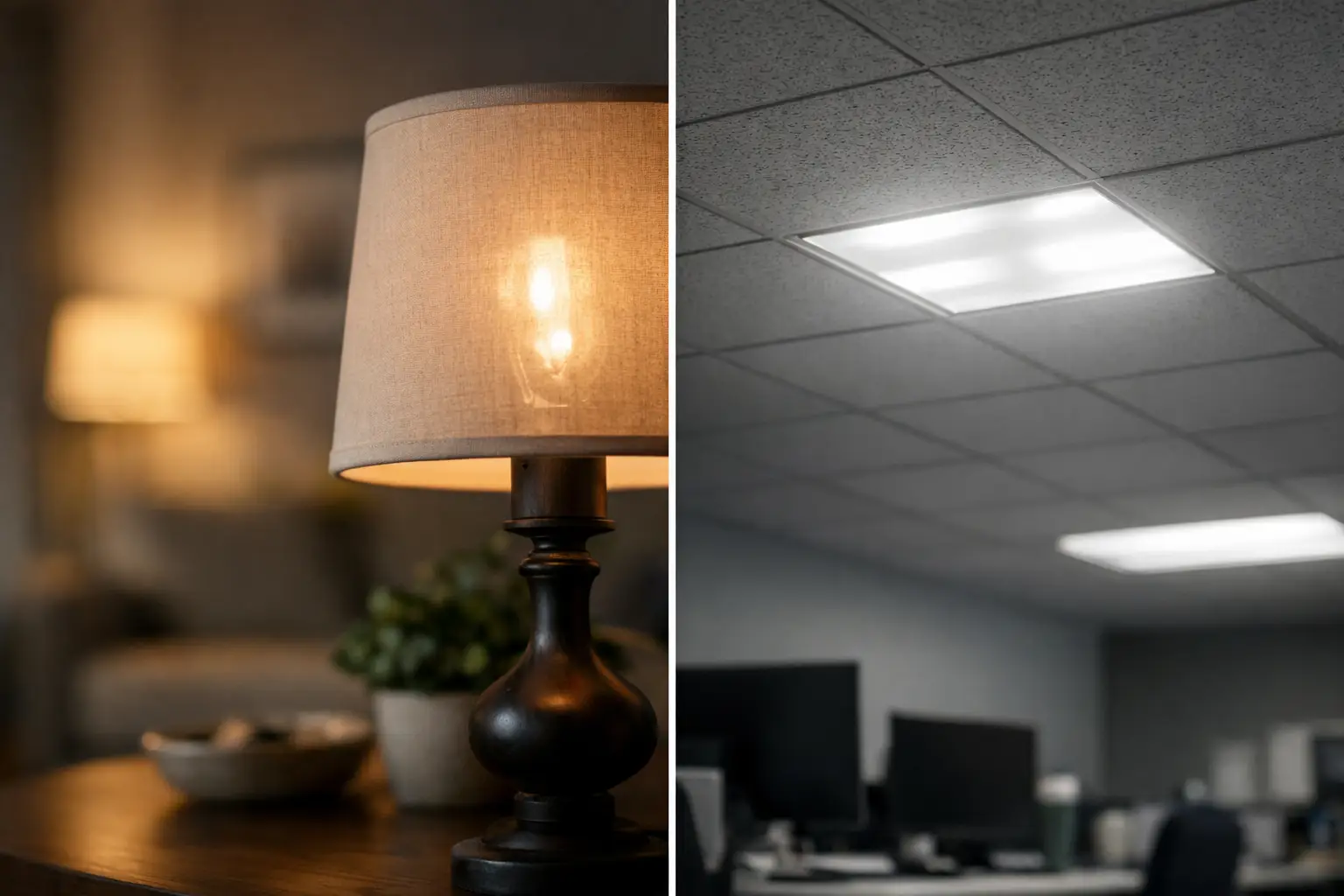
    Colour temperature has a big impact on how a building feels. Warmer light tends to create a more relaxed, welcoming atmosphere, which suits living areas, bedrooms and some hospitality spaces. Cooler light can feel cleaner and sharper, which often works well in kitchens, bathrooms, offices and task-focused commercial areas.

    There is no single best option for every building. In fact, using the same colour temperature everywhere can be a missed opportunity. A home usually benefits from variation across different rooms. A commercial property may need more consistency, but still with adjustments for staff areas, customer zones and external spaces.

    Getting this balance right also affects how materials and finishes appear. Timber, paint, stone and fabrics can look quite different under various light tones. That is another reason lighting design should be considered early, not left until the end of a build or renovation.

    How to design lighting for a building with energy use in mind

    Running costs matter, especially in larger homes and commercial premises where lighting is used for long hours. Efficient fittings and smart controls can make a noticeable difference over time, but efficiency should never come at the expense of usability.

    LED lighting is now the standard choice for most projects because it offers strong performance, lower power consumption and long service life. Beyond that, control strategy becomes important. Sensors, timers and dimmers can all help reduce unnecessary use. In offices, meeting rooms, bathrooms and external areas, these controls are often practical rather than fancy.

    That said, automation should match the building. A sensor in a storeroom makes sense. A sensor in a living room may annoy people if it switches off while they are sitting still. This is where a tailored design is better than applying the same system across every part of the property.

    Don’t overlook maintenance and access

    A lighting design should still work well years after installation. That means thinking about access for replacement, cleaning and servicing. Decorative fittings in high ceilings may look impressive, but if they are difficult to maintain, they can become an expensive headache.

    For strata, retail and commercial properties, maintenance planning is especially important. Consistent lamp type, sensible placement and durable fittings help reduce downtime and simplify future work. In outdoor areas, weather resistance and installation quality are critical if you want reliable performance through heat, rain and coastal conditions.

    Safety, compliance and the electrical side of the job

    Lighting is not only about appearance. It is part of the building’s electrical system and must be installed safely and to code. That includes correct circuit design, load management, switching, emergency lighting where required and appropriate protection for wet areas, outdoor zones and specialised environments.

    Older buildings often need more than new fittings. They may require rewiring, switchboard upgrades or additional circuits to support a modern lighting plan safely. This is especially common in renovations where new lighting is added to a property that was never designed for current demands.

    For commercial buildings, compliance obligations can be broader, particularly in workplaces, common areas and public-facing environments. Emergency and exit lighting, testing requirements and safe access all need to be considered early. Leaving these details until installation day usually leads to delays, variation costs or compromise.

    Matching lighting to different building types

    Homes, offices, retail shops, warehouses and apartment complexes all have different priorities. In a home, comfort and flexibility are often the focus. In an office, the goal may be visual comfort, energy control and a professional atmosphere. In retail, lighting can influence how products look and how customers move through the space.

    Industrial and service environments tend to place more weight on visibility, durability and safety. Outdoor areas also need their own approach. Pathways, car parks, entry points and landscape features should be lit with a clear purpose, whether that is wayfinding, presentation or security.

    This is why a one-size-fits-all solution rarely works. A good lighting design responds to the building, the people and the practical outcomes required.

    If you are planning a new build, fit-out or upgrade, it pays to involve a licensed electrician early. A proper lighting plan can prevent rework, improve comfort and make the whole building easier to live in or operate. For many property owners, that is where working with an experienced team like Voltricity adds value – not just in installation, but in getting the design right before the first fitting goes in.

    The best lighting does not call attention to itself every minute of the day. It simply makes the building work better, feel better and stay safer for the people using it.

  • How to Design Lighting for Home

    How to Design Lighting for Home

    A room can have beautiful flooring, fresh paint and quality furniture, then still feel flat the moment the sun goes down. That is usually not a styling problem. It is a lighting problem. If you are working out how to design lighting for home, the goal is not simply to make rooms brighter. It is to make each space safer, more comfortable and easier to use.

    Good lighting starts with how you live in the space. A kitchen needs clear task light. A living room needs flexibility. Bedrooms should help you wind down, not feel like a waiting room. When lighting is planned properly, your home feels more settled because every room supports what happens there.

    How to design lighting for home without overdoing it

    The biggest mistake people make is relying on one ceiling fitting in the centre of the room and expecting it to do everything. It rarely does. You end up with dark corners, glare where you do not want it, and a space that feels harsh or underlit at the same time.

    A better approach is to layer your lighting. In practical terms, that means thinking in three parts – ambient lighting for general visibility, task lighting for specific activities, and accent lighting to add depth or highlight features. Most rooms need at least two of these layers, and the rooms you use most often usually need all three.

    Ambient light gives the room its base level of brightness. This might come from downlights, a ceiling fitting or indirect wall lights. Task lighting is more focused, such as pendant lights over a kitchen island, under-cabinet strips on a benchtop, or bedside reading lights. Accent lighting is where the room starts to feel considered rather than merely functional. It might be a wall light washing texture across a stone feature, lighting for artwork, or soft shelving illumination.

    The right balance depends on the room, ceiling height, natural light, and how much control you want. More fittings are not always better. Smarter placement usually matters more than quantity.

    Start with function, then shape the mood

    Before choosing fittings, ask what the room needs to do during the day and at night. A dining room, for example, often has one job during the day and another after dark. In daylight it may barely need artificial light. At night it needs enough brightness for meals, but not so much that it feels clinical.

    That is why dimming matters in so many parts of the home. A dimmer gives you control over atmosphere without changing the fittings themselves. In living areas, bedrooms and dining spaces, it is often one of the simplest upgrades with the biggest payoff. In bathrooms and kitchens, dimmers can still work well, but you need to keep visibility and practicality front of mind.

    Colour temperature matters just as much as brightness. Warm white light usually suits living rooms, bedrooms and dining areas because it feels softer and more relaxed. Cooler light tends to work better in laundries, bathrooms and task-heavy kitchen zones where clarity is useful. If you mix colour temperatures badly across open-plan spaces, the result can feel patchy. Consistency helps the home feel more cohesive.

    Room-by-room lighting design that actually works

    In the kitchen, start with task lighting because that is where the room succeeds or fails. Benchtops, cooktops and sinks need clear visibility. Ceiling downlights can provide general light, but they are often not enough on their own, especially if they cast shadows from overhead cabinets or from the person standing at the bench. Under-cabinet lighting solves that problem neatly. If you have an island bench, pendants can add visual interest, but they still need to be positioned for function, not just looks.

    Living rooms need flexibility more than raw brightness. This is where layered light makes the biggest difference. Use ambient lighting to establish an even base, then add lamps or wall lights to soften the room and create smaller zones. If you watch television in the space, avoid overly bright downlights aimed directly at the seating area. Reflection and glare quickly become annoying.

    Bedrooms should feel calm. That does not mean they should be dim all the time, but they should offer softer options. Bedside wall lights or table lamps work well because they keep light close to where it is needed without flooding the whole room. If the wardrobe area needs better visibility, a separate light source there makes more sense than making the entire bedroom brighter.

    Bathrooms need a careful balance of safety, visibility and comfort. Mirror lighting is especially important. If the only light source is a ceiling fitting behind you, shadows fall across your face, which is frustrating for shaving, makeup and general use. Wall-mounted mirror lights or well-positioned vertical lighting can improve this dramatically. Bathrooms also have stricter safety requirements, so fittings and placement need to suit wet areas properly.

    Hallways, stairs and entry points are often overlooked, yet they shape how the home feels at night. If these areas are too dark, they become a safety issue. If they are too bright, they feel stark. Soft, even light works best. Stair lighting, step lights or well-spaced wall lights can make movement safer while also improving the overall finish of the home.

    Choosing fittings that suit the house

    Not every fitting suits every home, even if it looks good in a showroom. Ceiling height, room proportions and surface finishes all affect the result. A large pendant may look impressive, but in a room with a lower ceiling it can dominate the space or interrupt sightlines. Gloss surfaces can bounce glare around more than expected. Dark walls may absorb light and need a different approach than pale interiors.

    Downlights are popular because they are clean and unobtrusive, but they should not be treated as a default solution everywhere. In some rooms, too many downlights create a flat, overlit look. In others, they are exactly right. Wall lights, pendants, strip lighting and feature fittings all have their place when they are chosen to support the room rather than compete with it.

    Energy efficiency should also be part of the conversation. LED lighting is now the obvious choice for most homes because it lasts longer, uses less power and gives you better control over brightness and colour temperature. That said, quality still matters. Cheap fittings and drivers can lead to flicker, poor dimming performance and premature failure.

    Plan the layout early if you are renovating

    If you are renovating or building, lighting should be planned alongside the electrical layout, not after the plaster is up and the paint is done. This is the point where you can think properly about switch positions, circuit separation, feature lighting and practical task zones.

    Early planning also helps avoid the common compromise of placing lights where it is easiest to wire them rather than where they should actually go. A well-designed layout considers furniture position, cabinetry, artwork, mirrors, door swings and how people move through the space. That level of detail is where a home starts to feel polished.

    For existing homes, upgrades are still very achievable. Replacing outdated fittings, adding dimmers, improving exterior lighting or introducing layered lighting in key rooms can make a noticeable difference without a full renovation. Sometimes the best results come from improving a few problem areas rather than changing everything at once.

    When professional advice makes the difference

    There is a point where lighting stops being a decorating choice and becomes an electrical planning job. If you are adding circuits, moving fittings, upgrading switchboards, changing outdoor lighting or working in wet areas, licensed electrical advice matters. It is not only about compliance. It is also about getting a result that performs properly over time.

    An experienced electrician can help translate ideas into a practical layout, recommend suitable fittings, and make sure brightness, spacing and controls all work together. For homeowners who want a reliable outcome without second-guessing every decision, that guidance saves time and avoids expensive rework later. It is one reason many clients ask Voltricity to be involved early, before lighting choices become fixed.

    Outside the home, the same thinking applies. Entry lighting, pathways, patios and garden features should improve visibility and security without making the property feel harsh. Sensor lighting can be useful, but it needs to be placed carefully. Too sensitive and it becomes irritating. Not sensitive enough and it misses the moment you actually need it.

    The best home lighting feels effortless once it is in place. You notice that the kitchen works better, the living room feels more inviting, and the hallway is safer at night. That is usually the result of careful planning, sensible product choices and a layout built around real life rather than guesswork.