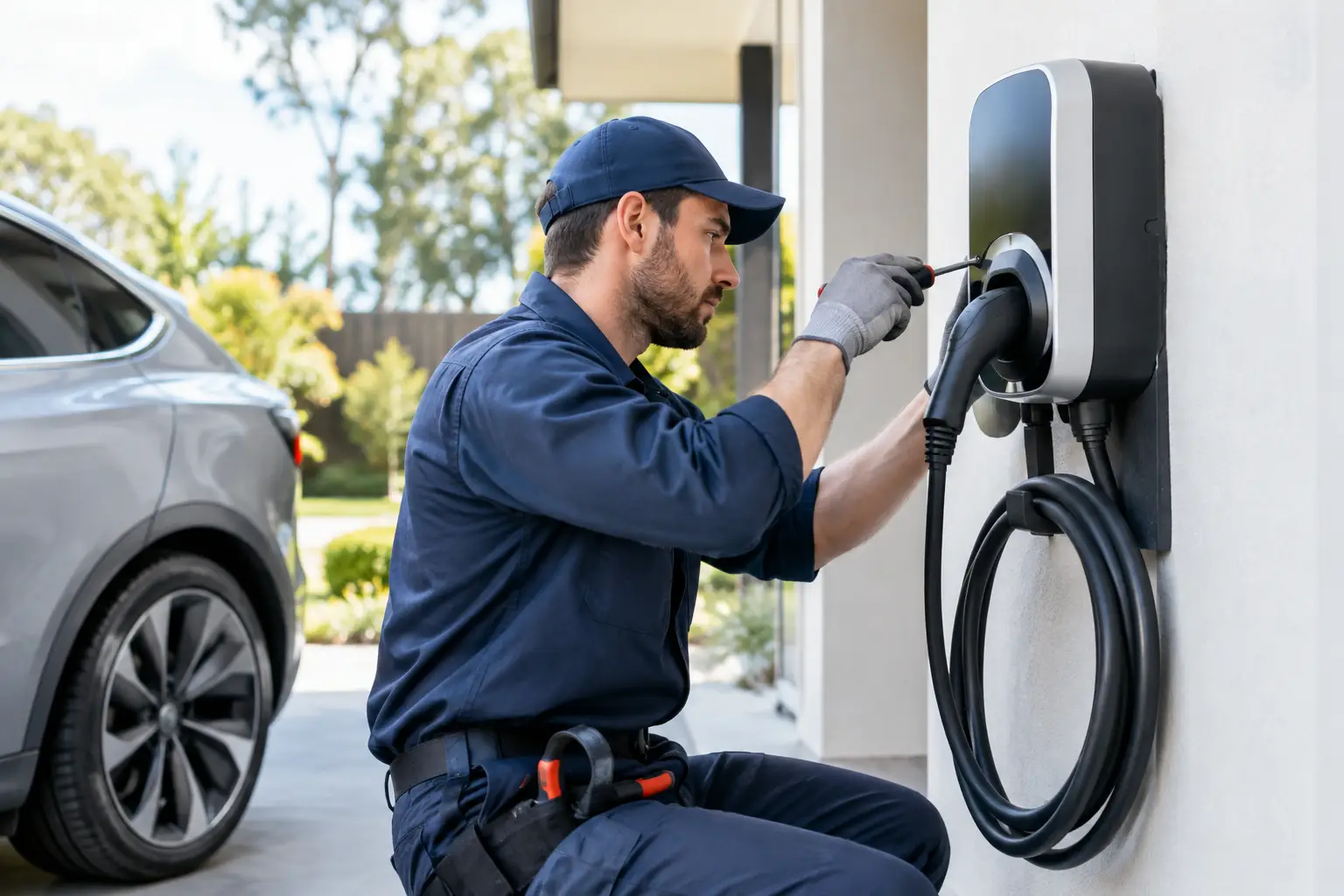
A new EV can be collected in an afternoon, but charging it safely at home or work requires more than plugging in a cable. If you are asking who installs electric vehicle chargers, the answer is a licensed electrician with the right experience in EV charging systems, electrical protection and local compliance requirements.
An EV charger is a high-load piece of electrical equipment. It needs to work reliably every day without overloading your switchboard, interrupting other appliances or creating a safety risk. Choosing a qualified electrical contractor gives you a charger that suits your vehicle, property and future plans – not simply the first unit that fits on the wall.
Who installs electric vehicle chargers?
Licensed electricians install residential and commercial EV chargers. They assess the existing electrical supply, select a suitable circuit and protection equipment, mount and connect the charger, test the installation, and provide the required certification or documentation for the work.
Not every electrician works regularly with EV charging, so it is worth choosing one with practical experience in the area. A capable installer understands the difference between charger models, charging speeds, cable runs, load demands and smart charging features. They can also identify issues that are easy to miss until the charger is already purchased, such as limited switchboard capacity or an impractical location for the cable.
For most homes, this work is completed by a licensed electrician rather than an EV dealer, vehicle manufacturer or general handyman. Your vehicle dealer may recommend charger brands or installers, but the electrical work itself must be completed by an appropriately licensed professional.
Why licensing matters
A wall-mounted charger can draw significant current for long periods. Unlike an appliance that runs occasionally, an EV may charge overnight several times each week. That sustained load makes circuit design, cable sizing, earthing and safety devices critical.
A licensed electrician will install the charger in line with applicable Australian Standards, manufacturer instructions and local regulatory requirements. They will use the correct dedicated circuit and protective devices, then test the installation before it is put into service. This protects your household, your property and your investment in the vehicle.
Using an unlicensed installer can create more than a poor finish. It may lead to unsafe wiring, nuisance tripping, damage to equipment, difficulties with insurance, or problems when selling or leasing the property. A low upfront price is rarely a saving if the work needs to be corrected later.
What a professional EV charger installation involves
A proper installation starts before anyone picks up a tool. Your electrician should ask about the vehicle, charger type, typical driving distance, parking arrangements and when you expect to charge. They should also inspect the switchboard and the proposed charger location.
For a straightforward home installation, the charger is often positioned on a garage wall, carport post or external wall close to the parking bay. The electrician then plans the cable route from the switchboard, allowing for safe access, weather exposure and a tidy finish. If the distance is long, trenching or additional containment may be needed, which affects the final price.
The electrical assessment is just as important. Some homes have enough capacity for a standard charger installation with minimal changes. Others may need a switchboard upgrade, new safety devices, a supply upgrade or load management that automatically reduces charging output when household demand is high.
After installation, the electrician tests the charger and circuit, confirms that protective devices operate correctly, and explains the basic use of the equipment. If the charger has an app, scheduled charging or load-balancing functions, they can help ensure the setup supports the way you use the property.
The switchboard can determine the scope
Older switchboards are common across Australian homes and commercial buildings. They may have limited space, ageing components or insufficient capacity for another major electrical load. That does not mean EV charging is out of reach, but it may mean the project needs to begin with an upgrade.
A modern switchboard can provide safer circuit protection and room for future electrical improvements, such as solar batteries, induction cooking, air-conditioning or a second EV. Your electrician should be clear about whether an upgrade is necessary now, recommended for future capacity, or not required at all. Transparent advice lets you make a practical decision without paying for work you do not need.
Home chargers versus commercial chargers
The electrician you need depends partly on where the charger will be used. Home charging is generally simpler because it serves one household and usually one or two vehicles. Even so, the right charger size depends on the available supply, your vehicle’s onboard charging capability and how quickly you need to recharge.
A higher-rated charger is not automatically the best choice. If you drive modest distances and can charge overnight, a lower charging rate may meet your needs at a lower installation cost. On the other hand, households with multiple EVs, frequent long trips or limited charging windows may benefit from a more capable system with smart load management.
Commercial installations require broader planning. Businesses, body corporates and property managers may need chargers for staff, customers, tenants or fleet vehicles. The project may involve several charging bays, access control, user billing, signage, distribution board upgrades and staged expansion as demand grows.
For these sites, an experienced electrical contractor should assess the building’s incoming supply and forecast future use rather than installing only enough capacity for the first charger. Planning for conduit routes, spare switchboard capacity and networked chargers early can reduce disruption and cost when more units are added later.
What to ask before booking an installer
The best installer will welcome clear questions and provide a written scope of work. Before accepting a quote, ask whether they hold the required electrical licence and insurance, whether they have installed your chosen charger brand, and whether switchboard capacity has been assessed.
It is also sensible to confirm what the quote includes. Charger supply, circuit protection, cable length, wall mounting, trenching, switchboard changes and commissioning can all affect the price. Comparing quotes only by the headline figure can be misleading if one quote excludes essential safety work or has limited allowance for the cable run.
Ask about workmanship warranties, manufacturer warranty requirements and expected time on site. For strata properties and workplaces, check who is responsible for approvals before work begins. A property manager, owners corporation or landlord may need to approve the charger location, shared electrical infrastructure or any changes to parking areas.
Can you install an EV charger yourself?
No. In Australia, fixed electrical installation work must be completed by a licensed electrician. This includes hardwired EV chargers and the new circuits, protection equipment or switchboard alterations required to supply them.
Portable charging leads supplied with some vehicles are different because they plug into an existing outlet. However, they are not always the best long-term charging solution. A standard power point may charge slowly, and regular high-load use can be unsuitable where the outlet or circuit is old, shared or not designed for that purpose. Have a licensed electrician assess your setup before relying on portable charging as your daily routine.
Choosing a charger-ready electrical partner
The right installer does more than connect a charger. They consider the condition of your electrical system, the safety of your household or workplace, and whether the installation will still suit you in a few years. Clear communication matters too: you should know what is being installed, why it is required and what it will cost before the work starts.
Voltricity provides licensed EV charger installation for homes and businesses, with practical advice on charger placement, switchboard capacity and the upgrades that may be required. The focus is on safe, tidy workmanship and a charging setup that fits the property rather than a one-size-fits-all package.
A well-installed EV charger should become one of the easiest parts of owning an electric vehicle: park, plug in and get on with your evening. Start with a qualified electrician, and you can charge with confidence from the first night.