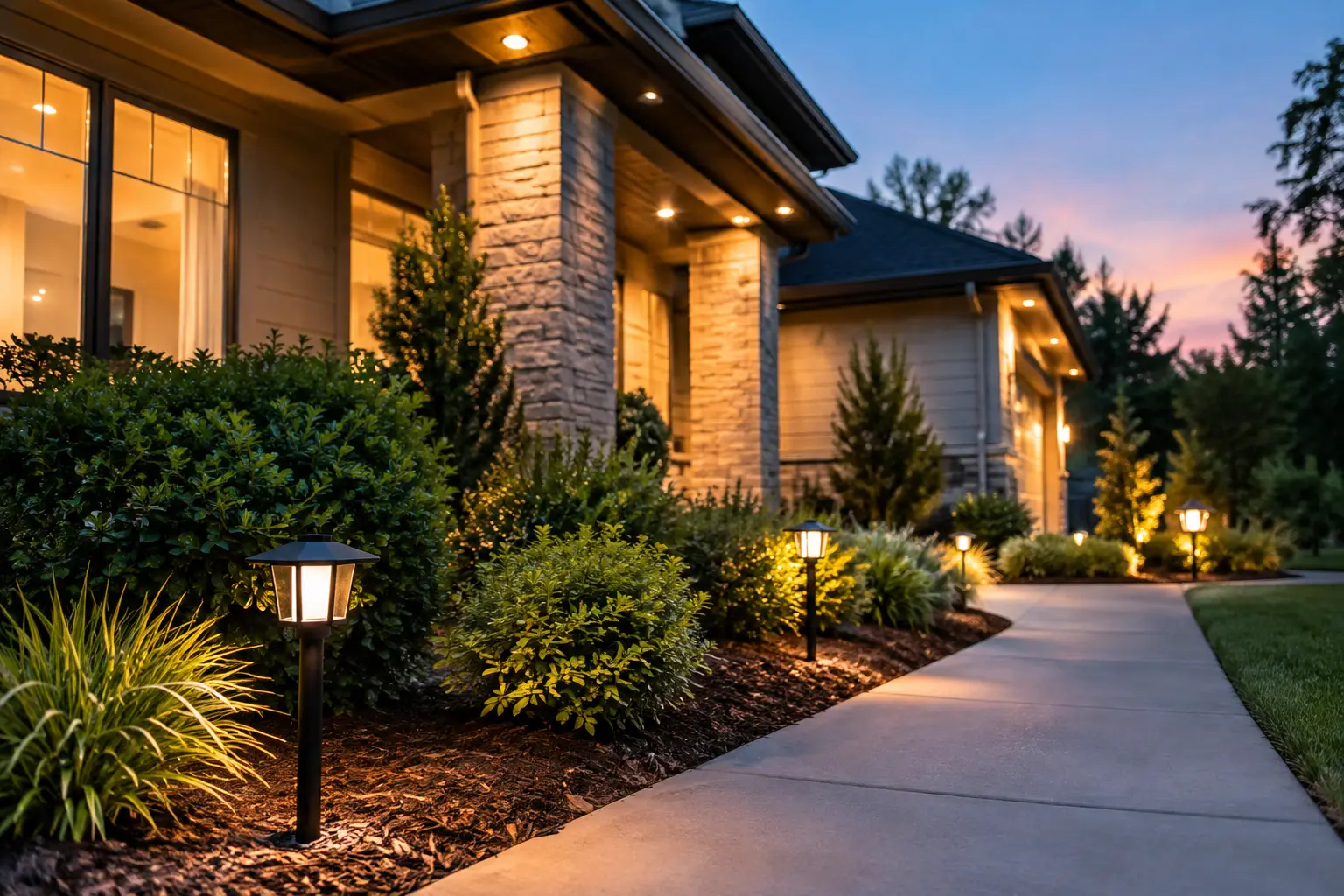
A dark path from the driveway to the front door is more than an inconvenience when you arrive home late. It can hide uneven paving, make visitors feel uncertain and leave vulnerable areas of a property exposed. Well-planned outdoor lighting makes everyday movement safer while improving security, comfort and the way your property presents after dark.
For homeowners, the goal may be a safer entry and a welcoming outdoor area. For property managers and business operators, it may also involve car parks, access points, common walkways, signage and after-hours security. The right result is not simply more fittings. It is light placed where it has a clear purpose, installed safely and designed to last.
Outdoor Lighting Starts With How the Space Is Used
Before choosing a fitting, consider what happens outside your property once daylight fades. A front entrance has different requirements from a side passage, loading area or landscaped courtyard. Lighting should support the people using the space without creating glare for occupants, neighbours or passing traffic.
Start with the routes people take most often. Driveways, front paths, stairs, ramps, gates and side access should be easy to see from dusk onwards. Changes in level deserve particular attention. A bright light at the front door does not help much if the path leading to it remains in shadow.
Then consider the areas you need to monitor. Lighting around gates, garages, rear doors and service entries can make a property less appealing to opportunistic intruders. It also improves the usefulness of security cameras, which need clear, controlled light to capture usable footage at night. Too much uncontrolled brightness can wash out an image or create deep shadows, so placement matters as much as output.
For entertaining spaces, the priority shifts towards atmosphere. Soft lighting around decks, patios, pergolas and outdoor kitchens lets people move around comfortably without the harsh feel of a floodlight. Separating practical path lighting from decorative lighting gives you more control over the mood and energy use.
Build Lighting in Layers, Not With One Bright Floodlight
A single high-output fitting can seem like the fastest answer to a dark yard. In reality, it often produces glare, hard shadows and light spill beyond the property boundary. A layered approach is usually more effective, more comfortable and more considered.
Ambient light for general visibility
Ambient lighting provides the base level of light for an outdoor area. Wall lights, soffit-mounted fittings and carefully positioned bollards can make entrances, patios and shared pathways feel open and usable. The aim is even visibility rather than maximum brightness.
Warm white light generally suits residential entries and entertaining areas, where a more relaxed appearance is wanted. Commercial walkways, work zones and access areas may benefit from a clearer, cooler light, depending on the task and existing building design. The best choice depends on the setting, not a one-size-fits-all rule.
Task light for movement and practical areas
Task lighting is focused on places where people need to see what they are doing. This includes steps, keyholes, letterboxes, bins, garage access, barbecue areas and external workspaces. Step lights or low-level path fittings can define a route without shining into someone’s eyes.
For driveways and car parks, the fitting position should help drivers see pedestrians, boundaries and obstructions. Light mounted too low can be easily damaged, while light placed too high may leave vehicles or pedestrian zones poorly defined. A site-specific layout is worth the effort, particularly at commercial premises.
Accent light for character and street appeal
Accent lighting adds depth to a property after dark. It may highlight a feature tree, textured wall, architectural detail, garden bed or signage. Used with restraint, it can make a home or business look cared for without turning the exterior into a display.
This is where quality design makes a visible difference. Uplighting can be effective on a feature, but it should be aimed carefully to avoid shining into windows. Downlighting from eaves or trees can create a softer result, provided fittings are suitable for the location and installed to withstand weather exposure.
Choose Fittings Built for Australian Conditions
Outdoor fittings must cope with more than rain. Heat, UV exposure, wind, salt air in coastal areas, dust, insects and the occasional impact all affect performance. A cheap fitting that looks fine on installation day may discolour, corrode or fail well before it should.
Choose fittings rated for the environment where they will be installed. Areas exposed to direct weather need an appropriate ingress protection rating, while covered verandahs may have different requirements. Coastal homes need fittings selected with corrosion resistance in mind. Near pools, water features or other wet areas, electrical requirements become more specific and professional advice is essential.
LED lighting is the practical choice for most new installations. It uses less energy than older lighting technologies, produces less heat and can offer a long service life. However, not all LED products are equal. Look beyond wattage alone and consider light output, beam angle, colour temperature, driver quality and whether replacement parts are available.
Integrated LED fittings can look clean and compact, but a failed internal component may mean replacing the whole fitting. Replaceable LED lamps can make future maintenance simpler, although the fitting design and lamp quality still matter. The right option depends on access, budget and how long you expect the installation to serve the property.
Controls Make Outdoor Lighting Work Harder
Lighting that runs all night when nobody needs it wastes power and shortens the life of equipment. The most useful system is one that responds to how the property operates.
Dusk-to-dawn sensors are a sensible choice for entry lights, address numbers and areas that benefit from consistent overnight visibility. Timers work well for hospitality, retail frontages and entertaining zones with predictable operating hours. Motion sensors are effective for side passages, garages and rear access points, where light is needed quickly but not continuously.
Sensor settings need to be adjusted properly. A detector that triggers every time a cat passes, or switches off before a visitor reaches the door, becomes frustrating rather than helpful. Detection range, sensitivity and hold time should suit the actual area. For commercial properties, controls can also be coordinated with security systems and access arrangements where appropriate.
Smart controls can offer scheduling and remote operation, but they are not automatically the best answer. They rely on compatible equipment, a stable network and someone knowing how to manage the system. For many properties, a dependable sensor or timer provides all the control needed with less complexity.
Safety and Installation Are Not DIY Details
Outdoor electrical work needs to be designed and installed with safety at the centre. Water, damaged cables, inadequate connections and incorrectly selected fittings can create serious risks. Hardwired outdoor lighting should be installed by a licensed electrician, with the right protection, cabling methods and connections for the environment.
Existing electrical infrastructure also matters. An older switchboard, overloaded circuit or lack of suitable safety switches may affect what can be added safely. During an assessment, a qualified electrician can identify these issues before work begins, rather than treating lighting as an isolated upgrade.
Low-voltage garden lighting can be a practical option, especially where cable routes cross landscaped areas. Even then, the transformer, supply connection, cable protection and equipment selection need careful consideration. Future gardening, edging work and digging should be planned for so cables are not easily damaged.
Good installation also means thinking ahead. Leave sensible access for maintenance, use durable fixings, avoid placing fittings where they will be struck by doors or vehicles, and ensure switching remains straightforward for the people who use the site. These small decisions protect the investment over time.
Plan for Maintenance Before Problems Appear
Even high-quality outdoor lighting needs occasional attention. Dirt, cobwebs and insect build-up reduce light output. Trees grow into beam paths, landscaping changes and sensor lenses can become obstructed. A periodic check keeps the installation working as intended.
For strata, rental and commercial properties, maintenance planning is particularly valuable. Keeping a record of fitting types, lamp specifications, control settings and circuit locations speeds up repairs and helps maintain a consistent appearance across the site. It also makes it easier to replace damaged fittings with suitable equivalents rather than whatever happens to be available at the time.
If lights are flickering, tripping circuits, taking on water or no longer providing enough visibility, arrange an inspection rather than repeatedly replacing lamps. The cause may be a failed driver, deteriorated cable, damaged fitting or an issue elsewhere in the circuit.
Voltricity can assess your property’s access routes, security priorities and outdoor living areas, then recommend a lighting plan that is practical, compliant and suited to the way you use the space. A few well-positioned fittings can make the walk to your door safer, give your cameras a clearer view and ensure your property still feels looked after after sunset.