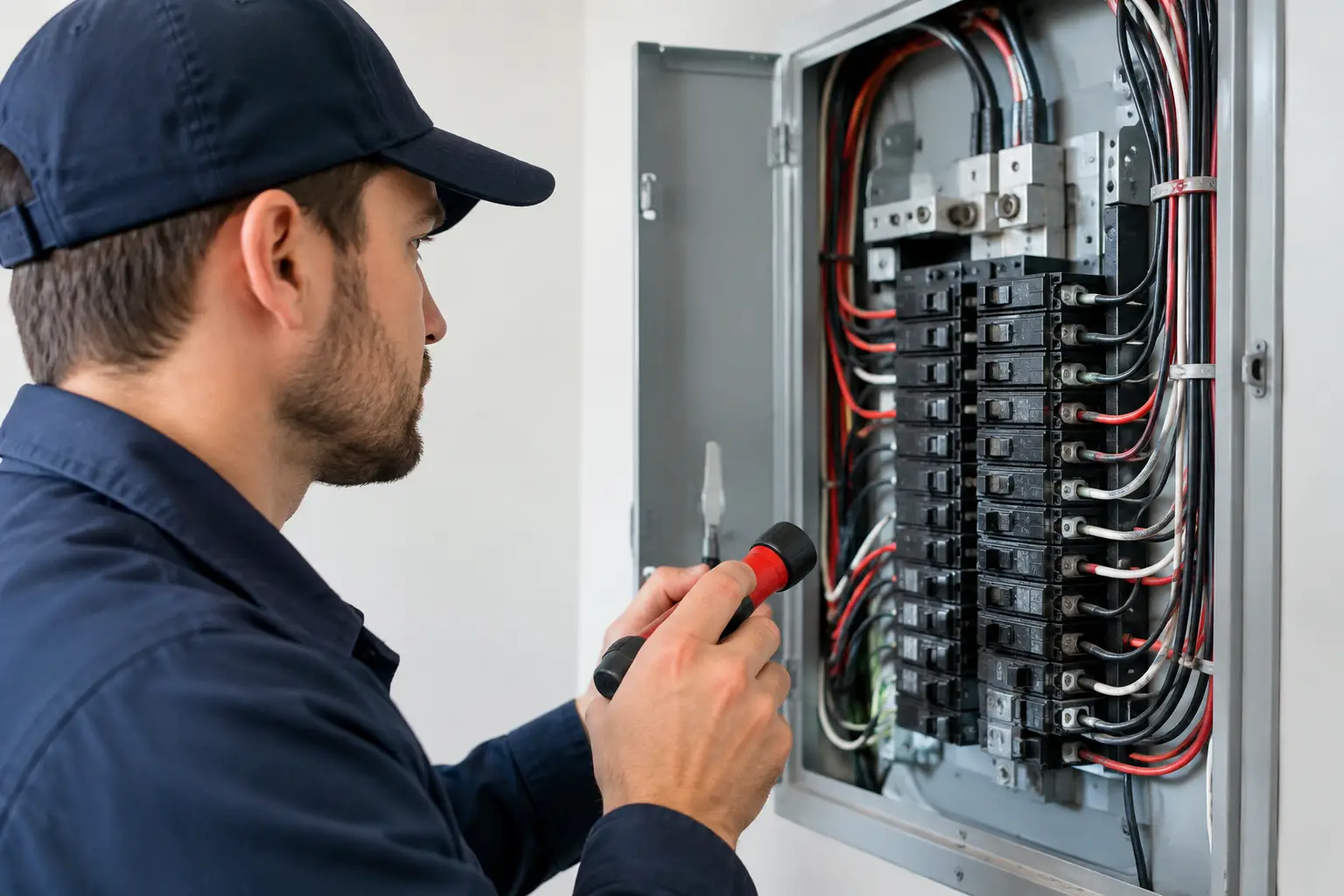
A power point that feels warm, lights that dim when the kettle boils, or a circuit breaker that keeps tripping are not just inconvenient. These can be early warnings that a circuit is carrying more electrical demand than it was designed to handle. Knowing how to identify overloaded circuits helps homeowners, property managers and business operators act before a minor issue becomes damaged equipment, repeated outages or a fire risk.
An overloaded circuit is common in older homes, busy workplaces and properties that have gradually added appliances, air conditioners, EV chargers, security equipment or extra lighting. The answer is not to keep resetting the breaker. It is to find out why it is operating and have the electrical system assessed properly.
What an overloaded circuit actually means
Every circuit has a safe current limit. That limit is determined by the circuit breaker, cabling, power points and the way the electrical installation was designed. When connected appliances draw more current than the circuit can safely supply, the circuit breaker should trip and cut the power.
This safety feature is doing its job. A breaker that trips once after an obvious high-demand event may not indicate a serious fault. For example, running a kettle, toaster, microwave and portable heater from power points on the same kitchen circuit can exceed its capacity. Repeated tripping, however, deserves attention.
Overloading is different from a short circuit or earth fault. A short circuit can cause an immediate trip, often when a damaged appliance or cable creates an unintended path for electricity. An overloaded circuit usually occurs when too many normal, working appliances are running at once. Only a licensed electrician can confirm the underlying cause safely.
Signs that a circuit may be overloaded
The clearest sign is a circuit breaker that trips when several appliances are in use. You may notice that this happens at predictable times, such as when heating is switched on in winter, when kitchen appliances are running, or when a business opens and multiple systems start at once.
Other signs are more subtle. Lights may flicker or dim when a large appliance starts. Power points, plugs or switch plates may feel unusually warm. You might hear buzzing from a power point, notice a faint burning smell, or see brown marks around a power point. These signs require prompt action, particularly if there is heat, smell, discolouration or visible damage.
Do not dismiss nuisance tripping as part of living in an older property. Extension leads and power boards can hide the issue for a while, but they do not increase the capacity of the circuit behind the wall. In some cases, they concentrate a high electrical load in one location and create an additional risk.
A simple pattern to look for
Think about what was operating just before the circuit tripped. High-demand appliances often include portable heaters, kettles, microwaves, toasters, clothes dryers, washing machines, dishwashers, air conditioners and electric ovens. In commercial settings, the load may come from computers, printers, refrigeration, kitchen equipment, lighting, pumps or specialised machinery.
If removing one appliance stops the breaker from tripping, that appliance may be contributing to an overload. It could also be faulty, so avoid assuming the circuit is the only problem. Record the appliance, location and time of day. This gives your electrician useful information and can speed up fault-finding.
How to check safely without opening anything
You do not need to remove a switchboard cover, test live wires or replace a breaker to recognise a possible overload. In fact, those tasks should only be completed by a licensed electrician.
Start by locating your switchboard and identifying the affected breaker or safety switch, if it is labelled. When it trips, turn off or unplug appliances on that circuit before resetting it once. Restore appliances gradually rather than switching everything back on at the same time. If the breaker trips again, leave it off and arrange an electrical inspection.
Check accessible plugs, power points and leads for obvious damage. A cracked power point, loose plug, melted plastic, scorch mark or hot lead is not a DIY repair. Switch off power at the switchboard if it is safe to do so, keep people away from the area and contact a licensed electrician.
Never use a larger circuit breaker as a workaround, and do not repeatedly reset one that trips. Circuit breakers are selected to protect the cable they serve. Increasing the breaker rating without assessing the wiring can allow cables to overheat before protection operates.
Common situations where overloads develop
Older switchboards and wiring may have been suitable when a home had fewer appliances and lower everyday electrical demand. A renovation can also change how a property uses power. Adding a home office, induction cooktop, reverse-cycle air conditioning, pool equipment or outdoor lighting may place extra pressure on existing circuits if the installation was not designed for the new load.
EV charging needs careful planning for the same reason. A dedicated, correctly sized circuit is often required, depending on the charger, supply capacity and property layout. Plugging an EV charger into an unsuitable power point or relying on long extension leads is not an effective substitute for a properly designed installation.
For businesses, overloads often appear after equipment changes rather than building changes. A new coffee machine, display fridge, server rack, workshop tool or upgraded security system can alter the load profile. Tenancies with shared or older electrical infrastructure need particular care, as the available capacity may be less obvious than it is in a standalone building.
When it is urgent
Treat the issue as urgent if you smell burning, see smoke, notice sparks, find a hot switchboard or power point, or have discoloured or melting fittings. Turn off power at the main switch only if you can do so without approaching heat, smoke or damaged equipment. If there is an active fire or immediate danger, call emergency services.
A breaker that trips repeatedly without any clear high-demand use also needs timely professional attention. The cause may be an overloaded circuit, but it may instead be damaged wiring, water ingress, a faulty appliance or a failing protective device. Guesswork is not a safe option.
What a licensed electrician can do
A proper assessment looks beyond the tripped breaker. A licensed electrician can inspect the switchboard, test the affected circuit, assess cable condition, identify appliance demand and check whether the existing electrical system suits the way the property is now being used.
The right solution depends on the result. It may be as straightforward as replacing a damaged power point or redistributing appliances across suitable circuits. In other properties, the safer long-term option may be a new dedicated circuit, switchboard upgrade, rewiring work or a planned upgrade for an EV charger, air conditioning or commercial equipment.
There is a trade-off between a quick workaround and a lasting repair. Reducing appliance use might prevent trips in the short term, but it does not fix a circuit that is undersized for the property’s needs. A clear assessment gives you the information to make a practical decision, with safety and future demand in mind.
Voltricity can assess recurring circuit trips and electrical load concerns for homes and businesses, then explain the safest path forward in plain language. If a circuit keeps tripping or any power point is hot, damaged or discoloured, arrange an inspection rather than waiting for the next outage. Reliable electrical work starts with treating warning signs early.