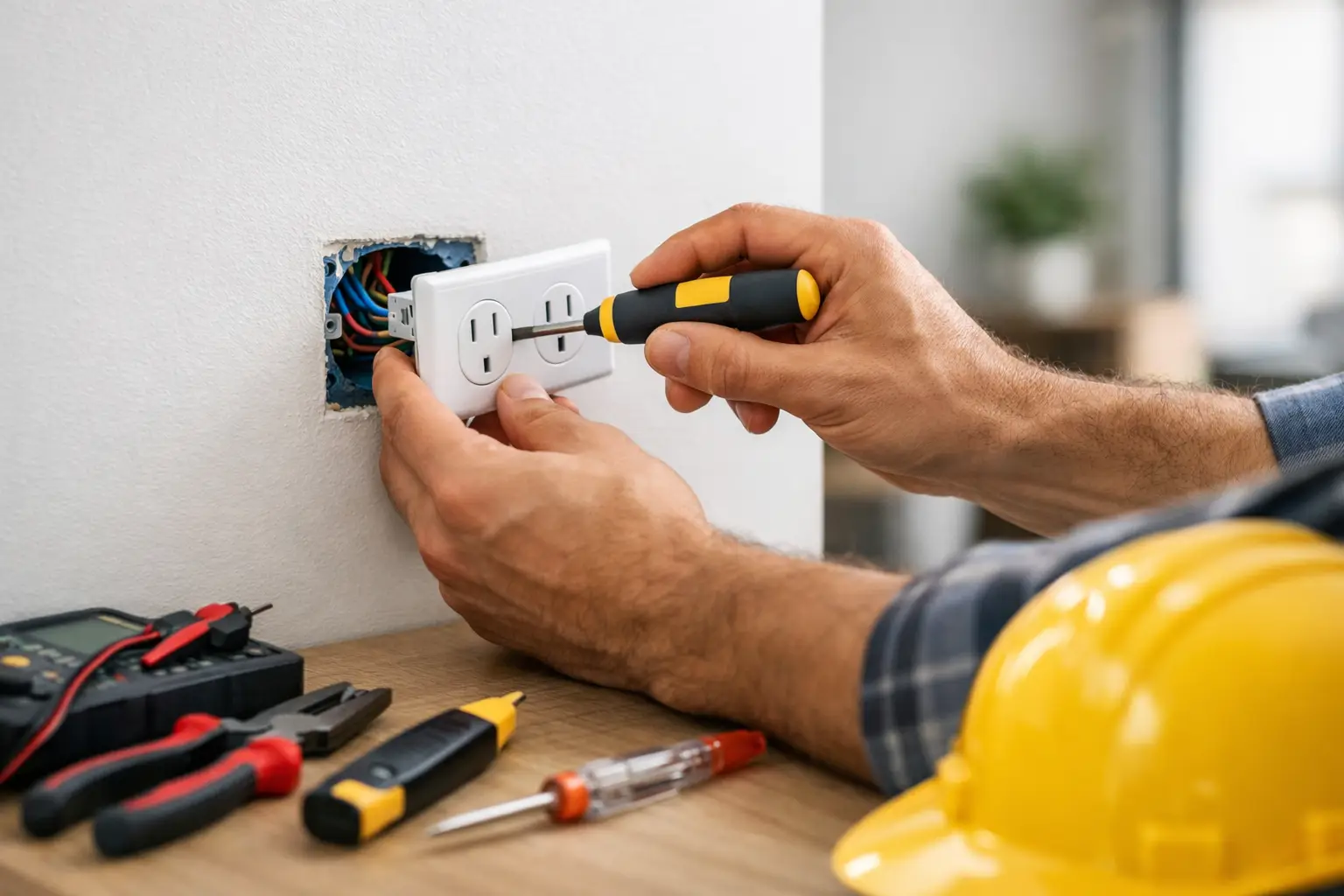
A power point in the wrong spot becomes a daily frustration. It can leave cables crossing walkways, force appliances onto overloaded power boards, or make a freshly renovated room less practical than it should be. This power point installation guide helps homeowners, property managers and business operators plan outlets that are safe, useful and built for how the space is actually used.
Installing or moving a power point is not a DIY job. In Australia, fixed electrical work must be completed by a licensed electrician and tested before it is put into service. The good news is that good planning before the electrician arrives can make the process quicker, clearer and more cost-effective.
Start with how the room is used
The best outlet layout is based on real behaviour, not just what looks balanced on a wall. Walk through each room and consider where furniture sits, where people charge devices and which appliances need permanent power. A bedroom may need outlets on both sides of the bed. A living area may need allowance for a TV, modem, lamp and occasional charging. In a commercial space, workstations, printers, point-of-sale equipment and cleaning equipment all need consideration.
Think ahead as well. A room that is currently a nursery may later become a study. A spare bedroom may become a home office. Planning for these changes during a renovation can avoid opening walls again later.
Avoid relying on extension leads as a long-term solution. They are useful for temporary needs, but permanent cables running under rugs, across doorways or behind furniture can create trip, heat and damage risks. A properly positioned outlet is safer and far more convenient.
Power point installation guide: choosing the right location
Location affects both safety and usability. An electrician will assess what is possible within the wall or building structure, but a clear brief gives them a strong starting point.
In living rooms, outlets are usually most useful near entertainment units, reading corners and seating areas. Consider whether wall-mounted televisions will need concealed cabling and a dedicated outlet behind the screen. This can create a cleaner finish and reduce visible leads.
Kitchens require extra care because power points sit near water, heat and high-use appliances. You may need separate outlets for benchtop appliances such as kettles, coffee machines and toasters, particularly if several are used at once. The position must meet required clearance rules from sinks and cooktops, so do not assume an outlet can go anywhere along a splashback.
Bathrooms, laundries and outdoor areas also have strict location and protection requirements. Moisture changes the risk level, and the right equipment, circuit protection and placement matter. For outdoor entertaining spaces, consider weatherproof outlets for lighting, garden tools, sound systems or a fridge, rather than using indoor extension leads through a doorway.
For offices and retail premises, keep outlets accessible without creating cable clutter. Floor boxes, wall outlets near workstations and dedicated supply for specialised equipment can all be appropriate, depending on the fit-out and building construction.
Match the outlet to the load
Not every appliance should share the same circuit. Everyday plug-in items such as lamps, chargers and televisions are generally straightforward, but high-demand appliances may require dedicated circuits or a broader electrical assessment.
Air conditioners, ovens, cooktops, dryers, dishwashers, pool equipment and EV chargers can place significant demand on an installation. Adding more outlets will not solve a capacity problem if the switchboard, wiring or existing circuit is already working close to its limit.
This is especially relevant in older homes and commercial properties that have grown over time. A building may have gained air conditioning, new appliances, security equipment or extra workstations without a corresponding electrical upgrade. Signs of concern include breakers that trip regularly, warm outlets, flickering lights, buzzing sounds or discoloured faceplates. These issues need prompt attention from a licensed electrician.
A professional assessment may identify that a new circuit, safety switch protection or a switchboard upgrade is the safer option. It depends on the property’s age, wiring condition, existing loads and the equipment you intend to use.
Choose practical outlet features
A standard double power point suits many rooms, but it is not the only option. The right choice should reflect the setting and the people using it.
USB charging outlets can be handy beside beds, in kitchens or at reception desks, reducing the need for charging adaptors. Outlets with integrated USB-C charging may suit newer devices, although conventional sockets are still needed for many appliances. In family homes, shutters can provide an added measure of protection where young children are present.
For areas exposed to dust, rain or cleaning, weatherproof outlets and suitable covers are essential. In workshops, garages and commercial environments, tougher accessories may be better suited to regular use. A licensed electrician can recommend products that are appropriate for the location rather than simply selecting the cheapest fitting.
Finish also matters in visible spaces. White remains a practical choice, but black, brushed metal and other styles can complement modern kitchens, offices and renovations. Appearance should come after safety and compliance, but there is no reason a well-installed outlet cannot do both jobs well.
What happens during professional installation?
The process normally begins with a site inspection or a detailed discussion of the room, equipment and preferred outlet positions. Your electrician will check access to wiring, wall construction, available circuit capacity and any factors that may affect the scope, such as tiled walls, concrete surfaces or heritage features.
They will then explain the recommended approach and provide transparent pricing for the agreed work. In some cases, adding an outlet is relatively simple. In others, the cable route may require ceiling access, wall repair, a new circuit or switchboard work. Clear communication upfront helps prevent surprises once work begins.
During installation, the electrician isolates the relevant supply, installs compliant cabling and accessories, and tests the completed work. They should leave the area tidy and provide the required certification for the electrical work carried out. Keep this documentation with your property records, particularly for rental properties, commercial sites and future renovations.
Prepare before your electrician arrives
You do not need electrical knowledge to make the appointment productive. Take a few photos of each room, mark your preferred positions and write down which appliances will be used there. If a power board is currently doing too much work, photograph what is plugged into it. This gives the electrician a useful picture of demand.
Move fragile items and furniture away from the work area where possible. If you are renovating, coordinate outlet locations before plastering, cabinetry or tiling is complete. Electrical rough-in work is much easier and usually less disruptive before walls and finishes are closed up.
For property managers and business operators, confirm access arrangements and identify any trading hours or tenant requirements. A planned installation can often be scheduled to minimise disruption to residents, staff and customers.
When to arrange an electrical review
New outlets are often part of a bigger decision. Arrange a professional review if you are renovating, adding a home office, upgrading a kitchen, fitting out a tenancy, installing new security equipment or preparing for an EV charger. These projects affect how your electrical system is used, and addressing capacity early protects the quality of the finished result.
Voltricity can assess your existing installation, recommend practical outlet locations and complete compliant work with the care expected in occupied homes and active businesses. The aim is not simply to add another socket. It is to give you safe, reliable access to power where it makes a genuine difference every day.
A well-planned power point installation should fade into the background once the job is done. Your rooms work better, cables stay under control, and you can use the equipment you need with greater confidence.