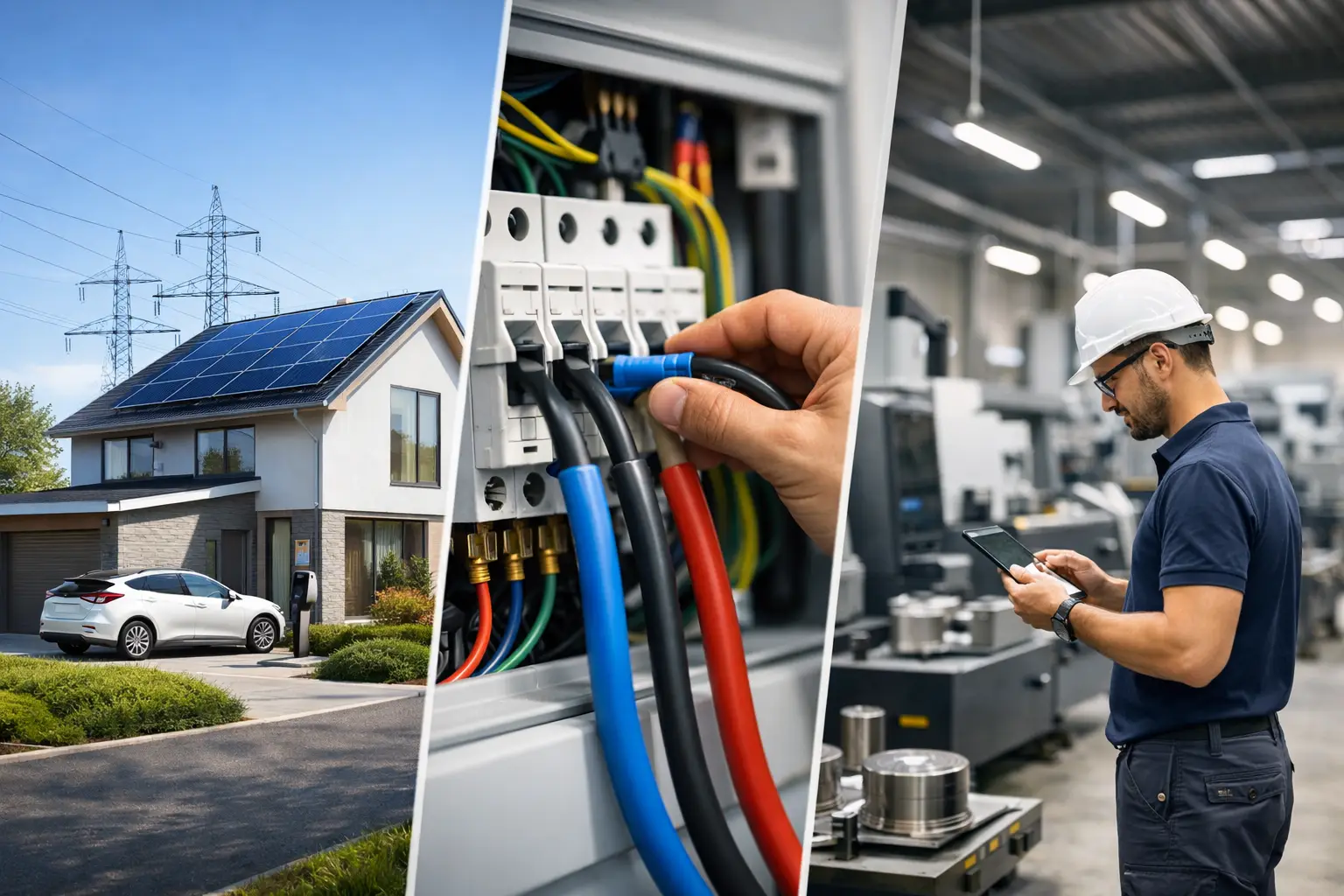
A property can look perfectly capable on the surface, then struggle the moment a new EV charger, larger air conditioner, commercial oven or upgraded machinery is added. That is where three-phase power benefits become relevant. For homes and businesses with higher electrical demand, a three-phase supply can provide the capacity, consistency and flexibility needed to run modern equipment without placing unnecessary strain on the installation.
It is not automatically the right upgrade for every property. A modest home with standard appliances may be well served by single-phase power. But for growing households, renovations, workshops, hospitality venues and commercial sites, understanding the difference helps you plan an upgrade that suits both current needs and what comes next.
What is three-phase power?
Most Australian homes have single-phase power. It supplies electricity through one active conductor, with power delivered in a single alternating wave. This is suitable for everyday loads such as lighting, general power points, televisions and many standard appliances.
Three-phase power uses three active conductors, each carrying an alternating current at a different point in its cycle. Rather than relying on one supply path to carry the full load, the demand can be distributed across three phases. In practical terms, it provides more available electrical capacity and a steadier supply for equipment designed to use it.
You may already find three-phase power in factories, offices, retail spaces, medical facilities and larger apartment buildings. It is also becoming more common in Australian homes with ducted air conditioning, electric vehicle charging, pool equipment, large workshops or fully electric appliance upgrades.
The key three phase power benefits
The main advantage is not simply that three-phase power is “more powerful”. It is that it manages high electrical demand more effectively. This can improve day-to-day performance and make a property easier to adapt as your needs change.
Greater capacity for modern electrical loads
High-demand appliances can quickly use the available capacity of a single-phase supply. An EV charger, induction cooktop, electric hot water system, ducted air conditioning and pool pump may all be operating during the same evening. Depending on the property’s existing supply and switchboard, this can leave limited room for additional equipment.
Three-phase power provides a larger supply capacity, allowing a licensed electrician to allocate circuits across the phases. That does not mean every appliance needs three-phase power. Standard household circuits can still operate normally, while suitable high-load equipment is connected and balanced correctly.
For businesses, this capacity is often essential. Commercial refrigeration, kitchen equipment, compressors, welders, pumps, lifts and machinery can require a three-phase supply to operate as intended.
Better support for EV charging
Electric vehicle ownership is changing how homes and workplaces use electricity. A single-phase charger can be a practical choice for many drivers, particularly where vehicles are parked overnight. However, a three-phase connection can support faster charging where the vehicle, charger and site capacity are compatible.
This matters for households with multiple EVs, drivers with limited charging windows and businesses providing charging for staff, customers or fleet vehicles. The final charging speed still depends on the vehicle’s onboard charger, the selected charger, electricity network requirements and the available capacity at the property. A three-phase supply creates more options, but it is not a guarantee of maximum charging speed in every situation.
Before installing an EV charger, an electrician should assess the incoming supply, switchboard, load demand, cable routes and protection requirements. The right solution needs to be safe, compliant and sized for the way the property is actually used.
More consistent operation of motors and equipment
Three-phase motors generally operate more smoothly than comparable single-phase motors. This is because the power delivery is more consistent through each cycle. For equipment such as pumps, compressors, ventilation systems, workshop machinery and some commercial appliances, that can mean dependable starting performance and efficient operation.
For a business, smoother motor operation can reduce disruption caused by equipment that struggles under load. For homeowners, the benefit may be seen in larger pool systems, bore pumps, workshop tools or air conditioning equipment where three-phase models are specified.
The equipment itself must be designed for three-phase use. It is not a matter of changing a plug or adding a circuit. Selecting the right appliance and having it installed by a licensed electrician are both critical.
Improved load balancing across the property
Electrical load balancing means spreading demand across available phases rather than concentrating too much demand on one part of the supply. This is particularly useful in larger homes and busy commercial premises where many circuits operate at once.
A well-planned switchboard can separate loads such as lighting, general power, air conditioning, kitchen appliances, EV charging and specialised equipment across the three phases. The aim is to reduce the likelihood of one phase being overloaded while others are lightly used.
Load balancing is a technical task, not a DIY exercise. It requires an assessment of actual demand, existing circuits, cable sizes, protective devices and the condition of the switchboard. A neat-looking board is not enough. The installation must be correctly designed and tested for safety.
Flexibility for renovations and business growth
Electrical upgrades are often easiest and more cost-effective when planned before a renovation, fit-out or expansion begins. If you are adding a granny flat, extending the home, fitting out a commercial kitchen, installing new machinery or planning multiple EV chargers, a three-phase supply may prevent avoidable limitations later.
This does not always mean the upgrade should happen immediately. If your projected loads remain modest, single-phase power may still be suitable. The value lies in assessing the plans early, so electrical infrastructure is not an afterthought once walls are closed or a business is ready to open.
For property managers, future capacity can also improve the practicality of a site for tenants. Premises with suitable electrical infrastructure are better positioned for modern commercial equipment and energy-focused upgrades.
When is a three-phase upgrade worth considering?
Three-phase power is worth discussing when your property regularly reaches its electrical limits, when planned equipment has a three-phase requirement, or when a major renovation creates significantly more demand. Frequent circuit trips, limited room in an outdated switchboard and an inability to install the equipment you want are all signs that an assessment is sensible.
Common situations include:
- Installing a higher-capacity EV charger or several chargers at one site.
- Adding ducted air conditioning, an all-electric kitchen or large electric hot water systems.
- Building a workshop with welders, compressors, hoists or other heavy-duty tools.
- Upgrading a café, restaurant, retail tenancy or industrial workspace.
- Replacing an old switchboard as part of a broader electrical modernisation.
A supply upgrade may also involve work beyond the switchboard. Depending on the site, the electricity distributor may need to confirm network capacity or alter the connection. New cabling, metering changes, switchboard upgrades and compliance work can all affect the scope, timing and cost.
What to expect from a professional assessment
The first step is not choosing the largest supply available. It is understanding your electrical demand. A licensed electrician can review the property’s existing connection, main switchboard, circuit arrangement, major appliances and future plans.
They should also identify whether the switchboard has adequate space, whether safety switches and circuit protection meet current requirements, and whether the main cabling is suitable for the proposed load. For commercial work, the assessment should consider operating hours, machinery start-up loads and any specialised compliance requirements.
Transparent advice matters here. A quality assessment should explain whether three-phase power is necessary now, sensible for future planning, or unlikely to provide enough value for your particular property. The goal is a safe installation that suits the site, not an oversized upgrade.
Safety and compliance come first
Electrical supply upgrades involve live connections, protective devices and strict Australian requirements. They must be completed by appropriately licensed professionals, with the required testing and certification. Attempting to alter a switchboard, meter panel or supply connection yourself creates a serious risk of electric shock, fire and costly damage.
If your property is older, the upgrade is also a useful opportunity to identify ageing wiring, insufficient circuit protection or switchboard components that no longer suit current demand. Addressing these issues together can provide a safer, more reliable foundation for new equipment.
Whether you are planning an EV charger, renovating a family home or preparing a business for higher demand, the best next step is a clear assessment of your actual loads and future plans. The right electrical capacity should give you confidence to use your property the way you need to, with safety built into every connection.