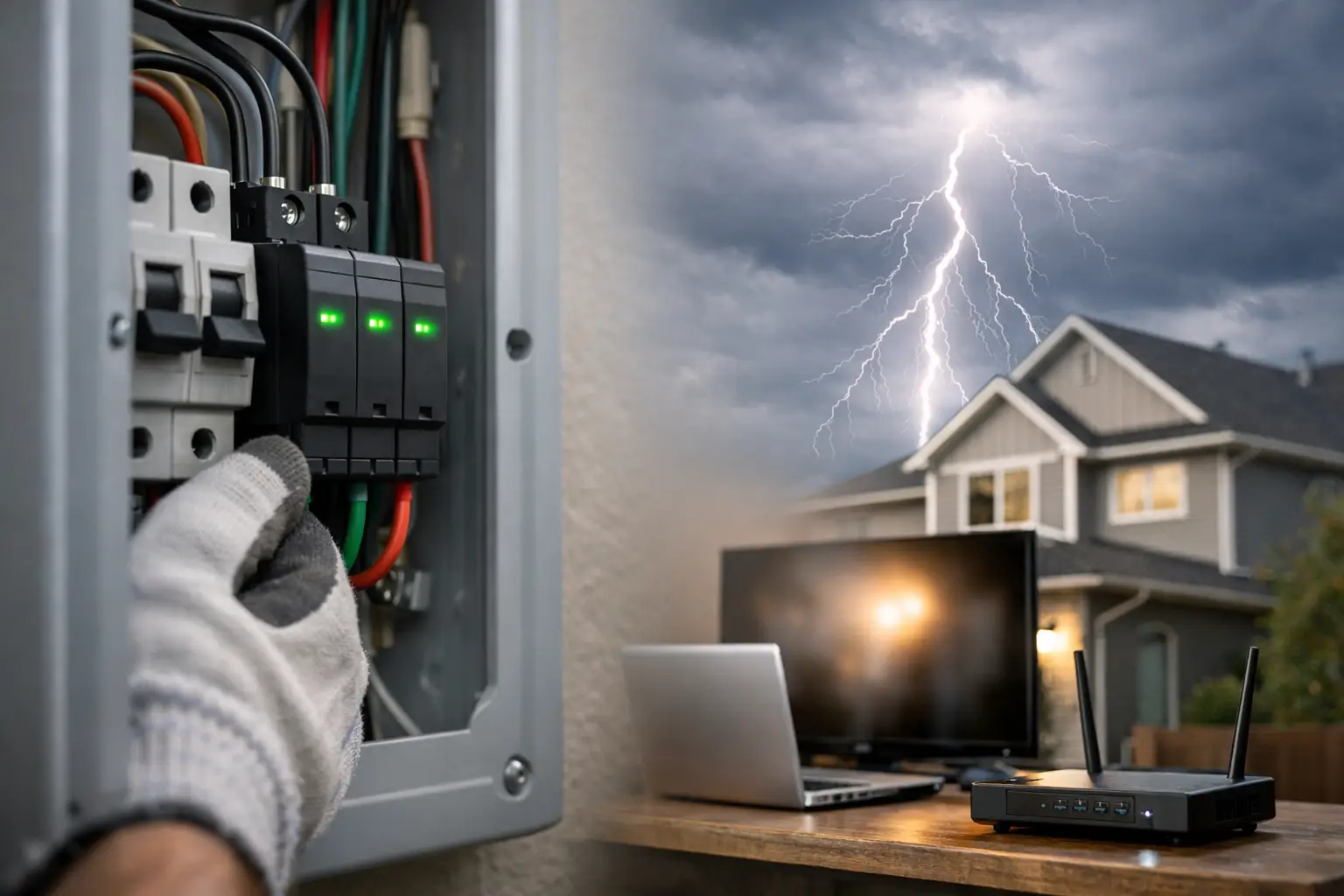
One power surge can wipe out a modem, damage a fridge control board, trip sensitive safety devices or shorten the life of expensive electronics without any obvious warning. That is why surge protection for homes is less about gadgets and more about protecting the electrical system your household relies on every day.
For many property owners, the problem is that surges are easy to underestimate. If the lights come back on and everything still seems to work, it is tempting to assume no real harm was done. In practice, smaller repeated surges can quietly wear down appliances, air conditioning systems, EV chargers, security equipment and smart home devices over time. The replacement costs add up quickly, and the disruption is often worse than the bill.
What surge protection for homes actually does
A power surge is a brief spike in voltage above what your electrical system is designed to handle. Some surges come from outside the property, such as lightning activity or changes on the grid. Others start inside the building when larger appliances switch on and off, or when equipment with motors and compressors creates sudden fluctuations.
Surge protection works by diverting excess voltage away from circuits and connected equipment before damage occurs. The key point is that not all protection is equal. A basic plug-in board may help with low-level surges on a single outlet, but it will not give the same level of protection as a professionally installed device at the switchboard.
For most homes, effective protection is layered. The switchboard protects the broader installation, while point-of-use protection can still play a role for especially sensitive electronics. It is not an either-or decision. It depends on the age of the home, the value of the equipment inside it and how much risk you want to reduce.
Where power surges come from in Australian homes
Many people associate surges with storms, and that is certainly part of the picture in Australia. Summer weather, lightning activity and unstable conditions can all increase the risk of voltage spikes, especially in areas with overhead supply lines or homes exposed to severe weather.
But storms are only one source. Internal surges are common and often overlooked. Air conditioners, pool pumps, fridges, garage door motors and larger kitchen appliances can all create minor surges during normal operation. These events may be small, but they happen repeatedly. Over months and years, that repeated electrical stress can degrade components inside modern appliances.
If your property has had recent renovations, added an EV charger, upgraded to smart lighting or installed security cameras and alarms, the need for reliable protection grows. Modern homes simply have more electronics than they used to, and many of them are more sensitive than older equipment.
Why switchboard protection matters most
If you are deciding where to start, whole-home protection at the switchboard is usually the most effective first step. A surge protection device installed by a licensed electrician is designed to intercept incoming voltage spikes before they spread through the property.
This matters because the switchboard is the control point for your electrical system. Protecting circuits at that level gives much broader coverage than relying on a few power boards around the house. It can help protect hardwired equipment as well, including ovens, air conditioning systems, hot water units, smoke alarm circuits, CCTV systems and other fixed electrical assets that cannot simply be unplugged.
There is still a trade-off to understand. No surge protection system can promise absolute protection against every event, particularly a direct lightning strike or a severely compromised electrical installation. What it does do is dramatically reduce risk and improve the resilience of your home’s electrical infrastructure.
Signs your home may need surge protection
Some properties are more exposed than others. If your home has an older switchboard, frequent power fluctuations, nuisance tripping or a history of damaged electronics after storms, it is worth having the system assessed.
You should also take a closer look if you have invested in high-value equipment. Home offices, entertainment systems, smart appliances, solar-related equipment, EV charging setups and integrated security systems all increase the potential cost of a surge event. In these cases, surge protection is not just a safety upgrade. It is an asset protection measure.
Property managers should think about it the same way. A preventable failure in a rental home can lead to urgent call-outs, tenant frustration and replacement costs that far exceed the cost of installing the right protection in the first place.
Plug-in boards vs whole-home surge protection
This is where many households get mixed messages. Plug-in surge boards are widely available and can be useful, but they are not a complete solution. Their protection is limited to devices connected to that board, and quality varies a lot between products.
A whole-home surge protection device installed at the switchboard is designed to protect multiple circuits across the property. It addresses the issue closer to the source and supports a more consistent level of protection. For most homeowners, that is the smarter foundation.
That does not mean plug-in protection has no place. If you have a desktop setup, gaming system or entertainment unit with particularly sensitive electronics, adding a quality point-of-use protector can make sense as part of a layered approach. The important thing is not to mistake one power board for a complete home strategy.
Installation is not a DIY job
Surge protection devices must be selected and installed to suit the property, the switchboard and the existing electrical system. That means checking the board configuration, earthing arrangement, available space, load requirements and the condition of the installation overall.
A licensed electrician can also identify related issues that affect performance and safety. In some homes, especially older ones, surge protection should be considered alongside a switchboard upgrade. There is little value in adding modern protective devices to a board that is already outdated, overcrowded or not compliant with current standards.
This is where experienced advice matters. A proper assessment avoids guesswork and ensures the protection installed is appropriate for the risks at your property, rather than just being the cheapest device available.
How surge protection fits into a safer electrical system
Surge protection works best as part of a broader approach to electrical safety. Safety switches, compliant wiring, proper circuit protection and a well-maintained switchboard all play different roles. One does not replace the other.
Think of it this way. Safety switches are there to reduce the risk of electric shock. Circuit breakers help protect wiring from overload and short circuits. Surge protection helps manage damaging voltage spikes. Each device addresses a different problem.
That is why homeowners should be cautious about simple one-size-fits-all advice. The right setup depends on the age of the property, whether it has had additions or upgrades, the type of equipment in use and how exposed the site is to external electrical events.
When it is worth acting sooner rather than later
If you are already planning electrical work, that is often the ideal time to ask about surge protection. Switchboard upgrades, rewiring work, EV charger installation, solar-related changes and security system installations all create a practical opportunity to improve system protection at the same time.
It can also be worth acting after the first warning sign rather than waiting for a bigger failure. A burnt modem, a damaged TV after a storm or recurring faults in sensitive equipment may point to a broader issue. Replacing individual items one by one is usually the more expensive path.
For households that rely on stable power for working from home, medical devices, internet connectivity or smart security, the value goes beyond the replacement cost of appliances. It is about reducing disruption and keeping the home functioning as it should.
A well-protected home is not built on luck. It is built on sound electrical work, the right equipment and advice you can trust. If you are unsure whether your current setup offers real protection, a licensed electrician can check your switchboard, explain your options clearly and help you put the right safeguards in place before the next surge tests the system.