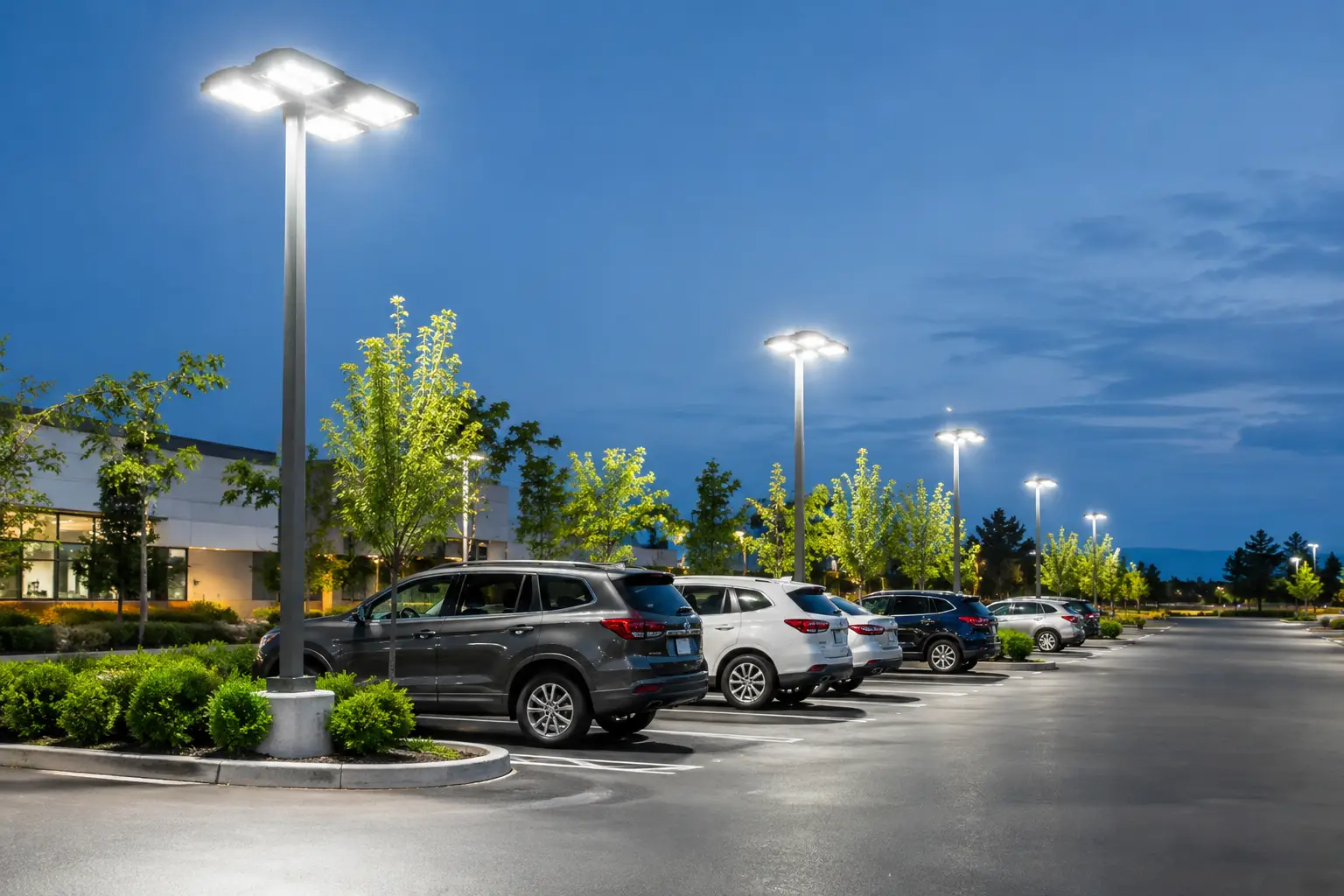
A carpark can look adequately lit from the street yet still feel unsafe once someone steps out of their vehicle. Dark paths between bays, glare at the boom gate, shadowed stairwells and poorly lit payment areas all create real safety, security and liability concerns. Knowing how to improve carpark lighting starts with looking beyond the number of fittings on site and focusing on what people can actually see.
For property managers, business owners and strata committees, a lighting upgrade should make the space safer to use, easier to monitor and less expensive to operate. The right result is not simply brighter light. It is even, controlled illumination designed around vehicles, pedestrians, cameras and the way the carpark is used after dark.
Start with a site-specific lighting assessment
Every carpark has different risks. A small apartment carpark with assigned bays needs a different approach from a retail carpark with frequent visitor traffic, delivery vehicles and a pedestrian route to the entrance. Before choosing replacement lights, assess the site at night and identify where visibility falls away.
Walk the same route a customer, resident or staff member would take. Check the entry and exit points, accessible parking spaces, footpaths, crossings, lift lobbies, stairwells, loading areas, bin rooms and any pathways that connect the carpark to the building. Look for sudden changes between bright and dark areas, which can make it harder for eyes to adjust.
It also helps to consider the perspective of your security cameras. A camera may technically cover an area but still produce unclear footage if faces are backlit, number plates are blown out by glare, or the scene is too dark for useful identification. Lighting and security should be planned together, rather than installed as separate projects.
A licensed electrician can assess existing wiring, fitting condition, switchboard capacity and control systems while identifying the practical changes needed for safer coverage. This gives you a clear scope before spending money on the wrong solution.
Replace ageing fittings with quality LED lighting
Older metal halide, fluorescent and high-pressure sodium fittings commonly produce uneven light, take time to warm up and require more frequent maintenance. Their colour quality can also make it harder to distinguish people, vehicles, line markings and hazards.
Modern LED carpark lighting generally provides stronger light output for less energy, reaches full brightness quickly and has a longer service life. This can reduce replacement costs, call-outs and disruption in high-use areas. LEDs are also available with optics that direct light where it is needed, instead of wasting it above the carpark or spilling into neighbouring homes.
However, LED upgrades are not a matter of fitting the brightest available unit. An oversized fitting may create harsh pools of light and uncomfortable glare, particularly on wet concrete or reflective vehicle surfaces. The fitting’s beam angle, mounting height, positioning and light output all need to work together.
For indoor or undercover carparks, choose fittings suited to dust, moisture and the conditions of the space. For outdoor locations, weather resistance and impact resistance matter, especially where lights are mounted near vehicle routes or exposed to coastal conditions. Quality fittings cost more upfront than bargain units, but they are usually the better value when reliability and maintenance access are considered.
Improve uniformity, not just brightness
A well-lit carpark has fewer dramatic contrasts. Drivers need to see pedestrians, wheel stops, bollards and parked vehicles without being dazzled as they move through the space. Pedestrians need to identify trip hazards and feel confident walking from their car to the building entrance.
To improve carpark lighting effectively, prioritise uniform coverage across driving lanes, parking bays and pedestrian routes. The corners of the site should not disappear into darkness simply because they are used less often. Areas around ticket machines, intercoms, EV chargers and access controls deserve particular attention because people may be stationary there and focused on a task.
Lighting placement should also account for obstructions. Columns, signage, ductwork, solar canopies and mature landscaping can block useful light and create deep shadows. In a multi-level carpark, ramps and turning points need careful design so drivers can see the path ahead without glare from fittings at eye level.
Light colour plays a role as well. A neutral white light often supports clearer visibility and camera performance than the orange cast associated with older lamps. Extremely cool light is not always the best choice, though. It can feel stark and uncomfortable in residential settings. The most suitable colour temperature depends on the setting, surrounding property and intended use.
Use controls that suit real carpark activity
Leaving every fitting at full output all night can be costly, but switching lights off completely is rarely appropriate. Smart controls provide a practical middle ground, allowing the carpark to remain safely illuminated while reducing unnecessary energy use.
Timers and daylight sensors can ensure outdoor lights operate only when required. Motion sensors can lift lighting levels in quieter zones when a person or vehicle enters, while maintaining a lower background level at other times. This approach can work well for smaller private carparks, storage areas and rarely used rear access routes.
In busy public or commercial carparks, constant lighting may be necessary during operating hours. Controls can still help by dividing the site into zones. For example, visitor parking, staff areas, pedestrian walkways and loading bays may have different schedules. A properly commissioned system avoids the common problem of sensors switching lights off while someone is still in the area.
Emergency and exit lighting must be treated separately from general lighting. It needs to operate correctly during a power failure and be tested and maintained in line with applicable requirements. Do not assume a new LED upgrade automatically addresses emergency lighting obligations.
Reduce glare and light spill
Glare is one of the most overlooked carpark lighting problems. A bright fitting mounted in the wrong location can reduce visibility rather than improve it. Drivers may struggle to see a pedestrian stepping off a footpath, and security cameras may lose detail in the brightest parts of an image.
Shielded fittings, appropriate mounting heights and carefully selected beam distributions help direct light downwards and across the intended area. This is particularly important near entry ramps, boom gates and driveways where motorists transition from a dark street into a brighter environment, or the other way around.
For apartment buildings and mixed-use sites, control light spill at property boundaries. Excessive light entering nearby windows can lead to complaints and may require costly changes later. A considered design protects security without creating an unnecessary nuisance for neighbours.
Plan lighting with security and access in mind
Carpark lighting is a front-line security measure, but it is most effective when integrated with other site systems. Clearly lit entrances, access-controlled doors, intercoms and pedestrian gates make it easier for users to find the correct route and harder for unauthorised people to move unnoticed.
CCTV coverage should be reviewed whenever lighting changes. Cameras positioned at vehicle entry and exit points need lighting that supports readable number plates, while cameras near lifts and pathways should be able to capture faces without severe shadowing. The best arrangement will depend on camera type, mounting position and whether footage is needed in low-light conditions.
Visible lighting also sends a message that a property is managed and maintained. That reassurance matters for residents returning home late, staff finishing shifts and customers collecting their vehicle after trading hours.
Keep maintenance part of the plan
Even high-quality lighting needs regular attention. Dirt, cobwebs and insect build-up can reduce light output. A failed fitting may turn a safe route into a dark corner overnight, particularly where the original design has little overlap between lights.
Set a maintenance schedule that includes cleaning lenses, checking fittings for damage, testing sensors and emergency lights, and reviewing reported dark spots. Keep records of faults and repairs, especially for commercial and strata properties. Repeated failures in one area may point to water ingress, a wiring issue, voltage problems or a fitting that is not suitable for the environment.
Electrical work in carparks should always be completed by licensed professionals. These spaces combine vehicles, pedestrians, moisture, exposed services and, increasingly, EV charging equipment. A proper installation considers electrical safety, protection devices, cable routes and the relevant Australian requirements, not only the visible fittings.
A professional lighting plan can also stage an upgrade around your operating hours, reducing disruption to tenants, customers and residents. Voltricity can assess the existing installation and provide practical recommendations that balance safety, appearance, energy use and long-term maintenance.
Good carpark lighting gives people confidence before they reach the front door. When the layout is clear, glare is controlled and every route feels visible, the property is safer, more welcoming and easier to manage after dark.