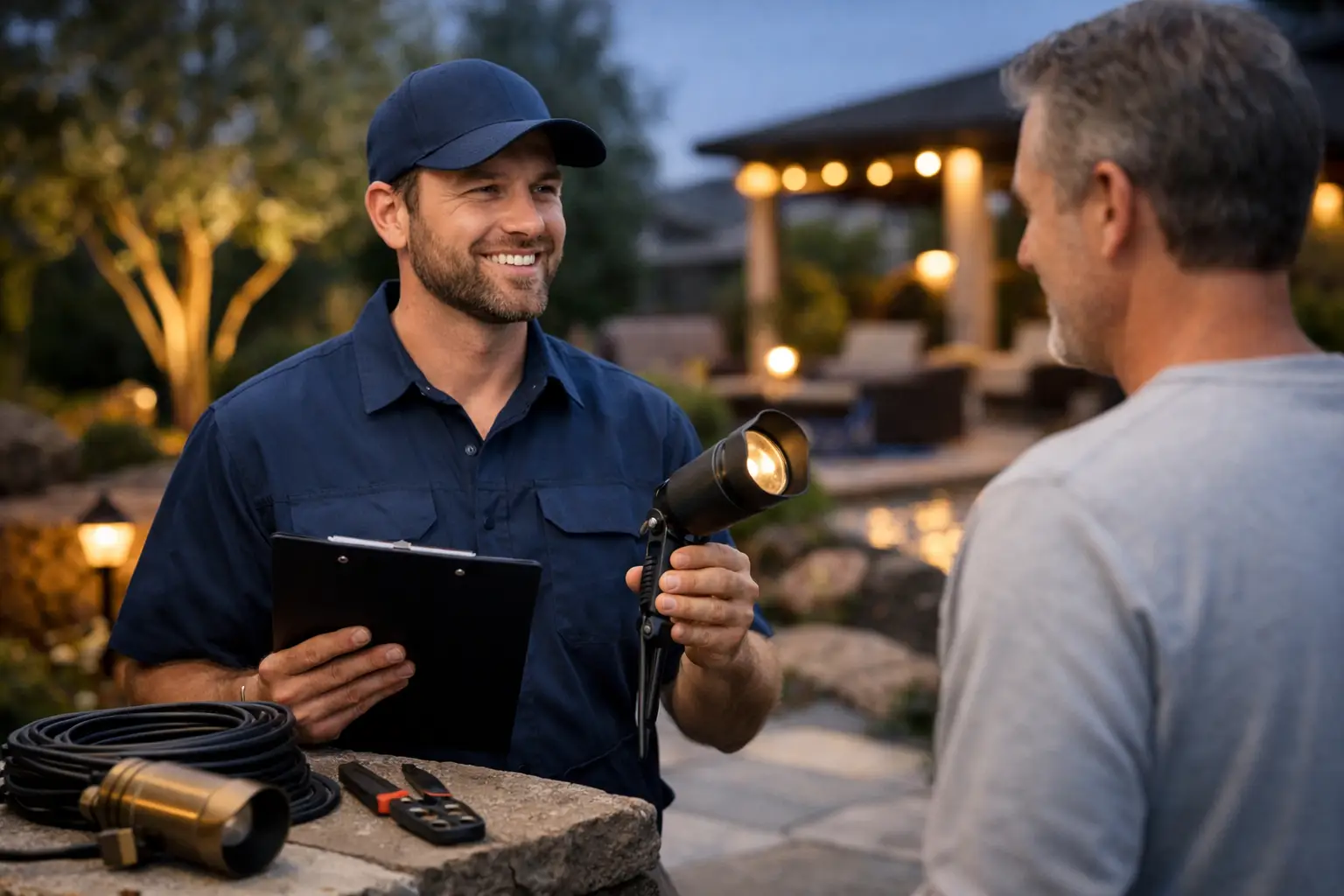
A well-lit path should feel effortless to use after dark. The same goes for a driveway, garden steps, a shop entrance or a shared car park. When lighting is poorly planned, however, it can create glare, dark spots, water-damaged fittings and avoidable safety risks. Choosing the right outdoor lighting installer helps you get a practical result that looks considered, works reliably and is installed safely.
Outdoor lighting is more than placing a few fittings around the property. It needs to suit how people move through the space, hold up to Australian weather conditions and connect correctly with your existing electrical system. For homes and businesses alike, professional advice early in the process can prevent costly changes later.
What a good outdoor lighting installer should provide
A qualified electrician should begin by understanding the purpose of the lighting. You may want safer access from the driveway to the front door, better visibility around a pool area, improved kerb appeal, security around a commercial building, or a combination of all four. The right solution depends on the property, its layout and how the area is used after dark.
A proper site assessment matters. An experienced installer will look at existing power access, switchboard capacity where relevant, cable routes, drainage, landscaping, mounting surfaces and likely exposure to rain, heat and dust. They should also consider neighbouring properties. A bright floodlight pointing into someone else’s windows is not good security lighting, and it is unlikely to be welcome.
Clear communication is equally important. You should receive straightforward advice on suitable fittings, control options, expected installation requirements and pricing. If a project has variables, such as concealed underground cabling or unknown conditions in an older property, those should be explained before work begins rather than appearing as a surprise on the invoice.
Start with the job your lighting needs to do
The most attractive lighting scheme is not always the most useful one. Start by identifying what you need the lights to achieve, then choose fittings and placement around that goal.
Safe movement around the property
Paths, stairs, level changes and entrances benefit from low-glare lighting that makes edges and obstacles easy to see. Bollard lights, step lights and carefully aimed wall lights can guide people without making the garden feel overlit. In residential settings, warm light often creates a more welcoming result, while still providing enough visibility for everyday use.
For strata properties, rentals and commercial sites, safety lighting should also support reliable access for residents, staff, visitors and contractors. Timers, daylight sensors and motion sensors can reduce unnecessary energy use while ensuring key access areas are not left in darkness.
Security and visibility
Security lighting works best when it is targeted. Entrances, side passages, loading areas, bins, gates and rear access points are common priorities. Motion-activated fittings can be effective in lower-traffic areas, but they need sensible positioning. Poorly aimed sensors can trigger repeatedly from passing cars, pets or moving branches.
Lighting can also complement cameras, access control and alarm systems. It should not create harsh reflections or washed-out camera footage. If you are upgrading several security features at once, using one electrical provider to coordinate the work can make planning simpler and help avoid clashes between systems.
Landscape and architectural appeal
Garden and feature lighting is where restraint pays off. Uplighting a mature tree, washing a textured wall with light, or highlighting a planting bed can add depth to an outdoor area. The aim is to create layers, not turn the yard into a stadium.
Fitting placement should account for future plant growth, garden maintenance and irrigation. A light that looks perfect beside a small shrub may be completely hidden in a year. Quality installation considers the property as it will be used over time, not only how it looks on installation day.
Choose fittings made for outdoor conditions
Outdoor electrical fittings need to cope with their environment. Rain, coastal air, UV exposure, insects, lawn care and temperature changes all affect performance. The cheapest fitting is rarely the best value if its seals fail early, its finish deteriorates or replacement parts are hard to source.
Ask your installer about the fitting’s ingress protection rating, material and intended location. A protected alfresco wall is very different from an exposed garden bed or driveway entrance. In coastal areas, corrosion resistance deserves particular attention. Durable fittings may cost more upfront, but they can reduce maintenance and premature replacement.
LED lighting is usually the sensible choice for new outdoor work because it uses less energy and offers a long service life. Even so, not all LED products perform the same. Colour temperature, beam angle, driver quality and heat management all influence the final result. A qualified electrician can recommend options that suit the task rather than simply selecting the brightest available light.
Controls make lighting more useful
The best outdoor lighting is easy to live with. Controls can be simple, such as a standard switch for entertaining areas, or more automated through timers, sensors and smart controls. There is no single right setup.
A sensor may suit a side gate or bin area, while a timer can be better for a business frontage that needs consistent lighting each evening. For homes, smart controls can be useful when you want to manage selected lights from a mobile or create routines while away. The trade-off is that advanced systems need compatible products, reliable configuration and a clear plan for who will manage them.
It is worth discussing manual override options too. You should be able to keep lights on when hosting guests, carrying out work outside or responding to an issue after hours. Convenience should never come at the expense of practical control.
Why licensed installation matters
Outdoor lighting often involves work that is out of sight once complete: cabling beneath soil or paving, connections within walls, weatherproof enclosures and protective electrical devices. This is not an area for shortcuts or unlicensed work.
A licensed electrician understands how to install and protect outdoor circuits safely, select suitable components and test the completed installation. They can also identify whether existing wiring, earthing or switchboard protection needs attention before new lighting is added. This is especially valuable in older homes, renovations and commercial premises where previous alterations may not be clearly documented.
Professional installation also protects the finish of your property. Careful cable routing, neat mounting, sensible positioning and clean reinstatement make a real difference. Good workmanship is visible in the details, even when much of the electrical work sits behind the scenes.
Questions to ask before you book
Before choosing an outdoor lighting installer, ask whether they are licensed and insured, how they will assess the site, and whether they can provide a clear scope of work. It is also reasonable to ask about fitting quality, warranty arrangements, expected timeframes and whether the quote includes testing and commissioning.
For larger projects, request a lighting plan or walk through the proposed locations together. This is the best time to check that fixtures will not obstruct gates, interfere with gardens, shine into bedrooms or create trip hazards. If your property has a pool, retaining walls, new paving or planned landscaping, mention it early so the electrical work can be coordinated properly.
A dependable contractor will not pressure you into unnecessary additions. They will explain where spending more improves safety, longevity or performance, and where a simpler option is likely to do the job just as well.
Plan for maintenance, not just installation
Even quality outdoor lighting benefits from occasional attention. Leaves can cover sensors, soil can shift around garden fittings, and storms can damage exposed equipment. Checking fittings periodically helps maintain both appearance and safe operation.
If a light begins tripping a circuit, flickering, filling with moisture or failing repeatedly, arrange an electrical inspection rather than replacing bulbs and hoping for the best. Recurring faults can point to a damaged fitting, a connection issue or a circuit that needs professional attention.
Voltricity provides outdoor lighting solutions with a focus on safe installation, quality workmanship and clear advice. Whether you are improving a family home’s entry, updating a shared property or planning lighting for a business site, the right design begins with a conversation about how the space needs to work after dark.
Good outdoor lighting should make a property safer, easier to use and more inviting without demanding attention every night. Choose an installer who listens to the practical details, explains the options clearly and treats the work as a long-term investment in your property.