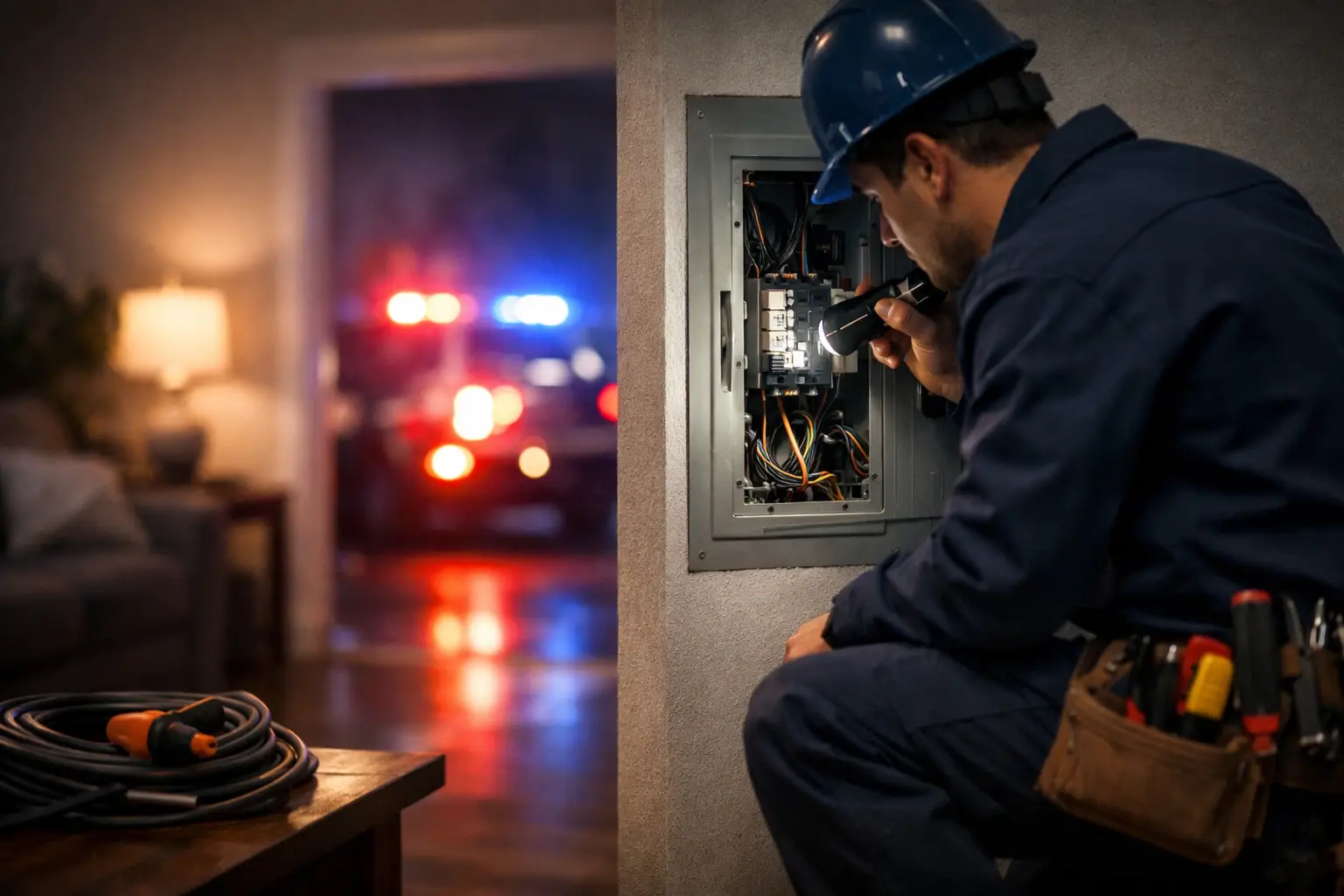
A power outage in one room is annoying. A burning smell near the switchboard, sparking power points, or a safety switch that will not stay on is a different story. When people search for an emergency electrician near me, they are usually not planning ahead – they are trying to make a safe decision quickly.
That is exactly when clear thinking matters most. Not every electrical issue is a true emergency, but the ones that are should never be ignored. The right response can protect your property, reduce downtime, and most importantly, keep people safe.
When you need an emergency electrician near me
An electrical emergency is any fault that creates an immediate safety risk, causes major loss of power, or affects a critical part of your home or business. The obvious examples are smoke, burning odours, exposed live wires, and active sparking. Flooding around electrical fittings or storm damage can also turn a manageable issue into an urgent one very quickly.
Some situations feel less dramatic but still need prompt attention. If your switchboard keeps tripping and will not reset, if only part of the property has lost power, or if lights are flickering alongside hot or buzzing outlets, there may be a deeper fault in the circuit. For businesses, faults affecting refrigeration, security systems, data rooms, or customer-facing areas can become urgent even when there is no visible damage.
It depends on the context. A dead powerpoint in a spare bedroom may be inconvenient. The same fault in a medical practice, café, or server room is far more serious. Good electricians understand that urgency is not only about sparks and smoke – it is also about safety, access, and continuity.
What to do before the electrician arrives
Your first job is not to diagnose the fault. It is to make the area safe.
If you can do so without risk, turn off the affected circuit at the switchboard. If you are unsure which circuit is involved, switch off the main power. Do not touch damaged wires, burnt fittings, wet appliances, or any electrical item sitting in water. Keep children, staff, tenants, or customers away from the area until it has been checked.
If there is smoke, fire, or an immediate threat to life, call emergency services first. An electrician handles the electrical fault, but fire and rescue risks come first. Once the area is stable, be ready to explain what happened, when it started, and whether there were any warning signs such as tripping, heat, buzzing, or a recent storm.
That information helps the electrician prepare. A clear description can mean the difference between arriving with a likely solution and spending extra time tracing avoidable unknowns.
How to choose the right emergency electrician fast
In an urgent situation, people often choose the first name they find. That is understandable, but speed should not come at the expense of safety or workmanship.
Start with licensing and insurance. In Australia, electrical work must be carried out by a properly licensed electrician. If the issue involves a switchboard, mains supply, commercial infrastructure, or damaged wiring, that qualification is non-negotiable.
Next, look for signs of genuine responsiveness. A reliable contractor should communicate clearly, give you a realistic timeframe, and explain what can be checked immediately versus what may require follow-up work. Fast response is valuable, but honesty matters just as much. If someone promises an instant fix before they have even seen the problem, be cautious.
Transparent pricing also matters during emergencies. After-hours callouts can cost more, and that is normal. What customers should expect is clarity about callout fees, likely labour charges, and whether temporary make-safe work is different from a full repair. No one likes surprises when the power is already off.
Local experience is another advantage. Searching for an emergency electrician near me is not only about distance. It is also about finding a team that understands local property types, common switchboard setups, storm-related issues, and the expectations of nearby homeowners and businesses.
Common emergency faults and what they may mean
Repeated tripping is one of the most common urgent callouts. Sometimes the cause is simple – a faulty appliance, overloaded circuit, or damaged extension lead. Other times it points to deteriorated wiring, moisture ingress, or a fault in the switchboard. The challenge is that the same symptom can have very different causes, so guessing is risky.
Burning smells often indicate overheating. That could be a loose connection, failed outlet, overloaded circuit, or damaged breaker. Heat is never a sign to wait and see. Electrical components rarely cool down and repair themselves.
Sparking from a powerpoint or switch may be minor in some cases, especially a small one-off spark when plugging in an appliance. But frequent sparking, visible charring, crackling sounds, or discolouration around the fitting usually means the point needs inspection and likely replacement. If the wall plate feels warm, stop using it immediately.
Partial power loss can be especially frustrating because it is not always obvious where the fault sits. It may be an internal circuit issue, a switchboard problem, or supply-related damage after weather events. For commercial sites, partial outages can interrupt alarms, lighting, POS systems, automatic doors, and other operational essentials.
Why emergency work should lead to a proper fix
A good emergency response often starts with making the site safe. That may mean isolating a damaged circuit, replacing a failed component, or restoring essential power to part of the property. But emergency work is not always the full story.
Sometimes the immediate danger is only the symptom of a larger issue. An old switchboard, deteriorated cabling, poor previous workmanship, or circuits that no longer suit modern electrical demand can all sit behind the fault. If the underlying cause is ignored, the same problem often returns – usually at the worst possible time.
That is why experienced electricians do more than restore power and leave. They explain what failed, what was done to make it safe, and whether upgrades or further repairs are recommended. For many properties, particularly older homes and commercial tenancies, an urgent fault is the moment hidden electrical weaknesses finally become visible.
Homes, rental properties and businesses all have different needs
For homeowners, the main concern is usually family safety and getting daily life back to normal. Hot water, cooking, lighting, internet, garage access, and charging devices all depend on a system that works properly. A fast repair matters, but confidence in the workmanship matters more.
Property managers and landlords have extra pressure. They need faults handled quickly, tenants kept informed, and compliance risks reduced. An electrician who communicates clearly and documents what was found can save time on both the practical and administrative side.
Business operators face another layer again. Downtime costs money, and electrical issues can affect staff safety, customer experience, stock, security and trading hours. In these situations, speed, fault-finding ability and a professional approach all need to work together. That is where a dependable provider stands apart from a contractor who simply patches the issue.
What a dependable emergency service looks like
A dependable emergency electrician shows up prepared, works safely, and communicates in plain language. They do not inflate the issue, but they do not minimise it either. They check the immediate fault, test the affected area, and tell you what is safe to use before they leave.
They also understand that electrical problems do not happen at convenient times. People calling after hours are often stressed, tired, or trying to protect a home, tenancy or business. Professional service means treating that situation with urgency and respect.
At Voltricity, that approach is simple: respond promptly, make the site safe, carry out licensed work properly, and give customers a clear path forward if more permanent repairs or upgrades are needed. That matters just as much for a tripping switchboard as it does for damaged wiring, failed lighting, or faults affecting security systems.
If you ever find yourself searching emergency electrician near me, trust the warning signs. Shut down what you safely can, keep people clear of the hazard, and call a licensed electrician who values safety, workmanship and straight communication. When the issue is urgent, the best next step is the one that protects your property properly the first time.