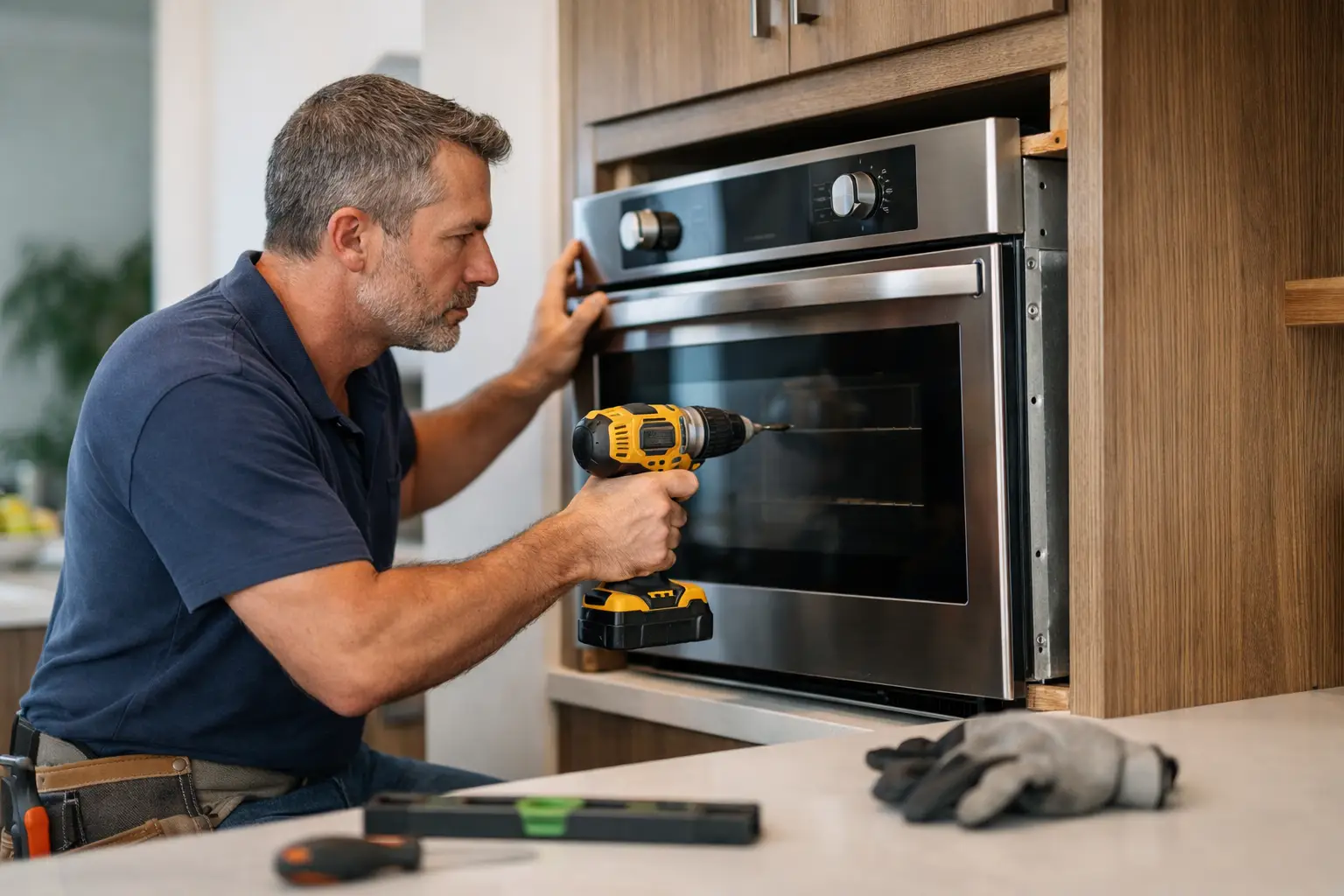
A wall oven should sit flush, heat evenly and work without tripping circuits. If you need to install wall oven units as part of a renovation or replacement, the job is more than sliding an appliance into a cabinet and plugging it in. In many Australian homes, the real work sits behind the cabinetry – checking the circuit, confirming ventilation clearances, verifying load capacity and making sure the final connection complies with current electrical standards.
That matters for two reasons. First, wall ovens draw serious power, and a poor installation can create overheating, nuisance tripping or long-term damage. Second, once cabinetry is finished and the appliance is in place, fixing mistakes becomes far more expensive.
What to check before you install wall oven models
The first question is not which oven you like. It is whether your kitchen and electrical system are ready for it. A replacement oven can look straightforward on paper, but dimensions, wiring type and circuit requirements often vary from one model to the next.
Start with the appliance specifications. You need the cut-out size, overall dimensions, required clearances and the rated electrical load. Some wall ovens are designed for a dedicated hardwired connection, while others may have a plug configuration depending on the model and local setup. In either case, the manufacturer instructions matter, and so does the existing wiring at the property.
For homeowners and property managers, this is where surprises usually show up. An older oven may have been connected years ago under different conditions, or the cabinetry may have been built tightly around a previous unit with little tolerance for a new model. If the replacement is even slightly larger, a cabinetmaker may need to adjust the housing before any electrical work is completed.
The electrical side is just as important. A licensed electrician should confirm the circuit capacity, breaker size, cable condition and isolation method. If the switchboard is already carrying a heavy load from induction cooking, air conditioning or an EV charger, adding a new oven can change what is required.
Why electrical capacity matters
Wall ovens are not small appliance loads. Depending on the model, they can place a significant demand on the circuit, particularly during preheat and high-temperature cooking. If the supply cable is undersized or the protective device is not matched correctly, the oven may not perform as intended and the installation may not be compliant.
This is where a quick replacement can turn into an upgrade project. In some homes, the oven circuit is perfectly suitable and the work stays simple. In others, the cable run may be outdated, the switchboard may need attention or the appliance load may call for a dedicated arrangement that was not there before.
There is no one-size-fits-all answer. A compact single oven in a newer home is different from a large multifunction unit in an older property with ageing wiring. The only safe approach is to assess the actual site conditions before installation day.
Hardwiring, isolation and compliance
In Australia, fixed electrical appliance installation is licensed electrical work. That means the final connection, testing and compliance checks must be carried out by a qualified electrician. This is not only about ticking a box. It is about confirming the appliance has been installed safely, the earthing is correct and the circuit protection works as it should.
A proper installation also considers isolation. The oven needs an appropriate means of disconnection for servicing and maintenance. If access is poor after the appliance is fitted, planning that isolation point early saves trouble later.
Cabinetry and ventilation are part of the job
A wall oven installation is partly electrical and partly fit-off coordination. Even if the wiring is perfect, poor cabinet preparation can shorten the life of the appliance or create heat build-up around surrounding materials.
Manufacturers specify minimum clearances for a reason. The oven needs enough airflow to dissipate heat, protect internal components and maintain cooking performance. If cabinetry is too tight, the unit may overheat, doors may not close properly or surrounding finishes may deteriorate over time.
That is why experienced installers usually want to see the oven specifications before attending site. It allows the electrical work to be planned around the actual appliance, not guesswork.
New installation versus replacement
A straight swap is generally the simplest option, but even then, measurements should be checked carefully. Similar-looking models can have different cut-out requirements, different connection points and different load ratings.
A new installation in a renovated kitchen takes more coordination. The cabinet location, cable route, circuit design and switchboard capacity should be planned before plaster, joinery and appliance delivery. Leaving the electrical work until late in the project often leads to avoidable delays.
Common issues when people try to install wall oven units without proper planning
The most common problem is assuming the existing circuit will do the job. That assumption can lead to repeated breaker trips, underperforming heating elements or a non-compliant installation that needs to be redone.
Another issue is ordering the appliance before checking the cavity size. A few millimetres can be the difference between a clean fit and a costly cabinet alteration. The same goes for cable location. If the termination point sits where the oven body needs to slide, the unit may not sit correctly in the housing.
Then there is access. Wall ovens are heavy and awkward to manoeuvre, especially in tight kitchens or upper-level apartments. Safe handling matters, both to protect the appliance and to avoid damage to cabinetry, flooring and walls.
Should you DIY or book a licensed electrician?
For anything involving fixed electrical connection, the answer is simple – book a licensed electrician. You can handle the early planning by confirming model details, measuring the cabinet opening and clearing access, but the installation itself is not a DIY electrical task.
For homeowners, that protects your household and your insurance position. For property managers and business operators, it also protects you from future disputes around safety and workmanship. A compliant installation completed properly the first time is usually cheaper than paying for fault-finding, rectification and cabinet rework later.
This is especially true in older homes, where hidden issues are more common. Damaged cable insulation, undersized circuits and outdated switchboards do not always show obvious signs until a new high-load appliance is connected.
What a professional wall oven installation should include
A professional install is not just the final connection. It should begin with checking the appliance specifications against the site conditions. From there, the electrician can verify the circuit, inspect the cable, confirm protection devices and determine whether any upgrades are needed before the oven is connected.
Once the physical fit is ready, the appliance can be connected, secured and tested. That includes verifying operation, checking that the circuit performs correctly under load and ensuring the installation aligns with manufacturer instructions and relevant standards.
Good communication is part of the service too. Customers should know before work starts whether the job is a straightforward replacement or whether additional work may be required. Clear advice upfront helps avoid surprise costs and keeps the project moving.
For renovation projects, it is often worth having the electrician involved before cabinetry is finalised. That early input can prevent layout problems, poor cable placement and scheduling delays once the appliance arrives.
Timing the installation properly
If you are renovating, do not leave your wall oven installation until the very end without prior checks. Appliance deliveries can be delayed, model numbers can change and site conditions often differ from plans. A pre-install assessment helps keep the job on track.
If you are replacing a failed oven, speed matters, but so does accuracy. Fast response is valuable when a household or business kitchen is out of action, yet rushing without checking the circuit and fit can create more downtime. The best outcome is prompt service with careful verification, not guesswork.
At Voltricity, that practical mindset sits behind every installation job. Customers want the oven working safely, on time and without avoidable call-backs.
The smart way to approach an oven upgrade
If you plan to install wall oven appliances as part of a kitchen upgrade, think of the project as electrical infrastructure as much as appliance fit-off. The oven, the circuit, the switchboard and the cabinetry all need to work together. When they do, the result is straightforward – reliable cooking performance, a clean finish and confidence that the installation has been done properly.
A good wall oven should make life easier, not introduce faults behind the scenes. Getting the checks done early, using licensed trades and allowing for the realities of your property will save time, money and stress long after the kitchen is finished.