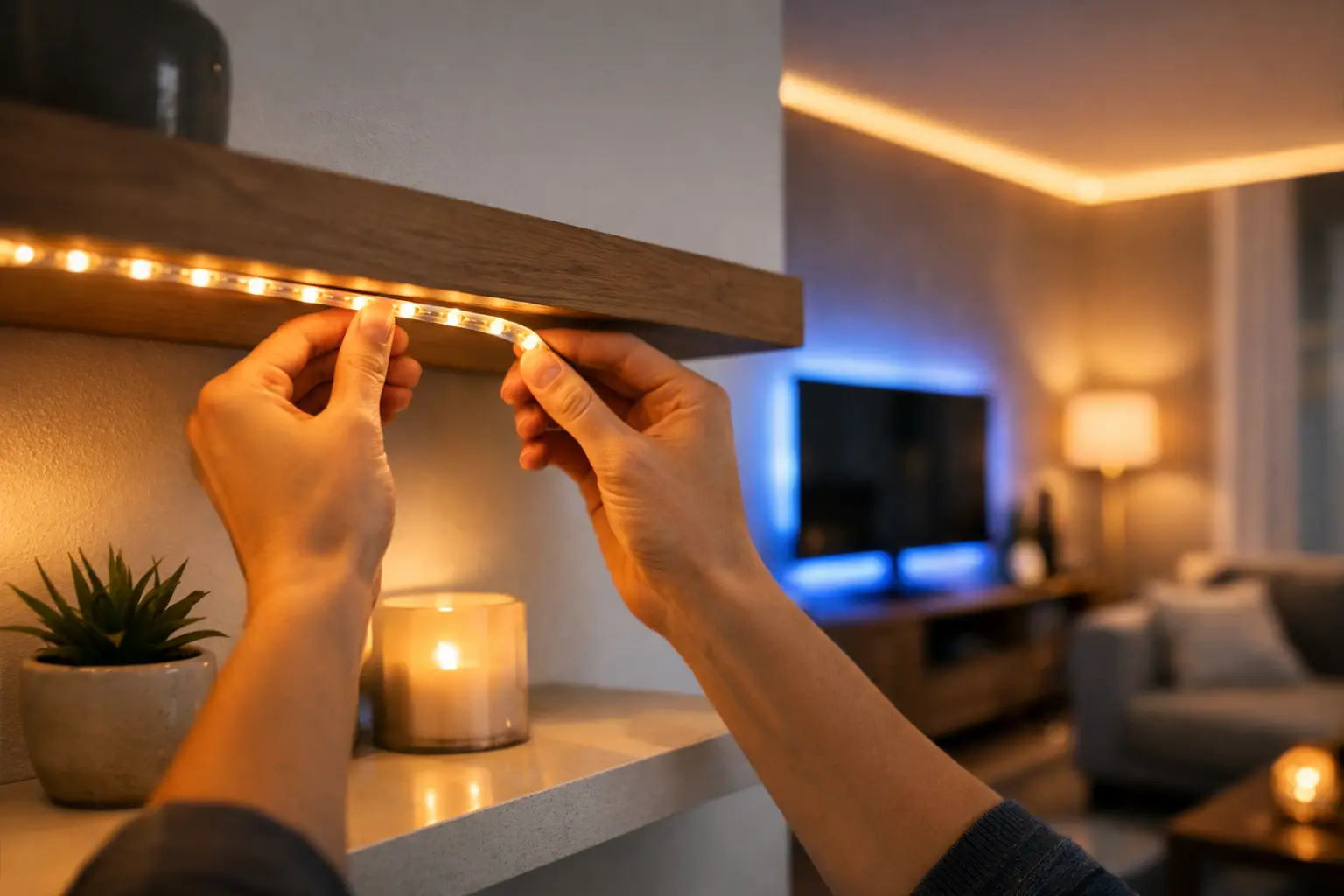
A well-placed strip light can change a room faster than a fresh coat of paint. Add decorative LED strip lights under kitchen cabinets, behind a TV unit, along shelving or in a reception area, and the space immediately feels more finished. The catch is that a clean result depends on more than peeling backing tape and sticking the strip where it looks good.
Done properly, LED strip lighting adds atmosphere, improves visibility and highlights features without taking over the room. Done poorly, it can look patchy, fail early, or create avoidable electrical issues. If you are planning an upgrade at home or in a commercial space, it helps to know where decorative strip lights work best, what power setup they need, and when a licensed electrician should step in.
Where to add decorative LED strip lights
The best LED strip installations are usually the ones you notice indirectly. Rather than staring at the light source itself, you see the effect – a softer edge, a warmer wall wash, or better definition around a feature.
In homes, common placements include under overhead cabinets, inside joinery, along stair edges, behind mirrors, under bed frames and around entertainment units. These areas suit decorative lighting because the strip can often be concealed while the light is thrown onto a nearby surface. That gives you the visual benefit without exposing the tape, wiring or diodes.
In commercial settings, decorative strip lights often work well in reception counters, bar fronts, retail displays, shelving, boardrooms and signage features. For businesses, the aim is usually twofold: create a polished look and support the way people use the space. A café may want warmth and ambience. A retail fit-out may want sharper feature lighting that helps products stand out.
The location matters because heat, moisture, dust and traffic all affect product choice and installation method. A strip behind a television in a dry living room is a very different job from strip lighting around an outdoor entertaining area or in a bathroom vanity.
Choosing the right strip light for the job
Not all LED strips are equal, and this is where many decorative lighting projects go off track. Two products can look similar in the packet but perform very differently once installed.
Brightness is the first thing to get right. Decorative strip lighting should support the room, not overpower it. If the strip is too bright, it can feel harsh and expose every imperfection in the joinery. If it is too weak, the effect disappears as soon as the main lights come on. Warm white usually suits living rooms, bedrooms, restaurants and hospitality spaces. Neutral or cool white can work better in kitchens, laundries, workspaces and some retail environments.
The quality of light also matters. A cheaper strip can produce uneven colour, visible spotting and poor longevity. Higher-quality strips tend to offer better colour consistency and a smoother finish, especially when used inside an aluminium profile with a diffuser.
Then there is the question of voltage and power supply. Some decorative strip lights plug into a standard outlet, while others require a hardwired driver. The right setup depends on the strip length, wattage, switching arrangement and whether the installation needs dimming or smart control. This is often where DIY plans run into trouble, because the lighting itself seems simple, but the power requirements behind it are not.
Why the finish matters as much as the light
The difference between a professional-looking installation and an obvious add-on usually comes down to finish. Decorative lighting should look intentional. That means hiding drivers where possible, managing cable runs neatly and avoiding visible sagging, gaps or exposed adhesive edges.
One of the most effective ways to improve the finish is to mount the strip in an aluminium channel. This gives the strip support, helps with heat dissipation and creates a cleaner line. Add a diffuser, and the individual dots of light become less visible. In many spaces, that one detail makes the whole installation look more refined.
Surface preparation matters too. If the strip is installed on a dusty, textured or greasy surface, the adhesive backing may not hold. Kitchens are a common example. Under-cabinet lighting can look excellent, but only if the mounting surface is properly cleaned and the strip is secured in a way that will last.
This is one of those jobs where the product cost is only part of the story. A better planning and installation approach often gives you a result that lasts longer and looks far more polished.
Add decorative LED strip lights safely
If you want to add decorative LED strip lights, safety should be part of the plan from the start, not something considered after the strip is already on the wall. Even low-voltage lighting systems rely on a safe power source, suitable drivers and compliant installation methods.
In Australia, any fixed electrical wiring work must be carried out by a licensed electrician. That includes hardwiring power supplies, altering circuits, adding switches, or integrating strip lighting into existing lighting systems. For homeowners and business operators, this is less about red tape and more about protecting the property, the occupants and the long-term reliability of the installation.
There are also practical safety issues to consider. Drivers need ventilation. Moisture-prone locations need products with the right IP rating. Outdoor runs need weather protection and proper cable management. Long strip runs may need voltage drop considered so the far end of the strip does not appear dimmer than the beginning.
It depends on the project, but if the installation involves cabinetry, bathrooms, shop fit-outs, outdoor areas or permanent wiring, professional advice early on can save a lot of rework.
Common mistakes that lead to disappointing results
The most common issue is choosing the strip before deciding what the lighting actually needs to do. Decorative lighting is not one-size-fits-all. A warm ambient glow behind a headboard needs a different approach from bright task support under kitchen cabinets.
Another frequent mistake is exposing the strip directly to view. When you can see the raw diodes from normal standing or seated positions, the effect tends to feel cheap rather than subtle. Concealment, reflection and angle all matter.
Power is another weak point. People often underestimate how many drivers, connectors or feed points are needed. They may also place the driver somewhere inaccessible, which becomes frustrating later if maintenance is required.
Then there is overuse. Strip lighting works best when it supports the room design. If every ceiling line, shelf and skirting board glows, the space can quickly feel busy. Restraint usually delivers the better result.
When professional installation is worth it
Some plug-in strip lighting projects are straightforward, especially temporary decorative setups in dry indoor spaces. But once the job becomes part of the property, it makes sense to treat it like any other electrical improvement.
Professional installation is especially worthwhile if you want integrated switching, dimmers, sensor control, hidden drivers, cabinet lighting, outdoor lighting or a tailored result across multiple areas. A licensed electrician can also assess whether your existing circuits, switchboard and switching layout support the new installation properly.
For renovations and fit-outs, planning strip lighting early gives you far more control. Cables can be concealed before surfaces are finished, power can be located where it makes sense, and the lighting can be aligned with other electrical work rather than added as an afterthought. That is often the difference between a clean built-in look and a retrofit that never quite feels right.
For property managers and business owners, reliability matters just as much as appearance. Decorative lighting still needs to be maintainable, safe and suitable for the environment. A quick fix that fails after a few months is rarely good value.
Getting the look right for your space
The most effective decorative lighting plans start with a simple question: what should the room feel like when the lights are on? In a home, you may want warmth, softness and comfort. In a commercial setting, you may want a sharper, more premium presentation.
That decision guides everything else – colour temperature, placement, brightness and control. Warm white strips tucked under joinery can make a kitchen feel more inviting at night. Backlighting behind a bathroom mirror can soften shadows and improve day-to-day use. In a retail or hospitality setting, subtle strip lighting can highlight architectural details without distracting from the main space.
A tailored approach nearly always beats a generic kit. That is why many clients choose to have decorative lighting assessed as part of a broader electrical upgrade. When the lighting is designed around the room instead of forced into it, the result is cleaner, safer and more useful.
If you are planning to upgrade a room, tenancy or fit-out, decorative LED strip lighting can be one of the simplest ways to add impact. The key is treating it as a proper lighting feature, not just a stick-on accessory. A thoughtful layout, quality components and safe installation will always look better than a rushed shortcut.