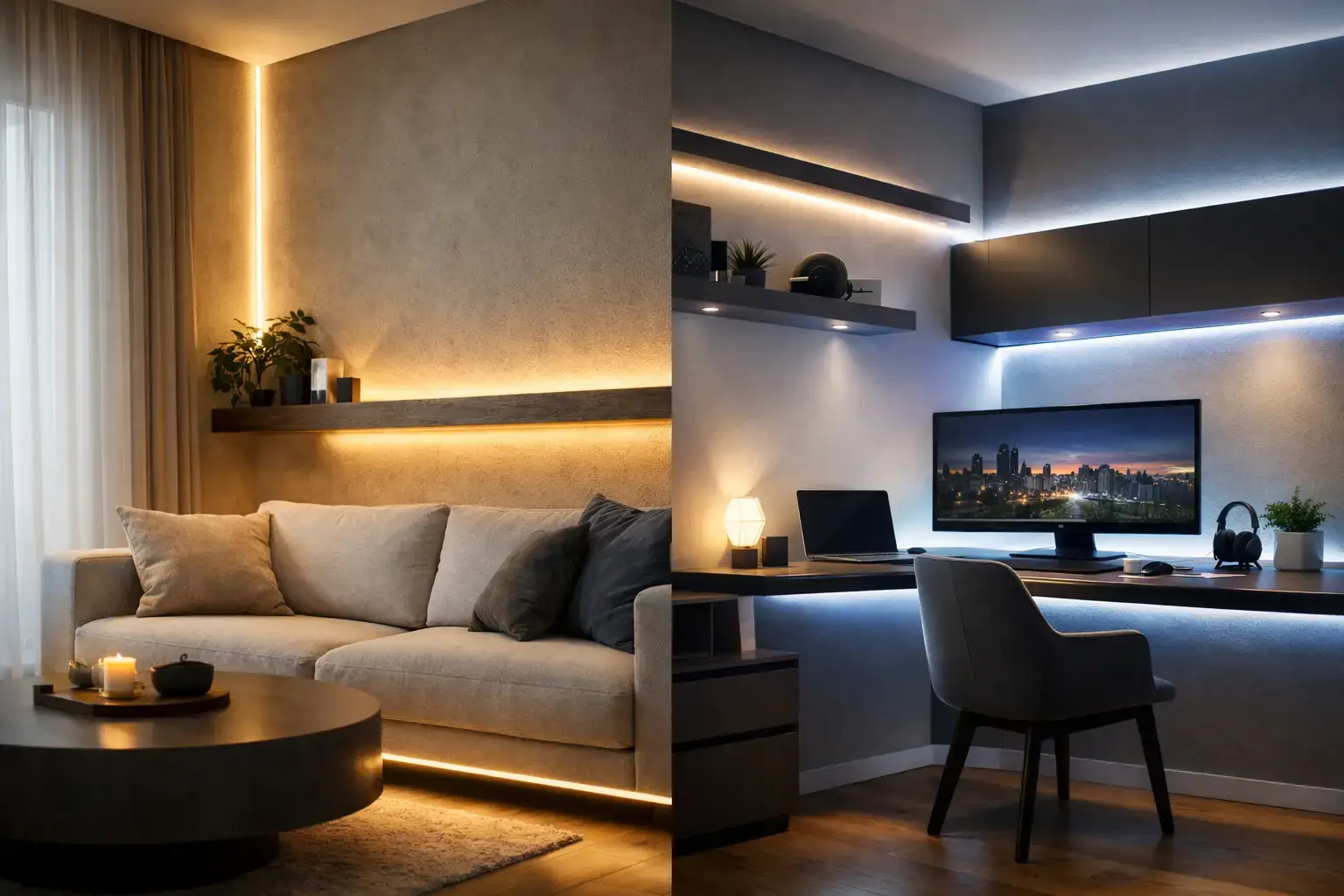
A harsh downlight can make a renovated kitchen feel flat. A dark hallway can make a great home feel unfinished. That is where led strip decorative lights earn their keep – not as a gimmick, but as a practical way to add warmth, visibility and character to a space without major building work.
Used well, strip lighting can highlight joinery, soften hard surfaces and improve the way a room functions after dark. Used poorly, it can peel away, show bright individual dots, fail early or create glare that is more annoying than useful. The difference usually comes down to planning, product choice and installation quality.
Where led strip decorative lights work best
The appeal of led strip decorative lights is flexibility. They can fit into places where traditional fittings do not make sense, and they can create an effect that feels considered rather than obvious. In homes, the most common applications are under kitchen cabinets, in bathroom niches, along stair treads, behind mirrors, inside wardrobes and under floating vanities. In outdoor areas, they are often used for deck edges, seating, pathways and alfresco zones.
Commercial spaces can get just as much value from them. Retail displays, reception counters, shelving, bars and waiting areas all benefit from subtle lighting that supports the fit-out without overpowering it. For property managers, strip lighting can also be a smart upgrade in shared areas where appearance and visibility both matter.
Not every location suits every product, though. A wardrobe light has very different demands from a poolside installation or a busy café counter. That is why the early decisions matter more than most people expect.
What to get right before installation
The first question is not colour. It is purpose. If the lighting is there purely for ambience, the output can be softer and the placement can be more concealed. If it needs to improve visibility on stairs, in a pantry or along a path, brightness and beam control become more important.
After that, the key factors are colour temperature, ingress protection, driver quality and the surface the strip will be mounted to. Warm white often suits living areas, bedrooms and hospitality spaces because it feels more relaxed. Cooler light can work in task areas, but if it is too blue it can make a room feel clinical. In many homes, the best result comes from choosing a colour temperature that complements the main lighting rather than fighting against it.
Moisture and dust ratings matter as well. A dry indoor shelf and an outdoor pergola should not use the same strip by default. Bathrooms, laundries, external walls and landscaping areas need products suited to those conditions. If water, steam or weather are involved, guessing is a risk.
Then there is the driver and control setup. Cheap drivers are one of the biggest causes of flicker, buzzing and premature failure. Dimming compatibility can also catch people out. A strip light may look simple on the surface, but the supporting components are what determine whether it performs reliably over time.
Why aluminium channels make such a difference
One of the most overlooked parts of strip lighting is the channel. Many people assume the strip can simply be stuck in place and forgotten. Sometimes that works for a short period. Often it does not.
An aluminium channel helps manage heat, improve adhesion and create a cleaner finish. It can also diffuse the light so you see a smooth line instead of individual LED points. That matters in visible locations like kitchen splashbacks, hallway joinery and feature walls, where the whole point is a polished result.
There is also a durability benefit. Heat is the enemy of LED lifespan, and strips mounted without proper heat dissipation are more likely to degrade early. If you are spending money on custom cabinetry, a bathroom renovation or a commercial fit-out, it makes sense to protect the finish and the lighting system at the same time.
Common mistakes with LED strip decorative lights
The most common mistake is buying based on price alone. Lower-cost strips may look similar in the packet, but differences in chip quality, adhesive backing, driver performance and waterproofing become obvious once they are installed. It is frustrating to pull apart joinery or external cladding later because a bargain product failed early.
Another issue is poor placement. If the strip is visible from normal standing or seated angles, glare can become a problem. Good strip lighting usually works best when the source is concealed and the effect is what you notice. That takes a bit of forethought during design, especially around mirrors, television units and overhead shelving.
DIY wiring is another risk. Plug-in options have their place, but many permanent installations involve low-voltage systems, hardwired drivers, switched circuits or integration with existing lighting controls. That work needs to be done safely and to standard. In some settings, especially kitchens, bathrooms, outdoor areas and commercial premises, there is very little margin for error.
Choosing strip lights for homes and businesses
For homeowners, the right setup often comes down to comfort and simplicity. You want lighting that looks good, turns on when expected and does not need constant adjustment. A well-designed kitchen installation might use under-cabinet strip lighting for meal prep, toe-kick lighting for evening ambience and separate switching so each layer serves a purpose.
For businesses, the priorities can shift slightly. Reliability, presentation and maintenance access become more important, especially in customer-facing spaces. A restaurant may want warm, dimmable strip lighting to shape atmosphere. A retail store may prefer a brighter, cleaner look that helps merchandise stand out. An office reception might need a subtle feature line that reinforces the fit-out without adding glare on screens.
Property managers usually need something else again – practical upgrades that improve appeal while keeping maintenance predictable. In that case, product quality and access for future servicing can matter more than the most advanced lighting effects.
When a licensed electrician adds real value
There is a reason strip lighting projects often look easy online and end up more complicated on site. Power supply locations, switch access, cable routes, existing load, compliance requirements and the material you are fixing to all affect the end result.
A licensed electrician can assess whether the installation should be hardwired, whether the circuit is suitable and how best to conceal cabling and drivers without compromising ventilation or future access. That becomes especially important during renovations, when lighting is being added alongside new cabinetry, plastering, tiling or outdoor works. Timing matters. It is much easier to get a neat result when the electrical plan is coordinated early.
For larger homes, commercial spaces or mixed-use upgrades, there can also be value in treating strip lighting as part of a bigger lighting and electrical strategy rather than a stand-alone add-on. Voltricity often sees better long-term outcomes when decorative lighting is planned alongside task lighting, switchboard capacity and any future automation or security upgrades.
Getting the finish right
The best strip lighting rarely announces itself. It supports the room. It makes a vanity feel more refined, a staircase safer at night, or an outdoor entertaining area more inviting after sunset. You notice the effect before you notice the fitting.
That is why final details matter. Even brightness, tidy terminations, concealed drivers and sensible switching all contribute to a result that feels deliberate. Good installation is not just about making the light turn on. It is about making the space feel better to live or work in.
If you are considering led strip decorative lights, think beyond the reel itself. Focus on where the light will land, how it will be controlled and what the environment demands. A well-planned installation can add style and function for years. A rushed one usually looks temporary from day one.
If you want the upgrade to look clean, perform properly and meet safety requirements, it pays to treat decorative lighting with the same care as any other electrical work. A small lighting detail can change the whole feel of a property when it is done properly.